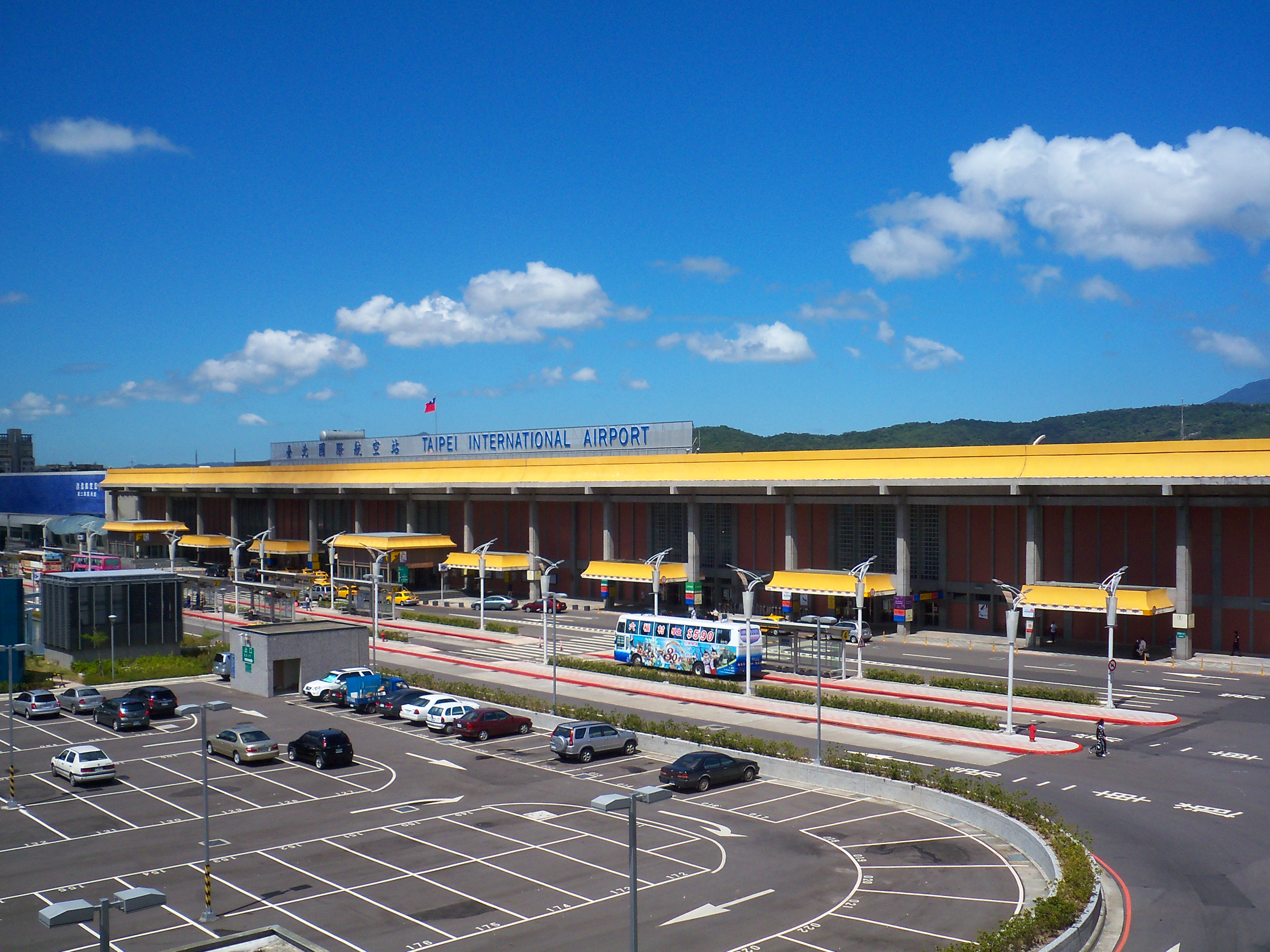
Songshan Airport
On August 14, 1937, eighteen bombers lifted off from Matsuyama Airfield and headed for mainland China. The Japanese Navy's Kanoya Air Group, flying Type 96 G3M bombers, targeted Jianqiao Airfield in Zhejiang Province and Guangde Airfield in Anhui Province. Chinese fighter aircraft intercepted the raid and shot down four bombers without losing a single plane. China later commemorated the date as Air Force Day. The airfield those bombers departed from is now surrounded by apartment buildings, shopping malls, and elevated highway ramps. It is called Taipei Songshan Airport, and it is one of the most contested pieces of real estate in Asia.
From Wartime Runway to City Airport
The Japanese military built Matsuyama Airfield on March 28, 1936, during the colonial occupation of Taiwan. By 1944, the Japanese Army had established the 37th Kyoiku Hikotai at the field, a training unit flying Ki-61 fighters whose instructors would engage American forces in the war's final months. The Americans fought back from the air: from March to August 1945, the U.S. Army Far East Air Forces bombed the field repeatedly, with B-24 heavy bombers flying the last mission on August 24. After Japan's surrender, the Republic of China Air Force took over in 1946 and renamed the facility Songshan Airport. Before the Chinese Civil War's conclusion, the airport connected Shanghai and Taipei -- a route that carried both passengers and political refugees as the Nationalist government prepared to relocate to Taiwan.
The Downtown Dilemma
Taipei grew around its airport the way a tree grows around a fence post. What was once a military facility on the city's edge is now embedded in downtown, surrounded by Songshan District's residential towers and commercial blocks. The airport saves travelers roughly 30 minutes compared to Taiwan Taoyuan International Airport, located far to the southwest, and that convenience has kept it alive through decades of debate. But convenience comes with costs: noise pollution blankets surrounding neighborhoods, building height restrictions constrain urban development, flight paths cross densely populated areas, and the 182-hectare site represents some of the most valuable undeveloped land in Taipei. In 1999, when Taipei 101 construction began, the Civil Aeronautics Administration had to alter the airport's standard instrument departure and arrival procedures to avoid the new skyscraper -- a vivid illustration of how the airport and the city have grown into each other.
A Political Football at 10,000 Feet
The question of whether to close Songshan Airport has divided Taipei's political parties for years. In the 2002 and 2006 mayoral elections, Democratic Progressive Party candidates proposed shutting the airport and converting its land into parks, roads, a detention basin, and a sports arena. The Taiwan High Speed Rail, they argued, could absorb domestic routes to western Taiwan cities, while outlying island and eastern Taiwan flights could shift to Taoyuan. The Pan-Blue Coalition, which dominated Taipei's city government, rejected closure, preferring to develop Songshan as a boutique international terminal linking Taipei's city center directly to Shanghai, Seoul, and Tokyo. Regular cross-strait charter flights to China began on July 4, 2008, and then-mayor Ma Ying-jeou championed making the airport Taipei's primary international business hub. A 677-meter road tunnel, constructed between 1997 and 2006, now runs beneath the runway to connect the neighborhoods the airport physically divided.
City Airport in a Crowded Sky
Songshan occupies a niche shared by a handful of airports worldwide -- London City, Milan Linate, Toronto Billy Bishop, Buenos Aires Aeroparque -- where proximity to the business district justifies the compromises of operating in a dense urban environment. At its 1997 peak, the airport handled over 15.3 million passengers annually. The Taiwan High Speed Rail's launch in January 2007 devastated domestic routes: passenger volume dropped from 6.7 million in 2006 to 4.4 million in 2007. Service to Taichung and Chiayi was cut. TransAsia Airways abandoned Tainan and Kaohsiung routes in 2008. What remains is a smaller but strategically positioned operation: direct flights to Tokyo Haneda, Seoul Gimpo, and Shanghai Hongqiao connect Taipei's business travelers to other Asian city-center airports, served by carriers including EVA Air, China Airlines, Japan Airlines, and All Nippon Airways.
From the Air
Coordinates: 25.069N, 121.552E. ICAO: RCSS. Taipei Songshan Airport is located in Songshan District in central Taipei, with a single runway (10/28) visible as a clear east-west strip amid dense urban development. The Keelung River curves along the airport's northern boundary. Taipei 101 is visible approximately 4 km to the south-southeast. Caution: building height restrictions apply in surrounding areas. The airport serves both military (Republic of China Air Force) and civilian operations.