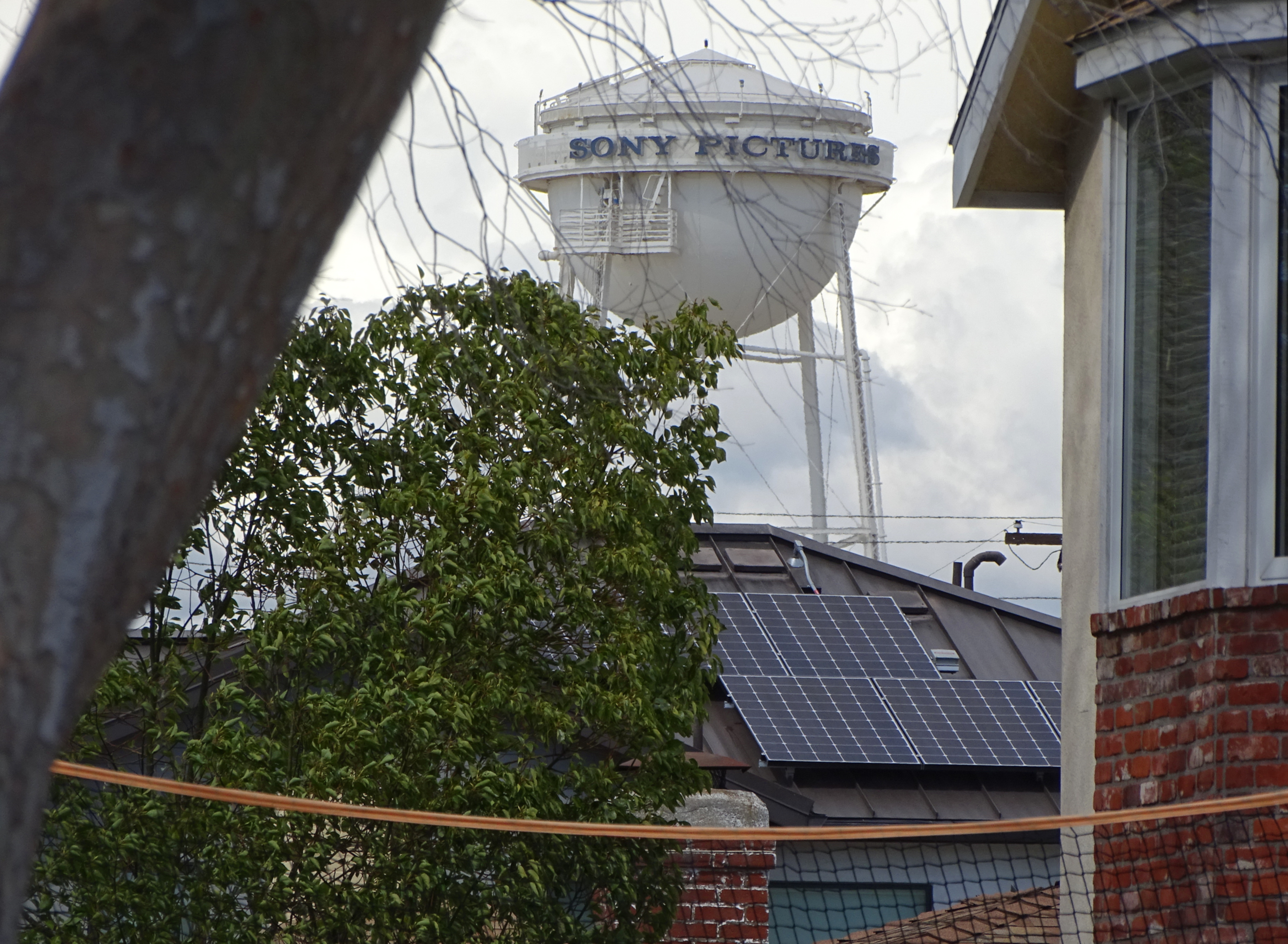
Sony Pictures Studios
On the lot at Washington Boulevard in Culver City, Stage 27 is just another soundstage — until you learn that the yellow brick road was built on its floor. The flying monkeys hung from its rafters. Judy Garland sang 'Somewhere Over the Rainbow' within its walls. What looks like a warehouse is, in the language of cinema, holy ground.
From Triangle to Metro-Goldwyn-Mayer
Thomas H. Ince founded the studio in 1912 as part of the Triangle Studios enterprise, one of the earliest attempts to consolidate filmmaking operations at a permanent lot. The land in Culver City — then a semi-rural community southwest of Los Angeles — offered space, light, and distance from the chaos of downtown.
MGM took over in 1924, and for the next six decades the lot became synonymous with Hollywood's studio era. Under the MGM banner, this was the home of the most glittering roster of talent in the history of the movies: Clark Gable, Katharine Hepburn, Judy Garland, Gene Kelly, Spencer Tracy. The studio's motto — Ars Gratia Artis, art for art's sake — was embossed on the roaring lion that opened every MGM picture.
The productions that came out of this lot include some of the most watched films in history. The Wizard of Oz, filmed largely here in 1938-1939. Gone with the Wind, whose burning of Atlanta sequence lit up the back lot. Lawrence of Arabia, scored at the studio despite being shot largely on location. The studio system that produced these films is gone, but the physical spaces where they were made remain.
The Stages Where It Happened
Stage 15 at Sony Pictures is the second-largest soundstage in the world. Stage 27 — the Munchkinland stage — has hosted productions for more than eighty years, its floor and overhead rigging still capable of supporting the kind of elaborate practical sets that CGI has not fully replaced.
The Barbra Streisand Scoring Stage is one of the largest recording facilities in the world: 600 square meters of carefully designed acoustic space where orchestras record the music that transforms a film into an emotional experience. The scores for Wizard of Oz and Gone with the Wind were recorded here before the stage bore Streisand's name. The score for Star Wars: The Force Awakens was recorded here in 2015, continuing a lineage of sound that spans nearly the entire history of recorded film music.
Jeopardy! and Wheel of Fortune tape their episodes on the lot — a reminder that the studio is not a museum but a working production facility, generating content every day for audiences that have no idea they are watching something made in a building where MGM once produced dreams.
Sony and the Next Century
MGM sold the studio in 1986. After a period of instability, Sony acquired it in 1990 and invested $100 million in renovation, restoring the physical plant and establishing the studio as a major independent production and distribution company.
The renovation preserved what deserved preserving — the historic stages, the architectural character of the main buildings — while updating the infrastructure for contemporary production demands. Sony Pictures Entertainment today produces theatrical films, television series, and streaming content at the same lot where Judy Garland once danced.
The Culver City location, surrounded by a city that has grown up around it over a century, is now a mixed-use environment: studio facilities alongside restaurants, offices, and public spaces. The lot is not open to casual visitors, but its silhouette — the water tower with its logo, the stages beyond — is a fixed landmark of the Westside, a place where the physical infrastructure of storytelling has accumulated over more than a hundred years.