Sousse Archaeological Museum
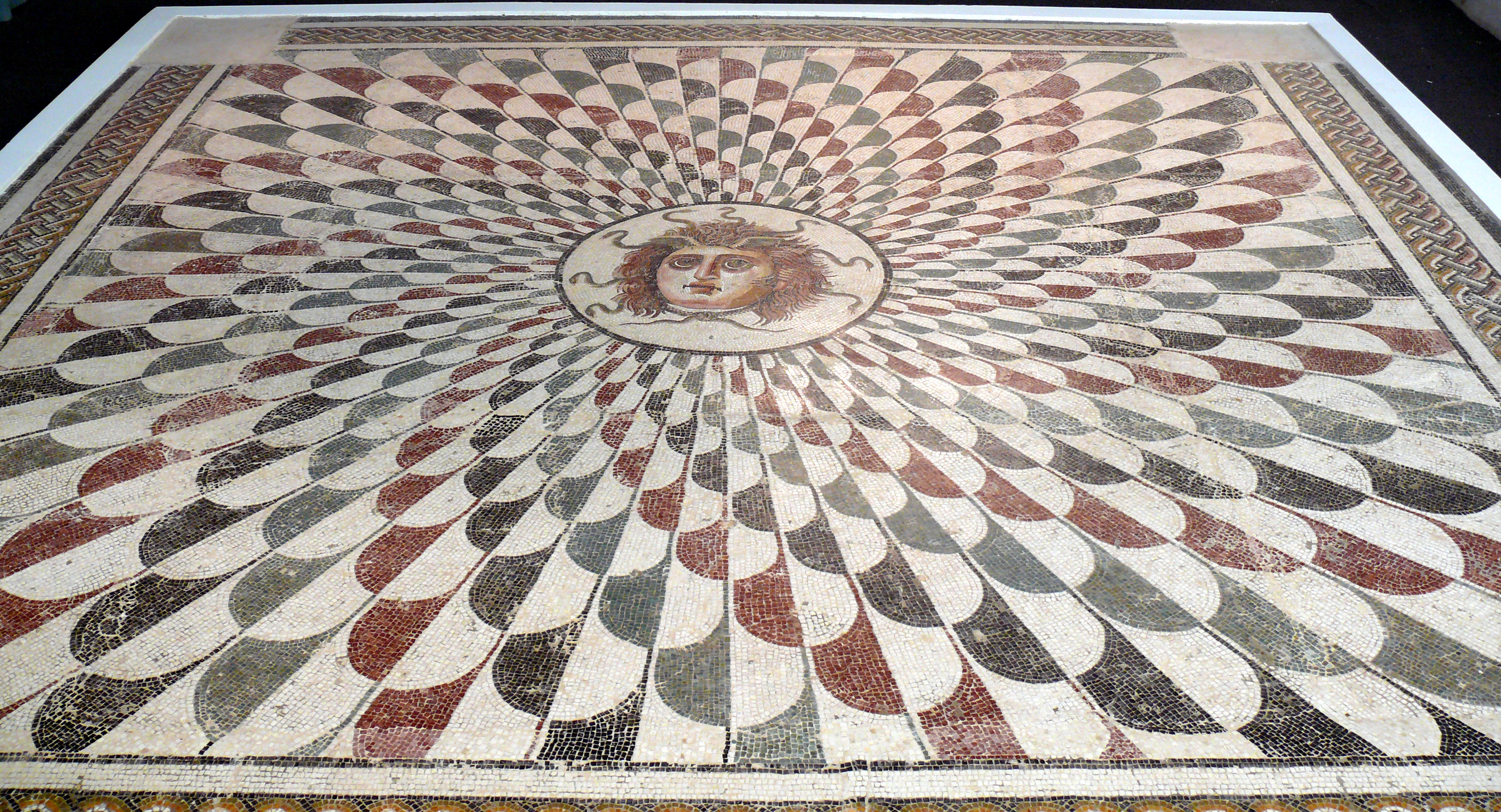
The face of Medusa stares from the floor, her head wreathed in serpents, wings sprouting from her brows. She has been staring since the second century AD, when Roman artisans set her image in tiny colored stones on the floor of a villa in what was then called Hadrumetum. Now she stares from the wall of the Sousse Archaeological Museum, surrounded by Neptune on his sea chariot, the face of Oceanus, and Nilotic landscapes of the distant Nile valley. This museum holds the second largest collection of mosaics in the world.
A Fortress Turned Gallery
The museum occupies the kasbah of Sousse's medina, a fortified hilltop position that was established in the eleventh century AD. It became a museum in 1951, and after a renovation that rearranged the collections and restored the building, it reopened to the public in 2012. The setting matters: these artifacts are displayed within the walls of a medieval Islamic fortress, itself built atop layers of Roman and Carthaginian construction. The building and its contents form a single continuous archaeological statement about the accumulation of power on this particular stretch of coastline. Only the Bardo National Museum in Tunis holds a larger collection of mosaics.
Before Rome, Before Carthage
The museum's oldest objects predate the Roman mosaics by centuries. Punic votive stelae and funerary urns date from as early as the seventh century BC, when Hadrumetum was a Phoenician colony trading across the Mediterranean. French archaeologist Pierre Cintas discovered additional artifacts from the same era in the Tophet of Sousse and in the Sanctuary of Baal Hammon, including objects that illuminate the religious practices of the Carthaginian world. Greek pottery, oil lamps, and marble funerary epitaphs inscribed in both Greek and Latin were found in Punic tombs at El-Kasabah, evidence that Hadrumetum was a cosmopolitan port where Greek goods and ideas circulated freely alongside Phoenician traditions.
The Good Shepherd Underground
Among the museum's most striking objects is a marble tablet from Sousse's Roman-era catacombs, the Catacomb of the Good Shepherd. The tablet is engraved with the figure of a shepherd carrying a sheep on his shoulders, a Christian image illustrating Jesus's words from the Gospel of John. Sousse has two complexes of Christian catacombs dating to the Roman period, the Catacomb of Hermes and the Catacomb of the Good Shepherd. The funerary artifacts recovered from these tunnels reveal a thriving Christian community beneath a city that was officially pagan, then Christian, then Muslim. A Byzantine baptismal font from the nearby town of Bekalta, covered in colorful mosaics, extends the story into the period when North African Christianity was giving way to Islam.
Emperors and Gladiators in Stone
The Roman collection includes a marble bust of Emperor Hadrian and a statue of Priapus, the god of fertility, displayed with characteristically Roman frankness. The Magerius Mosaic, discovered in the nearby village of Smirat, depicts a wild beast hunt in an amphitheatre complete with lengthy written explanations of the action, essentially a Roman infographic in stone. A second-century mosaic of the Gorgon shows her with wings on her brows, her head circled by snakes, an image of menace frozen in tesserae that have survived nearly two millennia. Taken together, the collection traces the full arc of civilization on this coast, from Phoenician seafarers making offerings to Baal Hammon to Roman elites commissioning portraits of their favorite gladiatorial spectacles.
From the Air
Located at 35.822N, 10.635E within the medina of Sousse, on Tunisia's central-eastern coast. The museum occupies the kasbah, the highest point in the medina, visible from the air as a fortified compound. Nearest airport: Monastir Habib Bourguiba International (DTMB), approximately 20 km south. The medina walls and the adjacent Ribat of Sousse are clear landmarks. Recommended viewing altitude: 2,000-4,000 feet AGL.