South Bend, Washington
On the morning of February 5, 1893, a party of men from South Bend crossed Willapa Bay by steamer, walked into the courthouse at Oysterville, and seized the county records. The auditor protested. The other officials shrugged and stepped aside. By nightfall, the ledgers, seals, and filing cabinets of Pacific County government were stacked in South Bend, and the county seat question was settled for good. It was not the first bold act in this small town's history, and it would not be the last. South Bend had incorporated just three years earlier, riding a railroad boom that promised fortune, and it would spend the next century proving that stubbornness counts for more than size.
A River Bend and a Railroad Bet
The town takes its name from the curve of the Willapa River, where freshwater bends south before emptying into the bay. In 1869, the Riddell brothers -- Valentine and John -- built a sawmill on that bend, and a settlement slowly gathered around it. When the Northern Pacific Railway completed a spur line from Chehalis to South Bend in the early 1890s, the population surged with speculators, merchants, and mill workers who believed the little port would become a major shipping hub. South Bend incorporated on September 27, 1890, full of ambition. But the Panic of 1893 killed the boom almost as fast as the railroad had created it. Development stopped cold. The dreamers moved on. What remained were the oystermen, the fishermen, and the county government that South Bend's audacious raid had secured -- the three anchors that would hold the town together for generations.
The Oyster Capital of the World
Willapa Bay produces roughly one out of every six oysters consumed in the United States, and South Bend sits at the head of the operation. The town claims the title "Oyster Capital of the World" without much argument from competitors, because the numbers back it up: Pacific County supplies about a quarter of the nation's oyster harvest. The industry runs deep in the town's identity. Native oyster beds sustained the Shoalwater Bay tribe and early settlers long before commercial harvesting began. When the native Olympia oysters declined, Eastern oyster plantings arrived in 1899, followed by Japanese Pacific oyster strains in the 1930s. The bay's shallow, nutrient-rich waters proved ideal for cultivation, and oystering outlasted every other industry that tried to take root here -- the salmon canneries, the lumber mills, the crab processing plants. They all came and went. The oysters stayed.
A Courthouse Worth Fighting For
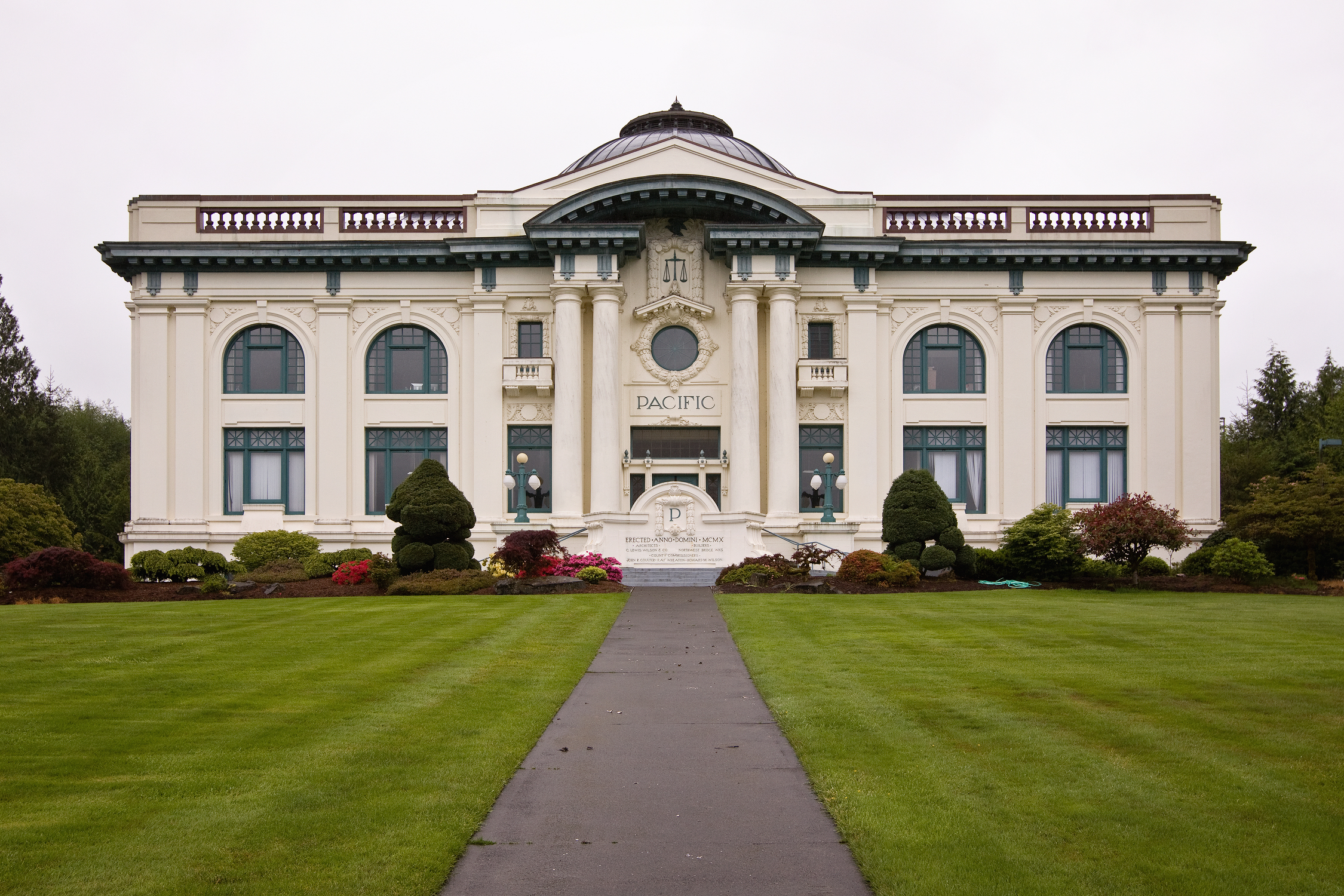
The Pacific County Courthouse that South Bend built after winning the county seat is itself a landmark, listed on the National Register of Historic Places. The ornate building anchors the town's small downtown and carries a darker footnote: it was the site of the first and only execution in Pacific County history, when convicted murderer Lum You was hanged in 1902. The courthouse represented something larger than justice or administration. For a town that had watched its railroad boom collapse, keeping the county seat meant survival. Government payroll, court proceedings, and the steady traffic of county business gave South Bend an economic floor that pure resource towns lacked. When the salmon canneries closed and manufacturers left in the 1930s, the courthouse kept the lights on.
Small Town, Outsized Characters
For a city of fewer than 1,800 people, South Bend has produced an improbable roster of talent. Pat Paulsen, born here in 1927, became one of America's best-known political satirists through his appearances on The Smothers Brothers Comedy Hour and his deadpan mock presidential campaigns that ran from 1968 through 1996. Helen Kleeb, born in South Bend in 1907, spent a decade playing Miss Mamie Baldwin on The Waltons, becoming one of television's most recognizable character actresses. Neither performer made a career of their hometown, but both carried the sensibility of a place where humor and resilience are survival skills. South Bend's population has hovered between 1,600 and 1,800 for decades, the kind of stability that reads as either stagnation or contentment depending on who you ask. The oyster beds still produce. The courthouse still stands. The river still bends.
From the Air
South Bend sits at the head of Willapa Bay at 46.66N, 123.80W, where the Willapa River curves south into the estuary. From altitude, look for the distinctive bend in the river and the small grid of streets clustered along its south bank. The town is dwarfed by the vast tidal flats of Willapa Bay stretching west and south. Recommended viewing altitude: 3,000-5,000 feet AGL. Nearest airports: Willapa Harbor Airport (W41) approximately 15nm northwest near Raymond, Bowerman Airport (KHQM) in Hoquiam approximately 30nm north. The extensive oyster beds visible at low tide across Willapa Bay are a distinctive feature from the air.