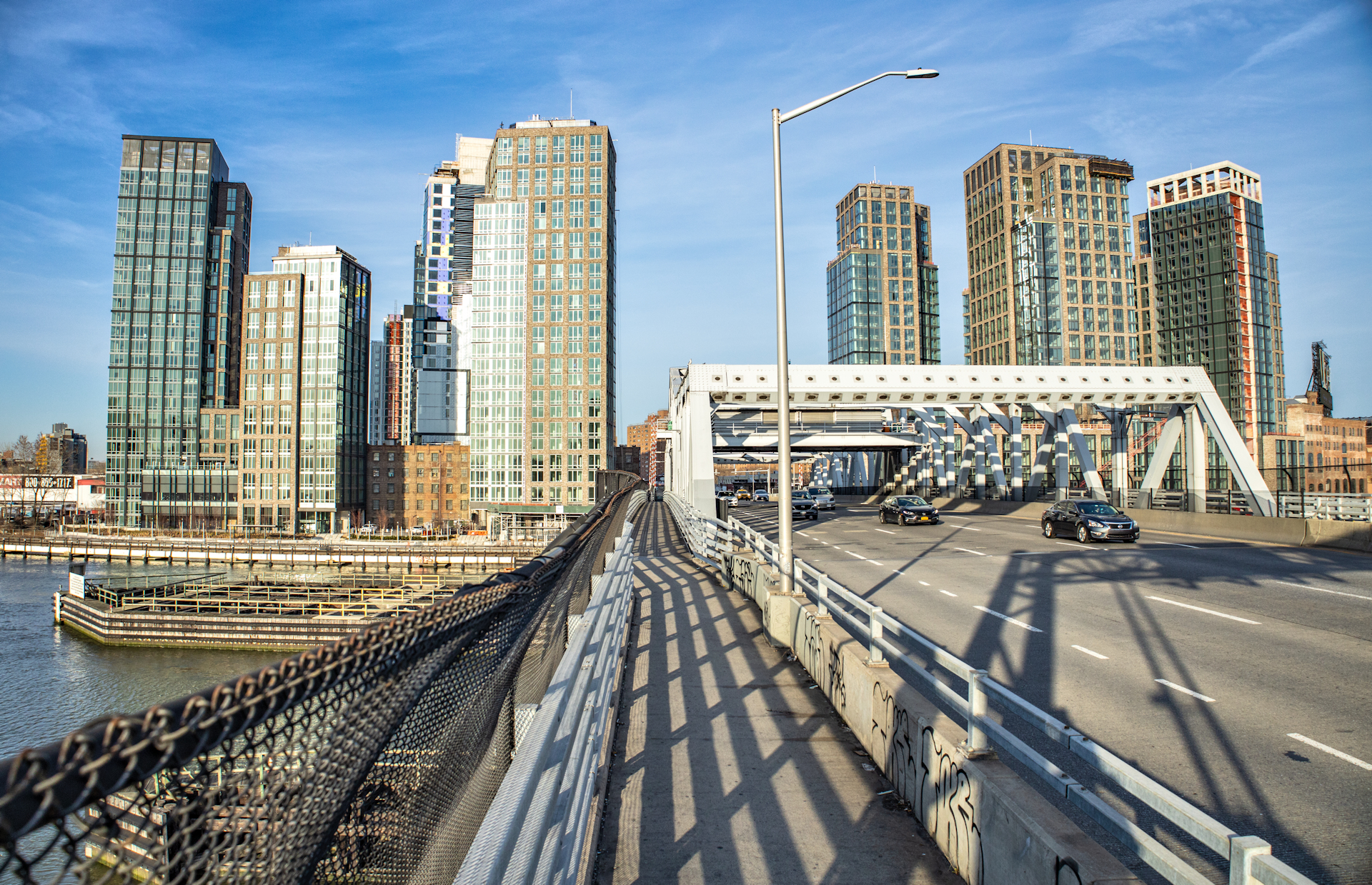
South Bronx
On the evening of October 12, 1977, as the New York Yankees played the Los Angeles Dodgers in the World Series at Yankee Stadium, ABC cameras panned to a building burning across the street. Howard Cosell's commentary -- "There it is, ladies and gentlemen, the Bronx is burning" -- became the epitaph for a neighborhood in crisis. But the South Bronx had been burning long before the cameras arrived, and what was being born in its streets during those same years would reshape global popular culture in ways that no one standing in the rubble could have predicted.
From Morris Manor to the Jewish Borough
The South Bronx was once the private domain of the Morris family -- Lewis Morris, a signer of the Declaration of Independence, and Gouverneur Morris, who penned the United States Constitution. Their memorial still stands at St. Ann's Church of Morrisania, and their descendants own land in the South Bronx to this day. As the Morrises developed their holdings, waves of German and Irish immigrants filled the streets. By 1930, nearly half the Bronx's population was Jewish -- 364,000 people in the South Bronx alone, 57 percent of the local population. The term 'South Bronx' itself was coined in the 1940s by social workers who identified the borough's first pocket of poverty in Port Morris, its southernmost section.
The Unraveling
After World War II, white flight accelerated and migration of African Americans from the South and Puerto Ricans from the Caribbean transformed the demographics. The South Bronx went from two-thirds non-Hispanic white in 1950 to two-thirds Black or Puerto Rican by 1960. The construction of the Cross Bronx Expressway, championed by Robert Moses, sliced through stable working-class neighborhoods and displaced thousands of families. Landlords found they could not profit from rent-controlled buildings in declining neighborhoods and began abandoning their properties. Redlining ensured that neighborhoods transitioning to Black and Hispanic residents could not secure the investment needed to maintain their housing stock. By the late 1960s, the South Bronx had the highest vacancy rate in the city, and the welfare system was consolidating its most vulnerable households into buildings already in decay.
When Burning Became Strategy
The fires of the 1970s were not all accidental. Landlords stripped their buildings and torched them for the insurance payoff. Tenants in substandard Section 8 housing discovered that being burned out earned them priority placement on waiting lists for better apartments. When the state-of-the-art Co-op City opened, fires spiked as residents tried to jump to the front of its two-to-three-year queue. Dozens of buildings burned every day, sometimes entire blocks at once. Firefighters from the era reported responding to as many as seven fully involved structure fires in a single shift, too many to even return to the firehouse between calls. Three years after Cosell's broadcast, presidential candidate Ronald Reagan stood on Charlotte Street and said he had not "seen anything that looked like this since London after the Blitz."
1520 Sedgwick Avenue
On August 11, 1973, in the recreation room of an apartment building at 1520 Sedgwick Avenue in Morris Heights, a Jamaican-born teenager named DJ Kool Herc threw a back-to-school party for his sister. Working two turntables, he isolated and extended the percussive breaks in funk and soul records -- a technique drawn from Jamaican dub music -- while talking over the beats in a style that would become rapping. The New York Times has called 1520 Sedgwick Avenue "the accepted birthplace of hip hop." Herc himself put it more directly: "1520 Sedgwick is the Bethlehem of Hip-Hop culture." From those South Bronx block parties, hip-hop spread through the subway system via graffiti, through the parks via breakdancing, and through the radio waves via DJing and MCing, until it became the dominant cultural force in global popular music.
Ashes and Renaissance
The rebuilding has been real but uneven. Between 1986 and 1994, over one billion dollars was spent on reconstruction, with 19,000 apartments refurbished and more than 4,500 new houses built. Charlotte Street, where Reagan posed amid the rubble, was developed into single-family homes that by 2004 were worth up to a million dollars. A Bronx borough historian sent to find the exact spot where President Carter had surveyed the devastation could no longer locate it -- the landscape had changed that much. Yet as of the 2010 census, the South Bronx remained the poorest congressional district in the United States, a reality reconfirmed in 2024 and 2025. The neighborhood that gave the world hip-hop, graffiti art, and breakdancing, that launched the careers of figures from Sonia Sotomayor to Al Pacino to Jennifer Lopez, still wrestles with the consequences of decades of disinvestment. The Bronx is no longer burning. What it is becoming remains an open question.
From the Air
Located at approximately 40.817N, 73.918W in the southern portion of the Bronx, New York City. The South Bronx is bounded roughly by the Harlem River to the west, the East River to the south, the Bronx River to the east, and the Cross Bronx Expressway (I-95) to the north. Yankee Stadium is a prominent visual landmark near the western edge. The dense urban grid, highway interchanges, and waterfront are visible from cruising altitude. Nearest airports: KLGA (LaGuardia, 3nm east), KJFK (JFK, 12nm southeast), KEWR (Newark, 10nm southwest).