South Kasai
Albert Kalonji stood before the Leopoldville Parliament in the summer of 1960, declared the proposed cabinet "anti-Baluba," and announced his intention to form a sovereign state. Within weeks he had done it. On 9 August 1960, South Kasai proclaimed its secession from the newly independent Republic of the Congo. Unlike its larger neighbor Katanga to the south, South Kasai never formally declared full independence -- it claimed to be an autonomous part of a federal Congo. But it had its own constitution, its own postage stamps, and its own diamond exports to pay for both. Within two years it would also have its own massacres, described by the UN Secretary-General as "a case of incipient genocide."
Old Wounds, New Borders
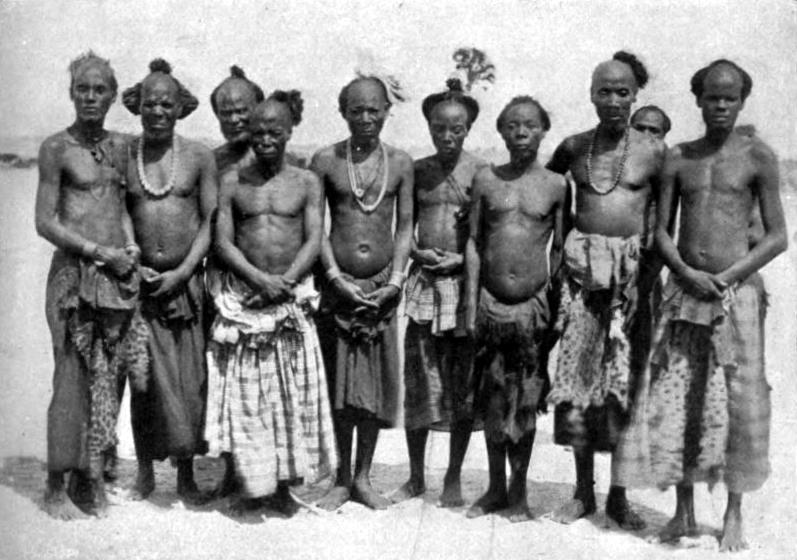
The roots of South Kasai ran deep into colonial-era ethnic engineering. Before European rule, the region formed part of the territory once dominated by the Luba Empire, annexed by the Congo Free State in 1889. Belgian colonial administration reorganized the country into hierarchical subdivisions and imposed a uniform policy that ignored traditional power structures. In the Kasai region, tensions between the Baluba and the Bena Lulua intensified as both groups competed for political influence in the approach to independence. Kalonji, who led a faction of the Mouvement National Congolais, exploited these divisions. When violence against the Baluba erupted across the country after independence, he called for all Luba people to return to their "homeland" in southeastern Kasai and declared the Federated State of South Kasai, centered on the mining town of Bakwanga. Belgium lent support, and diamond exports from the region's rich deposits funded the new government.
The Offensive That Became a Massacre
Prime Minister Patrice Lumumba saw South Kasai as the first obstacle on the road to reclaiming Katanga. The breakaway state controlled critical railway junctions that the Congolese army needed for its southern campaign. When the United Nations refused to help suppress the secession, Lumumba turned to the Soviet Union for logistical support. Within days, 2,000 soldiers of the Armee Nationale Congolaise launched an offensive. Bakwanga fell on 26 August 1960. What followed was not occupation but atrocity. Government troops released Lulua prisoners, requisitioned civilian vehicles, and turned on the Baluba population. When David Odia, the South Kasai Minister of Public Works, protested, soldiers beat him to death. Baluba civilians fled in terror, then began resisting with homemade shotguns. The ANC responded with large-scale massacres. UN Secretary-General Dag Hammarskjold described the violence as incipient genocide -- a term that carried weight from a diplomat known for his restraint.
A Kingdom of Stamps and Diamonds
South Kasai survived the initial assault, largely because the central government's attention shifted elsewhere. Kalonji's regime persisted in a strange twilight -- producing its own stamps and constitution while its leaders simultaneously served in the Congolese parliament. The state became increasingly militarist and repressive. Kalonji styled himself as the champion of Luba identity, but his government depended on diamond revenue and foreign support, particularly from Belgium. The relationship with the central government oscillated between hostility and accommodation. After Lumumba was deposed in late 1960 -- an event that the violence in Kasai had helped legitimize -- South Kasai found itself on relatively good terms with the new Congolese leadership. Kalonji played both sides, maintaining his local power base while engaging with Leopoldville.
The Fall of Kalonji
The arrangement could not last. In December 1961, Kalonji was accused of ordering corporal punishment against a political prisoner. Parliament stripped his immunity, and the army arrested him in Leopoldville. A delegation of 400 Luba tribal elders who traveled to the capital to protest were also briefly detained. In March 1962, parliament granted South Kasai official provincial status -- a compromise that acknowledged the region's distinct identity while binding it back into the Congolese framework. Kalonji was sentenced to five years in prison. In September 1962, he escaped and returned to Bakwanga hoping to regain power through local elections. Instead, his own former allies launched a coup. On the night of 29-30 September, military commanders in South Kasai overthrew the Kalonjist regime. By October 1962, South Kasai was reabsorbed into the Republic of the Congo.
Echoes in Renamed Streets
After the secession ended, Bakwanga was renamed Mbuji-Mayi -- "Goat-Water" in Tshiluba -- as a gesture of Luba reconciliation. Nearly 2,000 loyalist soldiers went into hiding, waging a guerrilla campaign under General Mwanzambala until 1963, when they accepted integration into the national army. Violence among Luba factions persisted through 1964, and a political settlement was not reached until 1965. That same year, Mobutu seized power in a second coup, launching the centralization that would define the Congo for three decades. South Kasai was one of the few provinces retained in his restructuring, later expanded and renamed Eastern Kasai. The diamond deposits that financed Kalonji's state remained the region's defining feature -- and its curse. The brief, bloody experiment of South Kasai demonstrated a pattern that would repeat across post-colonial Africa: mineral wealth financing ethnic separatism, met with disproportionate state violence, resolved through compromises that satisfied no one.
From the Air
Centered on Bakwanga (modern Mbuji-Mayi) at approximately 6.15S, 23.60E. The former South Kasai territory occupied the southeastern portions of the Kasai region in south-central DRC. Mbuji Mayi Airport (ICAO: FZWA) is the primary airfield. From altitude, the city sprawls across flat terrain along the Mbuji-Mayi River. Recommended viewing altitude: 15,000-25,000 ft to appreciate the extent of the former secessionist state. The region has limited infrastructure visible from the air outside the city itself.