South Pacific Coast Railroad
In 1857, a stagecoach ticket from San Francisco to Santa Cruz cost $13, took two full days, and demanded overnight lodging along the way. By 1880, the journey took just a few hours and cost $6 round trip. The difference was a narrow-gauge railroad built with Comstock Lode silver money, Chinese labor, and the ambitions of strawberry farmers who refused to let the Southern Pacific monopoly dictate their fate.
Silver Baron's Gamble
The South Pacific Coast Railroad began as the Santa Clara Valley Railroad, founded by local strawberry growers desperate for an alternative to the Southern Pacific's stranglehold on Bay Area shipping. In 1876, James Graham Fair, a silver baron who had struck it rich in Nevada's Comstock Lode, bought the fledgling line and saw something bigger than strawberries. Fair extended the railroad into the Santa Cruz Mountains to capture the lumber traffic flowing from the coastal redwood forests. The narrow-gauge tracks, just three feet apart, were laid on redwood ties cut from those same forests. Railway shops rose in Newark, and by 1877 the ferry Newark was shuttling passengers from the East Bay to San Francisco. The line grew rapidly: San Jose in 1876, Los Gatos in 1878, and finally Santa Cruz in 1880.
Eight Tunnels Through the Mountains
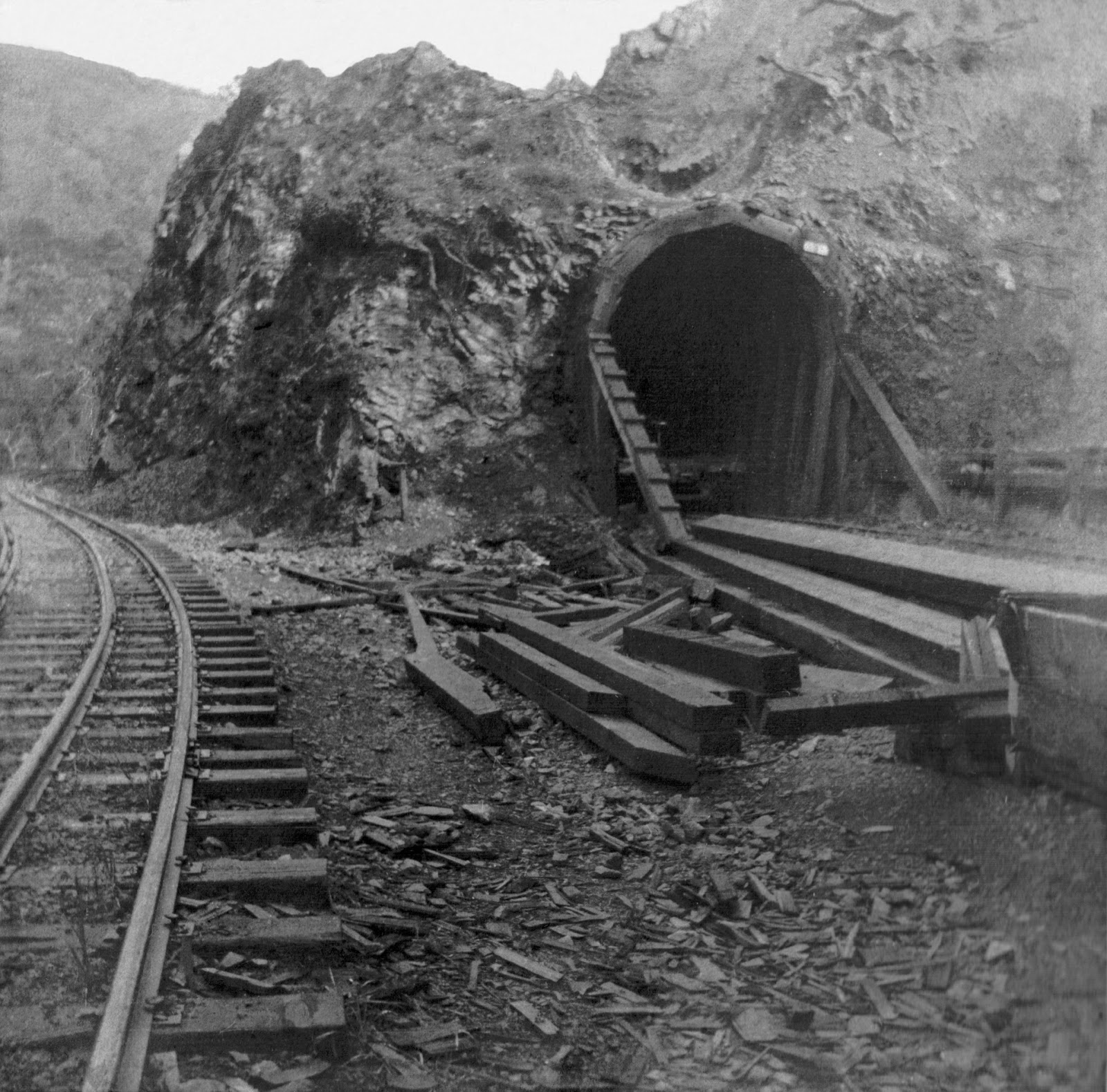
Reaching Santa Cruz meant punching through the Santa Cruz Mountains, and that required two years of construction and eight tunnels. Chinese workers under contractor O.B. Castle began drilling the Summit Tunnel in 1877, carving through rock to connect the Bay Area with California's third busiest seaport. The route proved transformative for the region. Freight trains carried redwood lumber, mercury from the New Almaden mine, sacked lime, and gunpowder from the California Powder Works. Excursion trains brought San Francisco day-trippers to the mountain resorts. Commuter trains fed the ferry terminals from East Bay communities. By 1887, the South Pacific Coast had become significant enough that Southern Pacific paid six million dollars to acquire it.
When the Earth Moved
The 1906 San Francisco earthquake struck the railroad where it was most vulnerable. The Summit Tunnel crossed directly over the San Andreas Fault, and the quake shifted the tunnel laterally, requiring it to be completely re-excavated. The bridge across San Leandro Bay was damaged beyond repair and abandoned. Southern Pacific had been converting the line from narrow gauge to standard gauge, but the earthquake interrupted the work. The conversion was not completed until 1909. Of the original eight tunnels, only two survive intact today: the Zayante and Mission Hill tunnels. The Mission Hill tunnel still carries rail traffic as part of the Santa Cruz, Big Trees and Pacific Railway, a tourist line that also hauls lumber through the mountains.
Ferries and Fog
The railroad's ferries led eventful lives on San Francisco Bay. The Bay City survived a 1906 collision with a lumber schooner, lost a rudder in 1911, broke its main shaft in 1912, and was rammed by the ferry Melrose in fog in 1913. She served until 1929 before being scrapped. The Garden City met a more dramatic fate. On Christmas morning 1921, she attempted an eastbound crossing during a full gale. After steaming into the wind for 90 minutes on what was normally an 18-minute trip, her rudder broke. The ferry drifted into the Key System pier as passengers crawled to safety through waves breaking 20 feet high. After her final run in 1929, she was moored as a fishing resort in Eckley. Today, her remains are visible from the Eckley fishing pier at Carquinez Strait Regional Shoreline Park.
Living Remnants
The South Pacific Coast Railroad's legacy persists across the Bay Area. The north-south line from Oakland to San Jose carries Union Pacific freight trains and Amtrak passengers on the Coast Starlight. The Altamont Corridor Express commuter service runs on former SPC tracks. In Los Gatos, the Los Gatos Creek Trail follows the old railroad right-of-way from Lexington Reservoir into downtown. The Agnew Depot, once a stop for trains heading to the state hospital, was purchased by the California Central Model Railroad Club in 1963. San Jose's Diridon Station occupies the site of the original South Pacific Coast station. The VTA's Green Line light rail shares the old right-of-way from Campbell to downtown San Jose, modern electric trains following the path where narrow-gauge steam locomotives once hauled strawberries and lumber to the ferries.
From the Air
Located at 37.107N, 122.004W in the Santa Cruz Mountains. The old railroad route is visible as a linear clearing through the redwood forest between Los Gatos and Santa Cruz. Look for the Lexington Reservoir as a landmark. Nearby airports include San Jose International (KSJC) 15nm northeast and Watsonville Municipal (KWVI) 18nm south. The terrain rises sharply through this area with peaks exceeding 3,000 feet.