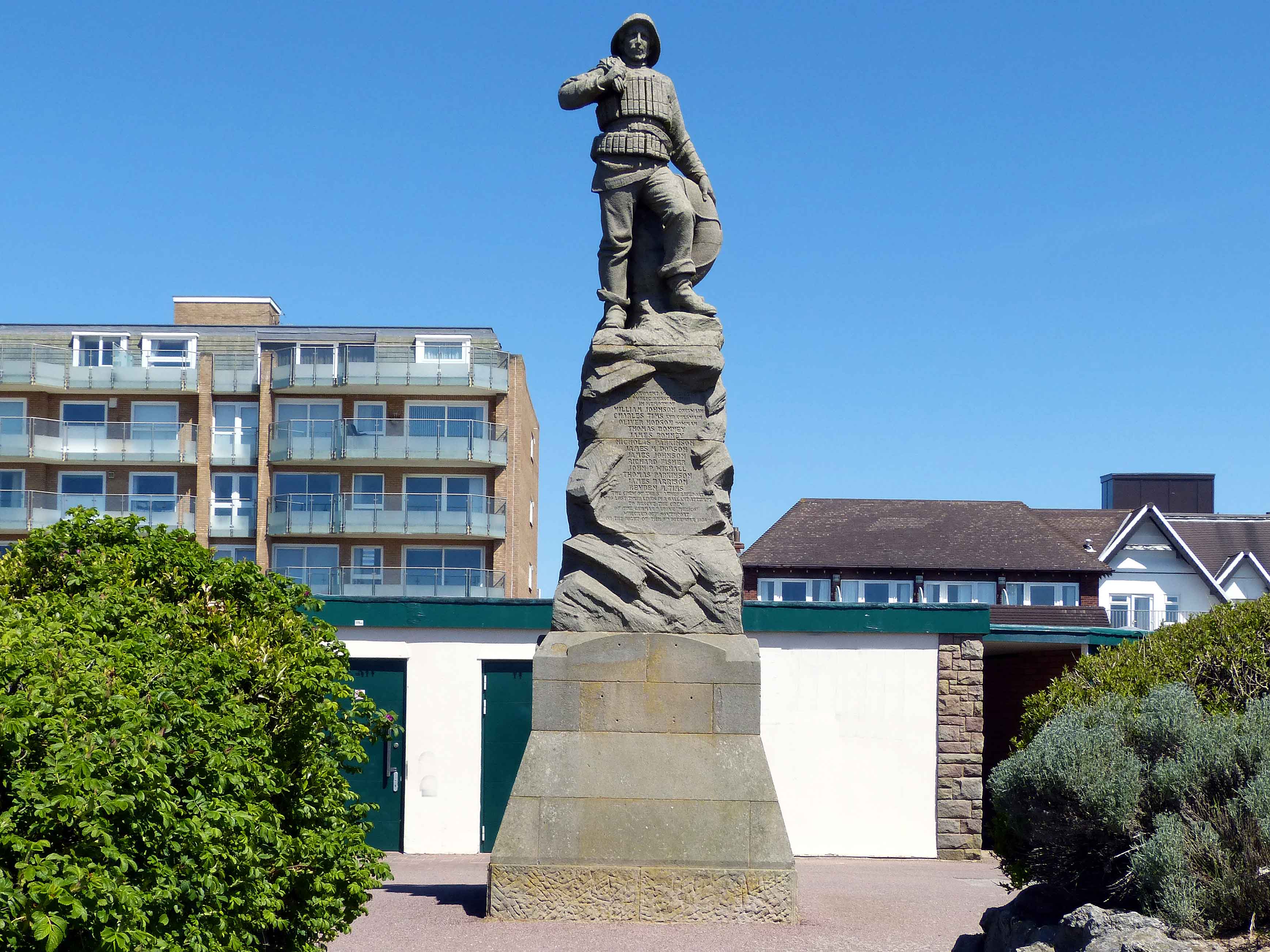
Southport and St Anne's Lifeboats Disaster
At quarter past eleven on the morning of 10 December 1886, the lifeboat Laura Janet was found ashore, bottom up. Three dead men hung from the thwarts with their heads downward. Every member of her thirteen-man crew was lost. Fifteen minutes before Laura Janet had launched from St Anne's, the Southport lifeboat Eliza Fernley had capsized in the same seas; fourteen of her sixteen crew drowned. Together, 27 lifeboatmen -- all of them fishermen by trade, husbands and fathers -- died trying to reach the crew of the Mexico, a Hamburg-registered barque that had run aground near Southport in a full westerly gale. The twelve German sailors aboard Mexico were eventually rescued by a third boat, the Lytham lifeboat Charles Biggs, on her maiden voyage.
Into the Gale
The Mexico had been bound from Liverpool to Guayaquil when the storm drove her onto the sandbanks near Southport on the evening of 9 December 1886. Distress signals brought the Eliza Fernley out from Southport. Her crew rowed into heavy seas, reached the Mexico, and were struck by a wave that capsized the boat. Two hours later, the upturned hull was found three miles away at Birkdale. The two survivors, Henry Robinson and John Jackson, had been trapped beneath the overturned boat, freed themselves, swum out, and clung to the keel before walking miles home to raise the alarm. One of them had tried to pull other crewmen from under the hull and failed. Four others initially survived the capsize but could not be saved.
Laura Janet -- Every Man Lost
Between fifteen and twenty minutes after the Southport boat launched, the St Anne's lifeboat Laura Janet was also called out. Her crew rowed five hundred yards, hoisted sail, and headed two miles offshore. What happened next was never established. Two red lights were seen from Southport -- possibly distress signals from the lifeboat. Then silence. Patrick Howarth, the RNLI historian, wrote: 'All that is known is that at quarter past eleven the next morning the life-boat was found ashore, bottom up, with three dead bodies hanging on the thwarts with their heads downwards. Every man in the crew was lost.' Thirteen men, gone into the dark Irish Sea with no witness to their final moments.
The Maiden Rescue
While two crews perished, a third completed one of the most remarkable rescues in lifeboat history. The Lytham lifeboat Charles Biggs -- never before deployed on a rescue -- rowed a mile and a half through the River Ribble, then out to the Mexico. By that time the barque had settled on her beam ends, and her crew had lashed themselves to the rigging. The Lytham men rowed alongside, shattered three oars in the process, and were swamped with water repeatedly, but pulled all twelve German sailors to safety. It was a triumph born of the same courage that had killed 27 of their fellow lifeboatmen that night.
Sixteen Widows, Fifty Orphans
The bodies of the drowned were laid out in the coaching house of the Birkdale Palace Hotel. That building later became a pub called The Fishermen's Rest, and is said to be haunted. The disaster -- the worst in the history of the Royal National Lifeboat Institution -- left sixteen widows and fifty fatherless children. Queen Victoria and Kaiser Wilhelm I both sent condolences. A public fund raised 30,000 pounds, an enormous sum for the era. Memorials went up on the promenade at St Anne's, in Southport Cemetery, and in the churchyard of St Cuthbert's Church in Lytham. Sir Charles Macara's organization of street collections in Manchester in 1891, inspired by the disaster, led to the creation of the first flag days -- a form of charitable fundraising that endures. In 1925, the RNLI withdrew its service from Southport, but local families eventually raised funds to establish an independent rescue trust, ensuring the tradition of service begun by the men of the Eliza Fernley would not die with them.
From the Air
The disaster site is in the waters off Southport and St Anne's-on-the-Sea, Lancashire, at approximately 53.65N, 3.02W. The broad sandy coastline and Ribble estuary are visible from altitude. The lifeboat memorial statue stands on the promenade at St Anne's. Nearest airports: Blackpool (EGNH, 5nm north) and Liverpool John Lennon (EGGP, 25nm south). The extensive sandbanks that caused the Mexico to ground are still visible at low tide.