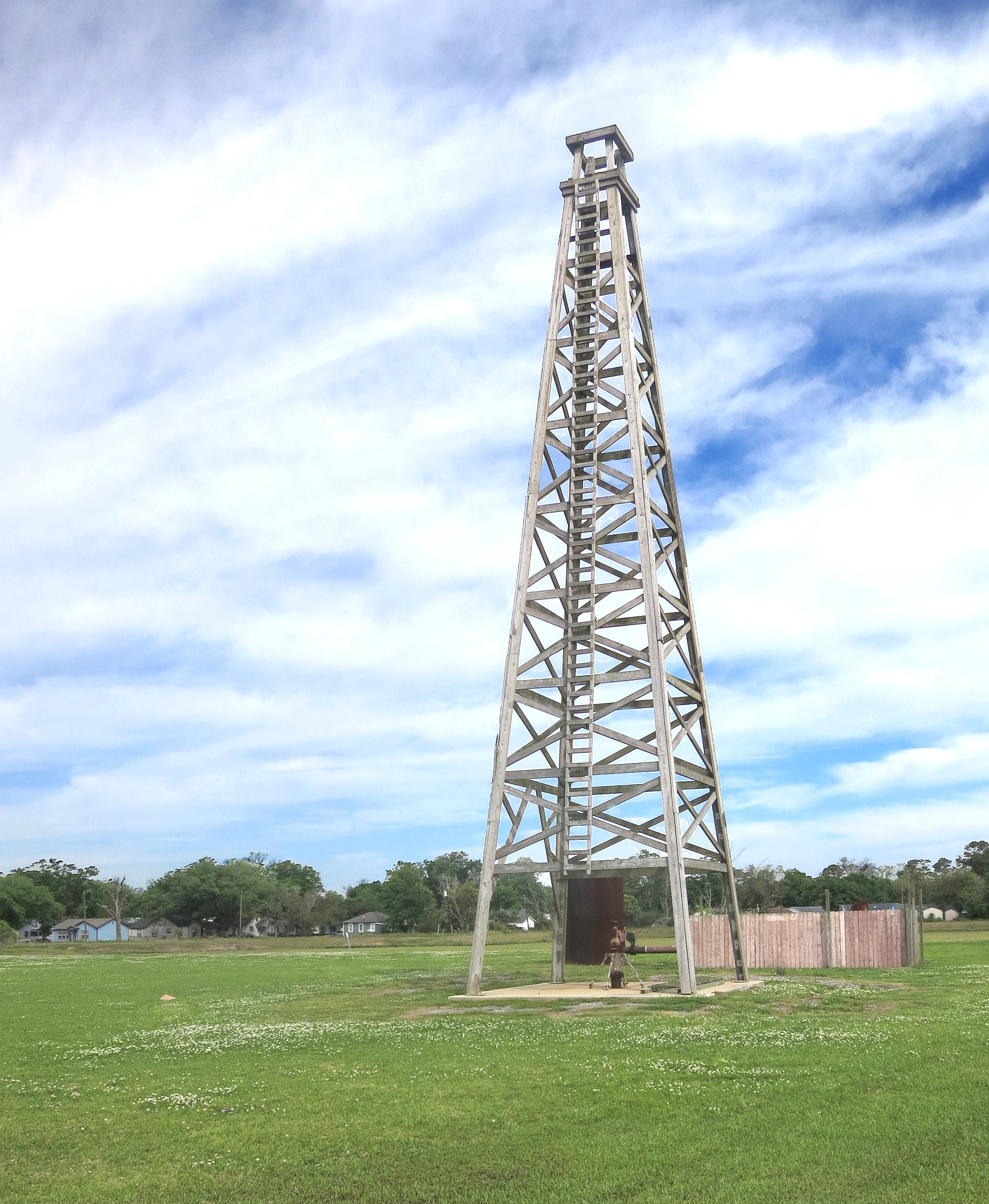
Spindletop
At 10:30 AM on January 10, 1901, drilling at a salt dome called Spindletop, south of Beaumont, Texas, struck oil. The well didn't merely produce oil - it exploded. A geyser of petroleum shot 150 feet into the air and flowed uncontrolled for nine days, producing an estimated 100,000 barrels per day - more oil than all other American wells combined. The Lucas Gusher, as it became known, announced that Texas held oil in quantities previously unimaginable. Within a year, hundreds of wells covered Spindletop. Beaumont's population tripled. Oil companies that would become Texaco, Gulf, and Humble (later Exxon) were founded in the rush. Spindletop didn't just create the Texas oil industry - it made petroleum cheap enough to power the twentieth century. The automobile age, plastics, aviation fuel, petrochemicals - the modern world began when mud and oil shot into the Texas sky.
The Discovery
Patillo Higgins, a one-armed businessman, believed oil lay beneath a salt dome south of Beaumont. Geologists dismissed him - salt domes weren't supposed to contain oil. But Higgins persisted, forming companies and seeking investors until he found Anthony Lucas, an Austrian mining engineer. Lucas drilled where others wouldn't, using rotary drilling techniques that could penetrate the unstable sand. On January 10, 1901, at about 1,000 feet deep, mud shot out of the hole. The drill pipe followed. Then came the oil - a massive geyser that took nine days to cap. The well produced more oil in one day than all the rest of Texas combined. The world's understanding of petroleum reserves changed overnight.
The Boom
Word of Spindletop spread instantly. Within months, Beaumont's population exploded from 9,000 to 50,000. Land that had sold for dollars an acre now went for hundreds of thousands. Derricks covered Spindletop in a forest of wood and metal - over 600 wells by 1902. Boomtowns sprouted: Gladys City, named after Higgins's niece, became a notorious collection of saloons, gambling houses, and brothels. Fortunes were made and lost daily. The chaos was extraordinary - wells drilled so close together that production declined rapidly, and by 1903 the field was nearly depleted. But by then, oil had been found across Texas, and the industry had moved on to new fields.
The Companies
Spindletop created the modern oil industry. The Texas Company (Texaco) was founded in Beaumont in 1902. Gulf Oil began as a Spindletop venture. Humble Oil and Refining, later absorbed into Exxon, traced its origins to the boom. These companies would dominate global petroleum for decades. Standard Oil, the monopoly that controlled American oil, couldn't absorb Spindletop's production fast enough. New competitors flourished. The price of oil dropped from over a dollar a barrel to three cents - petroleum became cheap enough to replace coal as the industrial world's primary fuel. The automobile industry, still in infancy, suddenly had affordable fuel. Gasoline engines became practical. The twentieth century's transportation revolution began.
The Legacy
Spindletop produced an estimated 17 million barrels before its initial flush played out. A second boom in the 1920s, using deeper drilling techniques, added millions more. The field remained productive into the 1980s. But Spindletop's true legacy was what it unleashed: the Texas oil industry that made Houston a world city, the cheap petroleum that fueled American mobility, the petrochemical industry that transformed manufacturing. The gusher demonstrated that oil existed in quantities that could power industrial civilization. The environmental and geopolitical consequences of that discovery - climate change, Middle Eastern conflicts, suburban sprawl - continue to unfold. Spindletop didn't just find oil; it found the fuel that shaped the modern world.
Visiting Spindletop
The Spindletop-Gladys City Boomtown Museum is located at Lamar University in Beaumont, Texas. The museum recreates the 1901 boomtown with fifteen replica buildings, including an oil derrick, saloon, blacksmith shop, and general store. A working replica gusher demonstrates the Lucas Gusher's scale (though using water rather than oil). The original Spindletop site, a few miles south, is now an industrial area with a monument marking the Lucas Gusher's location. The Texas Energy Museum in downtown Beaumont explores the broader history of the oil industry. Beaumont is accessible from Houston (85 miles west) via Interstate 10. Jack Brooks Regional Airport (BPT) provides local air service; Houston's George Bush Intercontinental (IAH) offers more connections. The experience connects Texas's oil wealth to a specific moment when the ground opened and changed everything.
From the Air
Located at 30.02°N, 94.06°W in Beaumont, Texas, about 85 miles east of Houston on the Gulf Coastal Plain. From altitude, the Spindletop area appears as industrial and suburban development - refineries, tank farms, and the sprawl of greater Beaumont. The salt dome that held the oil is not visible but underlies the landscape. The Gulf of Mexico is 25 miles to the south.