Spiro Mounds
Between 800 and 1450 CE, Spiro was one of the most important ceremonial centers in prehistoric North America. The mounds along the Arkansas River in eastern Oklahoma connected a trading network that stretched from the Great Lakes to the Gulf of Mexico. Thousands of people lived here, or came for ceremonies, or were buried in elaborately stocked graves. Then, in 1933, a group of local men leased the land and began mining the mounds for artifacts to sell to collectors. For six years, they dug, sifted, and dynamited - destroying archaeological context while extracting thousands of objects. The looting of Spiro was so catastrophic that it led directly to Oklahoma's first antiquities protection law. What remains tells us tantalizing fragments of what was lost.
The Civilization
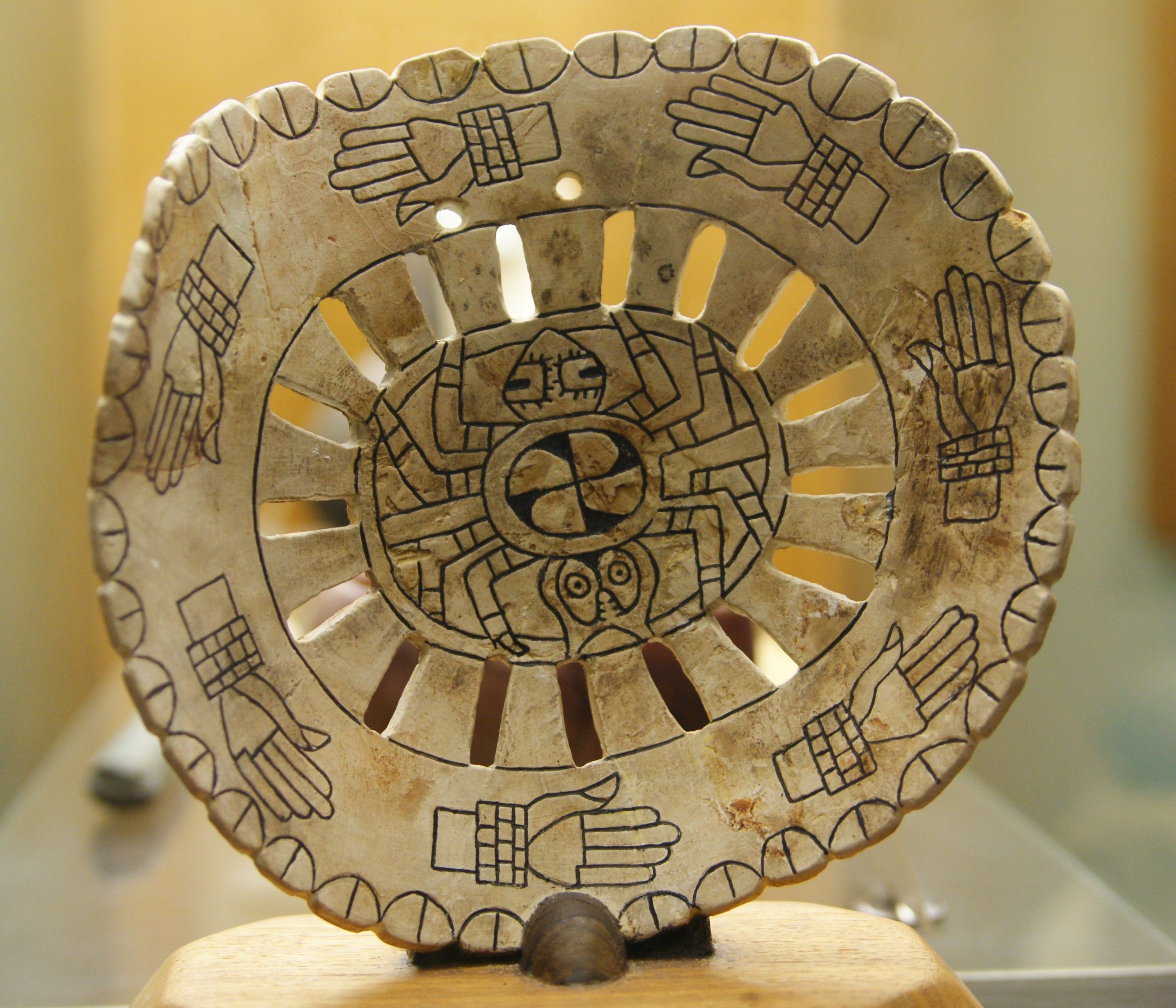
Spiro was the westernmost major site of the Mississippian culture, the mound-building civilization that dominated eastern North America from about 800 to 1500 CE. While Cahokia near St. Louis was larger, Spiro's location made it a crucial node in long-distance trade networks. Objects found here came from hundreds of miles away: copper from the Great Lakes, shells from the Gulf, obsidian from the Rockies. The ceremonial objects were among the finest produced anywhere in pre-Columbian North America - engraved shells depicting mythological scenes, copper plates, elaborate effigy pipes. Spiro was a place of power, and its elite were buried with the proof.
The Looting
By 1933, the mounds had been abandoned for 500 years, remembered only as mysterious hills on the Craig farm. A group of local men calling themselves the 'Pocola Mining Company' leased digging rights from the landowner for $15. They were treasure hunters, not archaeologists. They tunneled into the mounds, found burials loaded with grave goods, and began selling artifacts to collectors and dealers. When they reached the Craig Mound - the largest and most important - they found the chamber so packed with objects they could barely move. Unable to extract items carefully, they used dynamite to open the chamber. The explosion scattered irreplaceable artifacts.
The Destruction
The damage went beyond the physical. Archaeological context - the position of objects relative to each other, their association with specific burials, the stratigraphy of the mound - was obliterated. Objects that could have told stories about Spiro's society, religion, and connections became rootless curiosities in private collections. When word spread about the richness of the finds, the looters worked faster, selling objects by the truckload. Archaeologists who visited were horrified but powerless. The mining continued until 1935, when public outcry finally led the Oklahoma legislature to pass the state's first antiquities protection law and shut down the operation.
The Recovery
After the looters were expelled, archaeologists spent decades trying to salvage what they could. They excavated the damaged mounds, recorded what remained, and traced artifacts that had been sold. Objects from Spiro are now scattered across museums worldwide. Some collectors donated their holdings; others kept them hidden. The site itself was preserved, eventually becoming Spiro Mounds Archaeological Center in 1978. But the loss is incalculable. We know Spiro was important; we'll never know exactly how important. The looting destroyed the answers to questions we haven't yet learned to ask.
Visiting Spiro Mounds
Spiro Mounds Archaeological Center is located off Highway 9, about 7 miles north of Spiro, Oklahoma. The visitor center features exhibits on Mississippian culture and the looting's impact. Walking trails lead to 12 mounds; the Craig Mound, scene of the worst destruction, is visible. Replicas of key artifacts are displayed, as the originals are scattered in collections. The site offers interpretive programs and special events. The Spiro community holds an annual 'Indian Day' celebration. Fort Smith Regional Airport in Arkansas is 30 miles east; Tulsa International is 120 miles north. The site is open year-round but hours vary; check ahead.
From the Air
Located at 35.24°N, 94.62°W in Le Flore County, Oklahoma, along the Arkansas River valley. From altitude, Spiro Mounds appears as a cluster of grass-covered mounds in a rural agricultural landscape. The Craig Mound, the largest, is visible as a significant earthwork. The Arkansas River flows nearby. The terrain is transitional between the Ozark foothills and the Oklahoma plains. Fort Smith, Arkansas, is 30 miles east. The mound complex is modest compared to Cahokia but represents the westernmost extension of Mississippian culture.