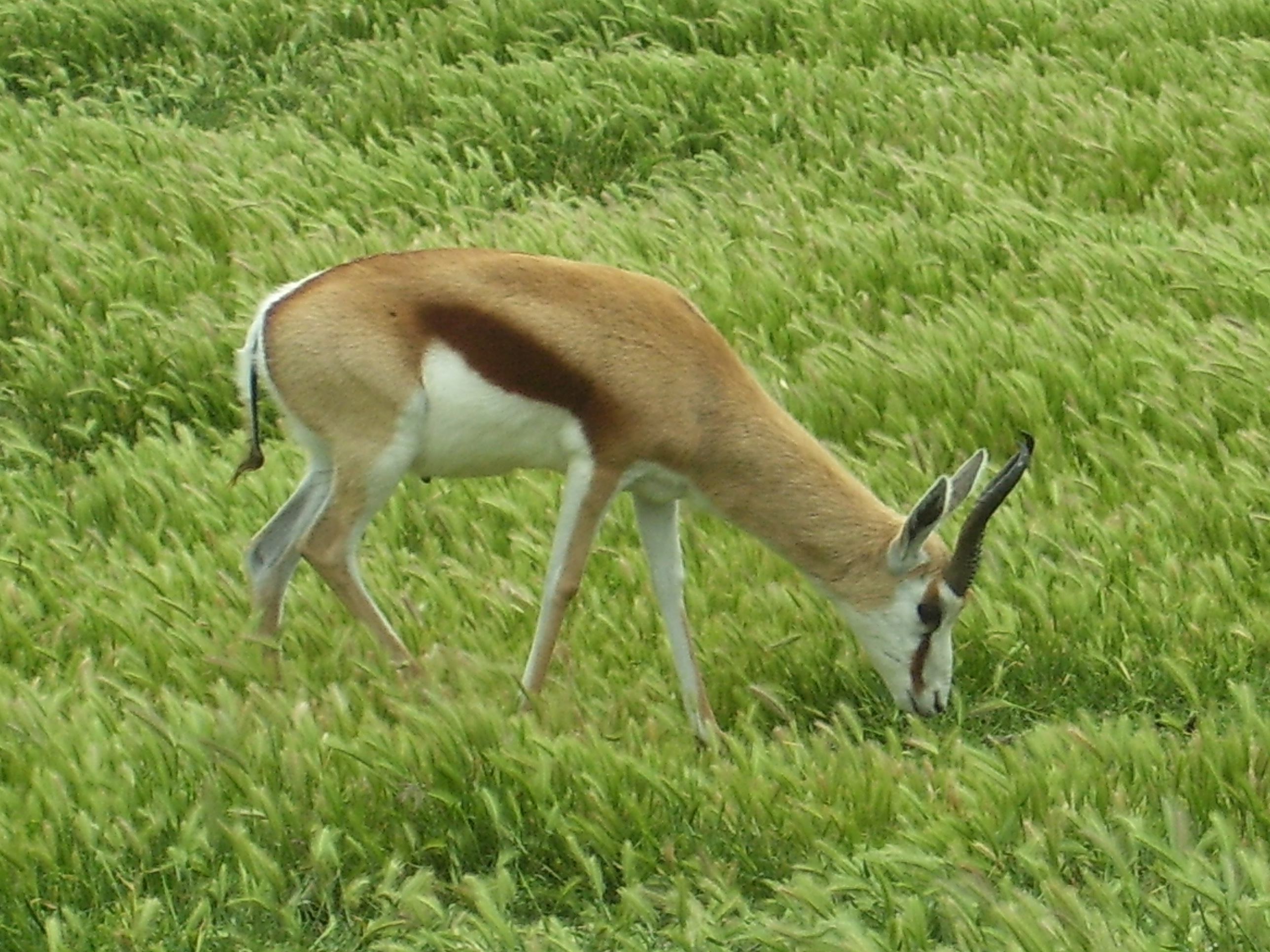
Springbok
Almost half the plant species around Springbok are found nowhere else on earth. This is a remarkable statistic for any location, but it is especially striking for a town that, at first glance, appears to offer little beyond dust and harsh sunlight. Springbok sits in an arid valley in South Africa's Northern Cape, the biggest settlement in Namaqualand with a population of about 13,000, and it has a way of surprising people who assume the desert has nothing to show them.
Copper, Diamonds, and Blue Earth
Walk through Springbok's center and you will find a hill called Klipkoppie, where a British fortress once stood before Boer commandos under General Jan Smuts burned it down during the Second Boer War. A short distance along Monument Street, the town museum occupies a converted synagogue -- a remnant of the diverse community that mining once attracted. Beyond that lies the entrance to the Blue Mine, South Africa's first commercial copper mine, which began operations in 1852. The mine's legacy is visible in the landscape itself: copper reacting with oxygen in the air gives the surrounding earth a distinctive blue tinge. Today the area produces diamonds and other gems, but it is that blue discoloration, subtle and otherworldly, that stays with visitors long after they leave.
The Quiver Tree's Town
The streets of Springbok lead off from the central koppie, which has been turned into a showcase for Namaqualand's extraordinary flora. The kokerboom, or quiver tree, stands out among the displays -- an almost leafless succulent tree whose hollowed branches were traditionally used by San people to hold their arrows. Springbok endures low humidity, minimal soil moisture, and severe sunshine throughout the year. These conditions, generally hostile to plant life, have instead produced extraordinary diversity. Drought-resistant succulents have adapted in countless ways to survive, and the result is a concentration of endemic species that rivals far wetter, more temperate environments. When winter rain arrives, the transformation is dramatic: the scrubland around town explodes into color from thousands of dormant flowers, a spectacle that draws visitors from across South Africa and beyond.
Gateway Between Nations
Springbok has always been a place people pass through. It sits on the N7, roughly 562 kilometers north of Cape Town and 100 kilometers south of the Namibian border, making it the natural stopover for anyone traveling between the two countries. The N14 crosses the N7 just outside town, offering connections east to Upington and beyond to Gauteng. A small airport sits five kilometers outside town with flights to Cape Town. Intercape buses stop in front of the Springbok Lodge with four weekly connections to Cape Town and Pretoria. The town is compact enough to explore on foot, nestled in its valley surrounded by hills on every side, its commercial life clustered along the main road in the way that stopover towns tend to organize themselves.
Namaqualand in Miniature
Ten kilometers southwest of town along the R355, the Goegap Nature Reserve is often described as Namaqualand in miniature. Inside the reserve, the Hester Malan Wild Flower Garden sits among granite outcrops, offering hiking trails, mountain biking routes, and roads for four-wheel-drive vehicles. Springbok, gemsbok, and aardwolf inhabit the reserve alongside other mammals. In spring, the reserve becomes a concentrated version of the region's wildflower display, with irises and orchids covering the ground between the rocks. Tourists visit year-round for the trails, but those who time their visit to August or September witness the landscape at its most improbable -- a desert reserve bursting with more color than most botanical gardens can manage.
From the Air
Located at 29.67S, 17.88E in a valley surrounded by hills. Springbok is the largest settlement in Namaqualand and easily identifiable from the air as a cluster of development in otherwise arid terrain. Springbok Airport (SBU/FASB) is 5km outside town with a paved runway. The N7 highway is a clear visual reference running through town. Goegap Nature Reserve is visible 10km to the southwest. Best visited August-September for wildflower season. The blue-tinged earth near the old copper mine may be visible from lower altitudes.