Springfield Race Riot of 1908
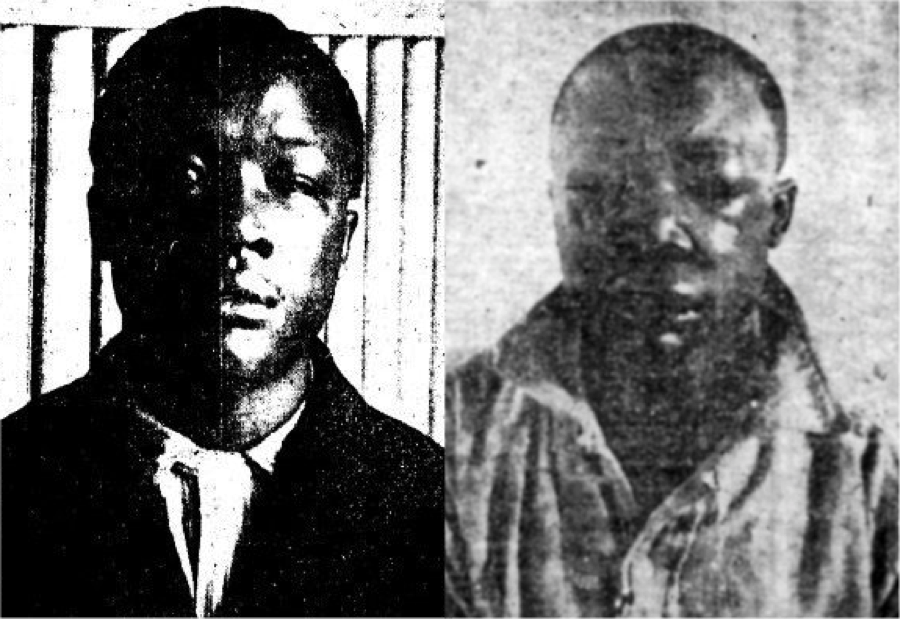
The lie that started it all was recanted too late. In the summer of 1908, two Black men sat in a Springfield, Illinois, jail on charges of sexual assault. One of the alleged victims would later confess she had fabricated her accusation entirely. But by the time the truth emerged, a mob of five thousand white residents and European immigrants had already torn through the city's Black neighborhoods, torching homes and businesses, lynching two Black men, and murdering others in the streets. Springfield was not some backwater of the Deep South. It was the capital of Illinois, the city where Abraham Lincoln had lived, practiced law, and delivered his famous "House Divided" speech. That the worst racial violence the North had seen in decades erupted in the Land of Lincoln forced a national reckoning that the country had been determined to avoid.
A Tinderbox Economy
Springfield in 1908 was a working-class railroad and mining town of about 45,000 people. The Panic of 1907 had squeezed the national economy, driving unemployment from 3 percent to 8 percent. The Illinois Central Railroad cut work weeks from seven days to four. Miners struck. Bars closed under new temperance laws, throwing saloon workers onto the streets. European immigrants, whose population had been growing at 4 percent per year since 1900, competed fiercely with Black residents for the jobs that remained. Within this rigid racial hierarchy, immigrants faced a stark calculation: align with the marginalized Black community or prove their claim to whiteness by enforcing its supremacy. Most chose the latter. Black residents, roughly 7 percent of Springfield's population, were confined to segregated neighborhoods called The Levee and The Badlands by restrictive covenants that barred them from buying property elsewhere.
Three Days of Fire
On August 14, 1908, a white mob gathered at the Sangamon County courthouse, intent on lynching two Black men accused of crimes against white women. When the mob discovered that the sheriff had transferred the prisoners out of the city, the crowd erupted. Rioters attacked Black-owned businesses, set homes ablaze, and dragged people into the streets. Scott Burton, a Black barber, was lynched within blocks of Lincoln's former law office. William Donnegan, an 84-year-old Black man married to a white woman, was pulled from his home, beaten, and hanged from a tree across the street from the schoolyard where Lincoln's children had played. Over three days, the Illinois state militia deployed to restore order. At least 17 people died: nine Black residents and eight white members or associates of the mob, six killed by militia crossfire and two by suicide. Property damage exceeded $150,000, equivalent to roughly $4 million in today's dollars. Dozens of Black families fled the city.
The Birth of the NAACP
On September 3, 1908, journalist William English Walling published "The Race War in the North" in The Independent magazine, challenging the nation to confront the reality that racial terror was not confined to the South. "Either the spirit of the abolitionists, of Lincoln and of Lovejoy, must be revived and we must come to treat the negro on a plane of absolute political and social equality," Walling wrote, "or Vardaman and Tillman will soon have transferred the race war to the North." The article galvanized reformers. Mary White Ovington, a white social worker in New York, reached out to Walling, and in early 1909, the two, together with Dr. Henry Moskowitz, began organizing what became the National Association for the Advancement of Colored People. The NAACP was formally established on February 12, 1909, the centennial of Lincoln's birth, with founding members including W.E.B. Du Bois and Ida B. Wells-Barnett, the pioneering anti-lynching journalist.
Justice Denied
Despite more than 100 riot-related indictments in the months that followed, only one alleged rioter ever went to trial, and he was convicted only of a lesser offense. Some pleaded guilty to minor violations. The legal system's failure to hold the mob accountable mirrored a national pattern: between 1877 and 1917, lynchings surged alongside mass disenfranchisement campaigns, and prosecutions were vanishingly rare. Of the two Black men whose arrests had precipitated the riot, one was eventually tried, convicted, and hanged. The other was set free after his accuser admitted she had lied. Many Black residents who fled Springfield during the violence never returned.
A Monument to Memory
For decades, Springfield largely avoided confronting what had happened. The riot's death toll was misreported for years, with early accounts inflating white deaths and minimizing Black casualties. Near the 100th anniversary in 2008, the city erected historical markers and a memorial statue. An NPR report that year described the riot as "a proxy for the story of race in America," noting that its occurrence in a Northern state shattered any illusion that racial violence was a Southern problem alone. On August 16, 2024, the 116th anniversary of the violence, President Biden designated part of the riot's location as the Springfield 1908 Race Riot National Monument, administered by the National Park Service. The site stands as a reminder that history demands more than commemoration. It demands honesty about what happened and why.
From the Air
The site of the Springfield 1908 Race Riot is in downtown Springfield, Illinois, at approximately 39.80N, 89.64W. The city's grid layout and the Illinois State Capitol dome are visible landmarks from altitude. The National Monument is in the area north of the Capitol building. Best viewed at 2,000-3,000 feet AGL. Nearest airports: Abraham Lincoln Capital Airport (KSPI) 4nm northwest, Springfield-Beckley Municipal (KSPI is the primary field). The Illinois state fairgrounds north of town are another useful visual reference.