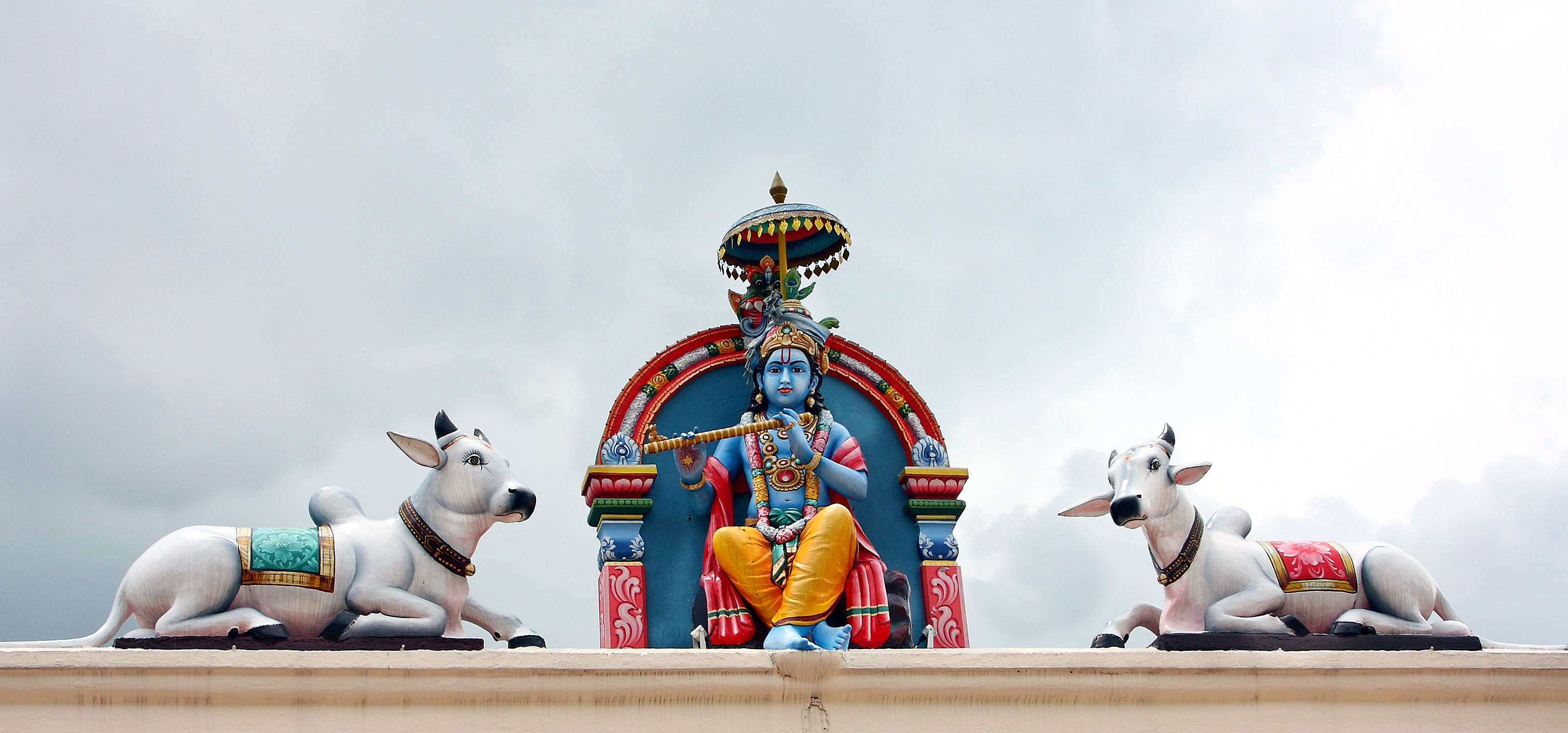
Sri Mariamman Temple, Singapore
The doors are enormous -- double-leaf timber panels scaled to make anyone who passes through them feel small. That is the point. Studded with rows of tiny gold bells arranged in a grid, they ring as devotees push through, announcing each arrival to the goddess inside. Behind those doors, at 244 South Bridge Road in Singapore's Chinatown, stands the Sri Mariamman Temple, the oldest Hindu temple in the city-state. It has occupied this ground since 1827, predating most of the neighborhood around it, and its six-tiered entrance tower -- the gopuram -- erupts from the low shophouse roofline in a vertical cascade of painted plaster deities, each tier slightly smaller than the one below, pulling the eye skyward.
A Clerk, a Founder, a Community
Naraina Pillai arrived in Singapore in May 1819 as a government clerk from Penang, traveling aboard the same ship as Sir Stamford Raffles on the colonial administrator's second visit to the island. Within a few years, Pillai had established Singapore's first construction company, entered the textile trade, and become the recognized leader of the island's Indian community. He wanted a temple. The British initially offered land on Telok Ayer Street, where immigrants traditionally prayed upon arrival, but it lacked the fresh water essential for Hindu rituals. A second site near Stamford Canal fell through when the 1822 Jackson Plan reassigned the land. Finally, in 1823, Pillai secured the South Bridge Road location. By 1827, he had built a simple structure of wood and attap palm, and installed Sinna Amman -- a small representation of the goddess Mariamman, the South Indian mother goddess worshipped for protection against disease. That original deity still occupies the principal shrine today.
From Attap to Monument
The temple grew in layers. Private land was donated in 1831 -- an event recorded on a stone tablet still standing in the compound. The oldest surviving brickwork dates to 1843, and skilled craftsmen from the Nagapattinam and Cuddalore districts of Tamil Nadu shaped the elaborate plaster sculptures and ornamentation that define the temple's character. A major expansion in 1862-1863 gave the building much of its current form. When fire destroyed the attap-covered walkway connecting the entrance to the main shrine in 1910, the colonial architectural firm Swan and Maclaren designed a permanent replacement in 1915. The original three-tiered gopuram went up in 1903 -- slimmer and more stepped than what stands today. The present six-tiered tower replaced it in 1925, and restoration work in the 1960s added the dense proliferation of painted sculptures that now cover its surface. On 6 July 1973, the Preservation of Monuments Board gazetted Sri Mariamman Temple as a National Monument.
Sanctuary and Registry
For generations of South Indian Tamil immigrants, the temple was more than a place of worship. It was the first address in a new country. New arrivals found shelter within its compound, sleeping there until they secured work and more permanent accommodation. The temple also served as the sole registry for Hindu marriages in Singapore -- only its priest held the authority to solemnize them. That dual role, as both spiritual home and civic institution, made Sri Mariamman Temple the anchor of the Indian community's social life in ways that extended well beyond prayer. Today the temple complex includes a three-storey annexe on Pagoda Street with an auditorium, wedding facilities, and spaces for cultural events, continuing a tradition of community service nearly two centuries old.
Gods in Plaster and Paint
Inside the walled compound, the temple unfolds as a sequence of covered halls, open courtyards, and free-standing shrines topped with decorated dome roofs called vimana. The central shrine honors Mariamman, flanked by Rama and Murugan. Surrounding pavilions house Durga, Ganesha, and Shiva. The ceiling above the main prayer hall carries frescoes including a large mandala diagram, and the columns supporting it are richly ornamented. Outside, the compound walls bear mouldings and seated cow sculptures at intervals. The gopuram itself is a catalog of Hindu mythology rendered in bright plaster -- Murugan on the right as you enter, Krishna on the left, and tiers of figures ascending toward the moulded ridge at the summit. Every twelve years, a Kumbhabhishekham ceremony reconsecrates the temple, believed to rejuvenate the mystic powers of the deities within. The most recent took place on 12 February 2023.
Walking on Fire
The shrine to Draupadi, heroine of the Mahabharata, is the temple's second most important. Beside her stand the five Pandava brothers -- Yudhishthira, Bhima, Arjuna, Sahadeva, and Nakula -- presided over by Lord Krishna. Their presence is tied to the temple's most dramatic annual event: the thimithi, or firewalking festival, held about a week before Deepavali. Devotees walk across a bed of burning coals in an act of faith connected to Draupadi's own ordeal by fire in the epic. An elevated viewing gallery accommodates the crowds who come to watch. The streets flanking the temple -- Pagoda Street and Temple Street, both renamed in reference to this very building -- fill with spectators and the smell of burning embers. It is a spectacle rooted in devotion, performed in the same compound where Naraina Pillai placed a small wooden image of a goddess nearly two hundred years ago.
From the Air
Located at 1.2826N, 103.8450E in Singapore's Chinatown district along South Bridge Road. The colorful gopuram tower is visible from low altitude against the surrounding shophouse rooftops. Nearest airport is Singapore Changi Airport (WSSS), approximately 17 km to the east. Paya Lebar Air Base (WSSL) is closer at about 10 km northeast. Best viewed below 2,000 feet in the dense urban core south of the Singapore River.