SS El Faro
"I have a marine emergency." Captain Michael Davidson's voice, captured on the voyage data recorder, carried the flat calm of a man trained to manage crisis. It was 7:06 a.m. on October 1, 2015. His ship, the SS El Faro, had lost propulsion, taken on water through a blown scuttle, and was listing fifteen degrees in the eyewall of a Category 4 hurricane. The engineers could not restart the engine. Within the hour, the ship and all 33 people aboard would vanish into 15,000 feet of Atlantic water northeast of the Bahamas. It was the worst American maritime disaster in more than three decades, and the investigation that followed would expose failures that reached far beyond a single captain's decision to sail.
A Ship of Many Names
She was built in 1975 by Sun Shipbuilding & Drydock Company as the Puerto Rico, a roll-on/roll-off cargo vessel designed to haul trailers and containers between the mainland and the Caribbean. In 1991 she became the Northern Lights. In 2006 she was rechristened El Faro - "The Lighthouse" in Spanish. Each new name papered over the same aging hull. In 1992, a 90-foot midsection was inserted at Atlantic Marine Shipyard in Mobile, Alabama, adding cargo capacity but also complexity to a vessel already approaching middle age. Former crew members would later describe her as "a rust bucket" with holes in her decks and persistent leaks in the galley. Two months before her final voyage, the decks were still riddled with them. Yet she passed her American Bureau of Shipping surveys in February 2015. She met stability criteria. On paper, she was fit to sail.
Into the Storm
El Faro departed Jacksonville, Florida, at 8:10 p.m. on September 29, 2015, bound for San Juan, Puerto Rico. She carried 391 shipping containers, roughly 294 trailers and cars, and a crew of 33 - twenty-eight Americans and five Poles. Tropical Storm Joaquin sat several hundred miles to the east, and the voyage plan took the ship within 175 nautical miles of the disturbance. By the following morning, Joaquin had become a hurricane and was rapidly intensifying. It tracked southwest, an unusual path that brought it directly into El Faro's route. By 11:00 p.m. on September 30, it had reached Category 3 with sustained winds of 100 knots. Ten hours after departure, El Faro had already deviated from her charted course. The crew discussed altering course further, but Captain Davidson relied on weather information from the Bon Voyage System, a commercial service the NTSB later determined was providing outdated forecasts. Despite crew members urging a course change, the ship pressed on.
Twenty-Six Hours on the Bridge
The voyage data recorder captured the final twenty-six hours of conversation on El Faro's bridge. The NTSB released a 500-page transcript in December 2016, and it reads like a slow-motion reckoning. At 5:43 a.m. on October 1, Davidson received word of suspected flooding in the number three cargo hold and sent his chief mate to investigate. The crew fought to assess and control the water, but the situation deteriorated faster than they could respond. By 7:06 a.m., Davidson was on the phone reporting a hull breach, a heavy list, and a dead engine. At 7:30 a.m., the Coast Guard received a satellite notification that El Faro had lost propulsion with a fifteen-degree list and flooding - though the captain reported it was contained. A single ping from the emergency position beacon followed. Then silence. All subsequent attempts to raise the ship failed. Her last relayed position was logged at 7:56 a.m.
The Search and What Remained
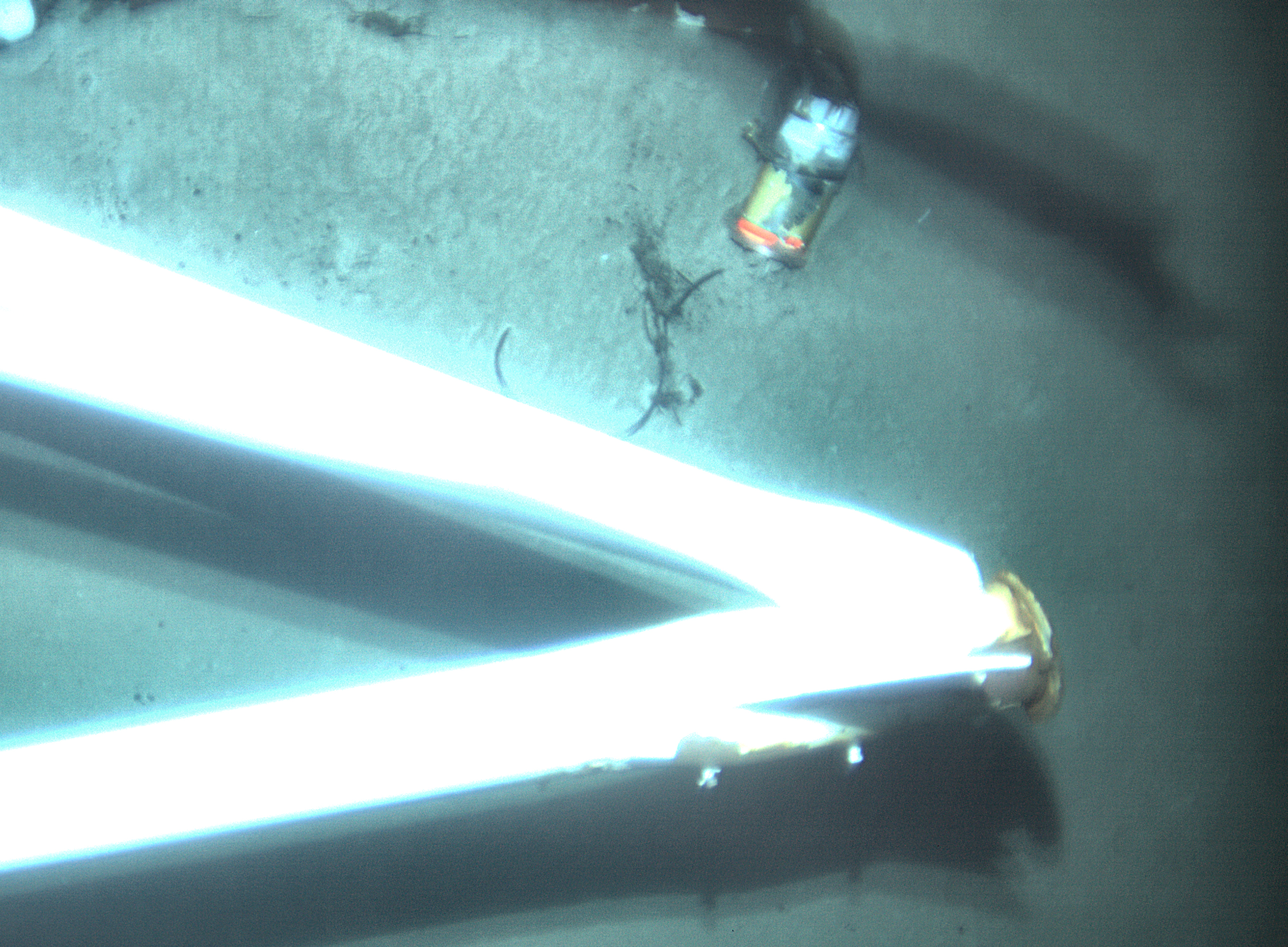
Coast Guard aircraft launched from Clearwater and Miami the next day, flying through hurricane conditions - winds exceeding 100 knots at a thousand feet, waves reaching 40 feet, visibility under a nautical mile. They recovered a life ring. On October 5, searchers found a body and a damaged, empty lifeboat, but a positioning device failure meant the body could not be retrieved. Two debris fields were located: one spanning 260 square nautical miles near the last known position, another covering 61 square nautical miles sixty miles to the northeast. By sunset on October 7, the Coast Guard had covered 183,000 square nautical miles and called off the search. The Navy's USNS Apache located the wreck on October 31 at approximately 15,000 feet, sitting upright and in one piece on the ocean floor. The voyage data recorder proved harder to find. A second search in April 2016 located it 41 miles northeast of Acklins and Crooked Islands, but it was tangled near the ship's mast. Apache returned in August and finally recovered it, delivering the recorder to the NTSB ten months after the sinking.
What the Investigation Found
The NTSB convened in Washington on December 12, 2017, and their findings spread blame across multiple parties. Captain Davidson had advanced into the storm despite his crew's objections, relying on outdated weather data. TOTE Maritime, El Faro's operator, had failed to maintain a superannuated vessel. The Coast Guard's practice of grandfathering older ships exempted El Faro from modern lifeboat requirements - the open lifeboats she carried were obsolete, improperly maintained, never launched, and almost certainly useless in hurricane seas. The Coast Guard fined TOTE $5,350 for five code violations. Families filed lawsuits totaling $100 million; by April 2016, TOTE had settled with eighteen of the thirty-three families for more than $7 million. The disaster prompted reforms in vessel inspection and weather routing, but the human cost was irreversible. Thirty-three people - engineers, able seamen, stewards, officers, a captain - went to work on a routine cargo run and never came home. Their ship rests in the deep Atlantic, a lighthouse that went dark.
From the Air
The wreck of SS El Faro lies at approximately 24.27°N, 74.95°W, northeast of Acklins and Crooked Islands, Bahamas, in roughly 15,000 feet of water. The site is in open Atlantic waters with no visible surface markers. The nearest airports include Lynden Pindling International Airport in Nassau (ICAO: MYNN, approximately 190 nm northwest) and Providenciales International Airport in Turks and Caicos (ICAO: MBPV, approximately 130 nm southeast). The area lies along the common shipping route between Jacksonville, Florida (ICAO: KJAX) and San Juan, Puerto Rico (ICAO: TJSJ). Pilots flying this corridor pass over the deep Bahamas trench where the ship rests. Conditions can deteriorate rapidly during hurricane season (June-November).