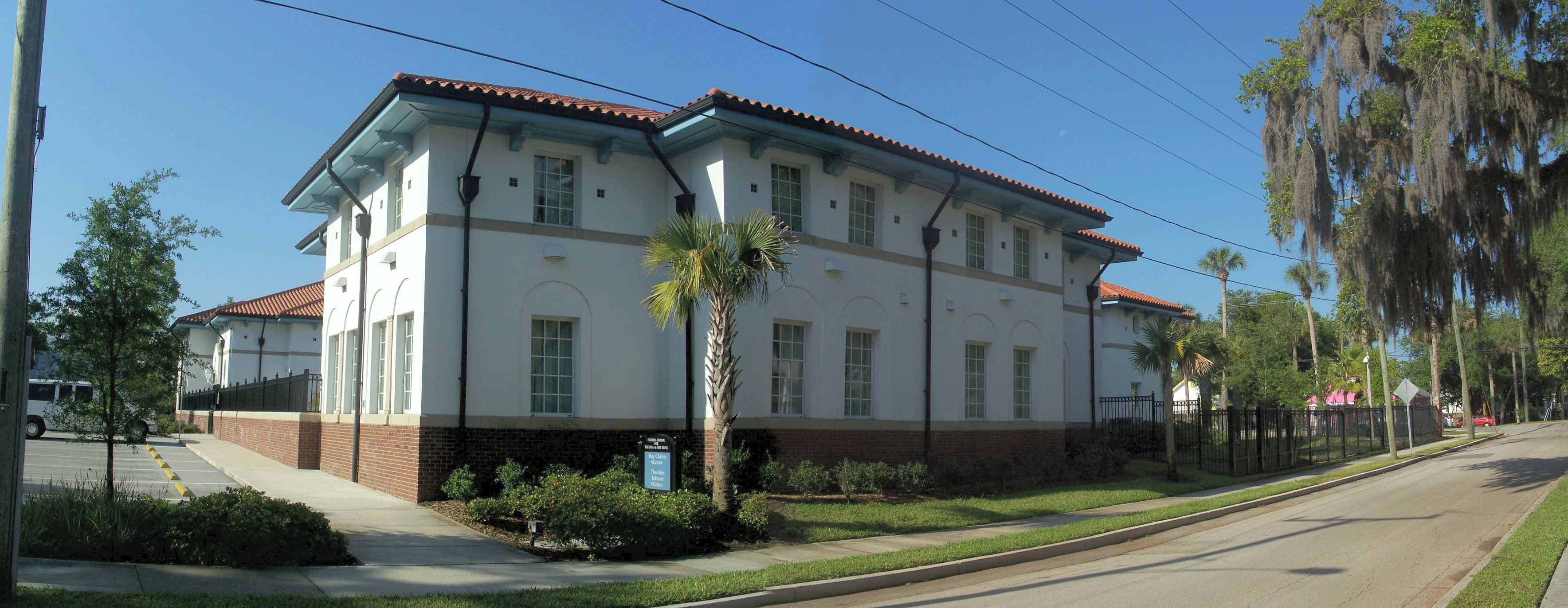
St. Augustine, Florida
The name comes from a calendar. On August 28, 1565, the feast day of St. Augustine of Hippo, a Spanish expedition led by Pedro Menendez de Aviles finally sighted the coast of Florida after weeks at sea. Eleven days later, on September 8, Menendez formally claimed the land for King Philip II of Spain and founded the settlement of San Agustin. The chaplain celebrated what some historians consider the first communal Thanksgiving in what would become the United States -- a religious ceremony followed by a shared meal with the Timucua people who already lived there. That founding makes St. Augustine the oldest continuously occupied European settlement in the contiguous United States, and the second oldest in any U.S. territory after San Juan, Puerto Rico.
Sacked, Burned, and Rebuilt
Survival has been St. Augustine's defining talent. In 1586, Sir Francis Drake sacked and razed the town. The English buccaneer Robert Searle attacked again in 1668, killing sixty people and looting churches and storehouses. The raid finally convinced the Spanish Crown to build a real fortress: the Castillo de San Marcos, constructed of coquina limestone beginning in 1672 and completed in 1695. The fort proved its worth almost immediately when British forces from Carolina besieged St. Augustine for 58 days in 1702, failing to breach the walls before retreating and burning the town in frustration. In 1740, Georgia's Governor James Oglethorpe tried again with another siege, and again the Castillo held. The fortress still stands today, the oldest masonry fort in the continental United States, its coquina walls bearing the scars of centuries.
Fort Mose and the Promise of Freedom
In 1738, Governor Manuel de Montiano ordered the construction of a settlement two miles north of St. Augustine for a growing community of formerly enslaved people who had escaped from the British colonies to the south. Fort Mose became the first legally recognized free Black settlement in what is now the United States. The men who lived there had enlisted in the Florida militia and converted to Catholicism in exchange for their freedom, and they served as a military buffer protecting St. Augustine from British incursion. Archaeological work at the site has revealed the layout of homes and fortifications, evidence of a community that carved out liberty in a dangerous borderland between empires.
Flagler's Gilded Transformation
Henry Flagler, co-founder of Standard Oil with John D. Rockefeller, spent the winter of 1883 in St. Augustine and found the town charming but its hotels inadequate. His solution was characteristically grand. He bought several short-line railroads and combined them into the Florida East Coast Railway in 1885, then commissioned the 450-room Hotel Ponce de Leon and the 250-room Hotel Alcazar, both designed by Carrere and Hastings in the Spanish Renaissance Revival style. Edison Electric powered the Ponce de Leon, making it one of the first electrified buildings in the nation. Flagler also purchased the Casa Monica Hotel, renamed it the Cordova, and connected it to the Alcazar by a second-floor bridge. Overnight, St. Augustine became the winter resort of American high society, its skyline reshaped by Moorish Revival towers and terracotta rooflines that still define the city's silhouette today.
The Swimming Pool and the Civil Rights Act
In the spring of 1964, civil rights leader Robert Hayling asked Martin Luther King Jr. and the Southern Christian Leadership Conference for help desegregating St. Augustine. From May through July, King, Hayling, Hosea Williams, C.T. Vivian, and hundreds of supporters organized marches, sit-ins, and wade-ins across the city. King was arrested on June 11 on the steps of the Monson Motor Lodge restaurant -- the only time he was jailed in Florida. The movement reached its most dramatic moment when black and white protesters jumped into the hotel's segregated swimming pool, and manager James Brock poured muriatic acid into the water to force them out. A photograph of a police officer diving into the pool to arrest the swimmers appeared on the front page of the Washington Post the day the Senate voted on the Civil Rights Act of 1964. That image, taken in a city founded four centuries earlier by Spanish missionaries, became a catalyst for the landmark legislation.
Layers Upon Layers
St. Augustine is a small city -- 14,329 people at the 2020 census -- but its density of history is staggering. Walk a few blocks of St. George Street and you pass the Castillo de San Marcos, the Cathedral Basilica, Flagler College in the old Ponce de Leon Hotel, and the Lightner Museum in the former Hotel Alcazar. In 2017, skeletal remains from the earliest settlements were discovered beneath a wine shop in the Fiesta Mall, unearthed during renovations after Hurricane Matthew. The annual Nights of Lights festival drapes the historic district in millions of holiday lights each winter, and the city maintains sister-city relationships with Aviles, Spain -- the hometown of its founder. In 2015, King Felipe VI and Queen Letizia of Spain visited for the 450th anniversary celebration. The oldest European city in the contiguous United States keeps finding new ways to honor what came before.
From the Air
St. Augustine is located at approximately 29.889N, 81.304W on Florida's northeastern Atlantic coast. From the air, the Castillo de San Marcos star-shaped fortress is the most recognizable landmark, sitting at the northern edge of the historic district along the Matanzas River bayfront. The Bridge of Lions connects the mainland to Anastasia Island to the east. The Flagler-era buildings -- the Ponce de Leon Hotel (Flagler College), Hotel Alcazar (Lightner Museum), and Casa Monica Hotel -- cluster along King Street and are identifiable by their Spanish Renaissance Revival towers and red-tile roofs. The St. Augustine Inlet connects the Matanzas River to the Atlantic Ocean. Nearest airport: St. Augustine Airport (KSGJ), approximately 4nm north of downtown, with three runways and two seaplane lanes. I-95 runs north-south to the west of the city. Best viewed at 2,000-4,000 feet in clear conditions.