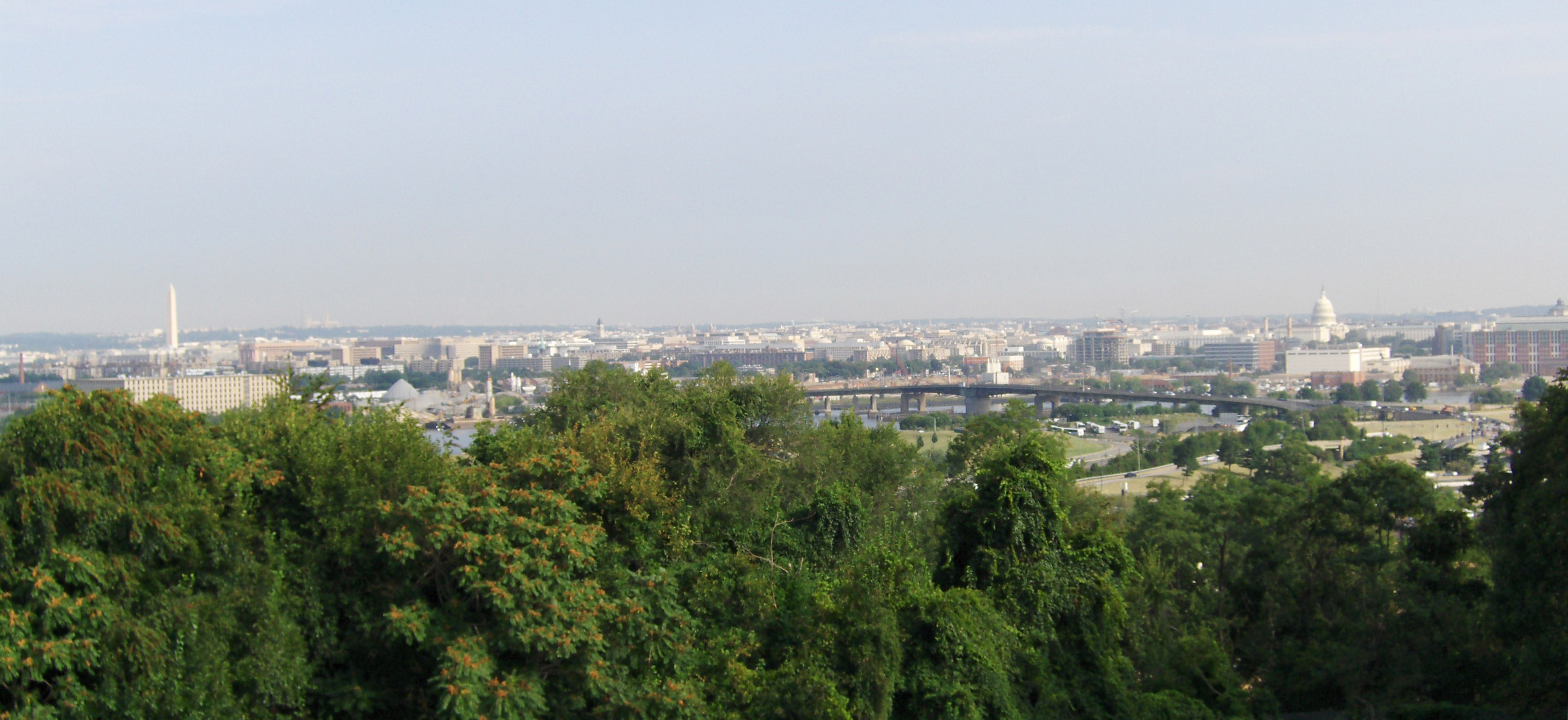
St. Elizabeths Hospital
The official name was the Government Hospital for the Insane, and nobody pretended otherwise when it opened in 1855 on a hilltop in southeast Washington, D.C. Congress had appropriated $100,000 to build it -- a place to care for indigent residents of the District and military personnel suffering from what the era called "brain illnesses." Dorothea Dix, the tireless advocate for the mentally ill, wrote the very legislation that created it and handpicked its first superintendent. The site was chosen according to the precise guidelines of Thomas Story Kirkbride: a rural setting near a city, with good soil for farming and gardens, because fresh air and honest labor were considered therapeutic. Over the next 170 years, St. Elizabeths would house poets and assassins, pioneer treatments and harbor abuses, and bury thousands of patients in graves that nobody can quite find anymore.
Built on Kirkbride's Promise
Dorothea Dix was on friendly terms with President Millard Fillmore, and she leveraged that access to get the hospital off the ground. Her recommendation placed Dr. Charles H. Nichols as superintendent, and together they designed an institution following the Kirkbride Plan -- a system of asylum architecture that arranged patient wings in a staggered formation to maximize light and ventilation. The Center Building, designed by Thomas U. Walter, the same architect who expanded the U.S. Capitol, became the campus centerpiece. At its peak in the 1950s, St. Elizabeths housed over 8,000 patients and employed 4,000 people. It operated a full medical-surgical unit, a school of nursing, and accredited psychiatric residencies. The sprawling campus, designated a National Historic Landmark in 1990, contained its own cemeteries -- approximately 450 Civil War veterans buried on the West Campus, and more than 5,000 military and civilian interments on the East Campus over 120 years.
Assassins, Poets, and Secret Agents
St. Elizabeths became a repository for some of the most notorious figures in American history. Richard Lawrence, who attempted to assassinate President Andrew Jackson in 1835, was confined here. Charles Guiteau, who killed President James Garfield in 1881, was held at the hospital until his execution. John Hinckley Jr., who shot President Ronald Reagan in 1981, spent decades as a patient before his release in 2016. But the hospital's most literary resident was Ezra Pound, the American poet and fascist collaborator during World War II, who was committed here rather than face treason charges. He spent twelve years at St. Elizabeths, receiving visitors and continuing to write. During the war itself, the Office of Strategic Services -- the precursor to the CIA -- used the hospital's facilities to test truth serums, experimenting with cocktails of mescaline, scopolamine, and THC on volunteers. None of the combinations worked.
The Graves They Cannot Find
Beneath the sprawling campus grounds, thousands of patients appear to have been buried in unmarked graves. Records for the individuals interred there have been lost. Some researchers have suggested that bodies may have been cremated in an on-site incinerator. The General Services Administration, which now owns the property, has considered using ground-penetrating radar to locate the graves but has not yet done so. More than 15,000 autopsies were performed at St. Elizabeths between 1884 and 1982. A grim collection accumulated: over 1,400 brains preserved in formaldehyde, 5,000 photographs of brains, and 100,000 slides of brain tissue, maintained by the hospital until it was transferred to a museum in 1986. In 1963, Dr. Luther D. Robinson became the hospital's first African American superintendent and founded its mental health program for the deaf, a nationally recognized initiative that offered a more humane face to an institution with a complicated legacy.
From Asylum to Arena
By 1996, only 850 patients remained on the East Campus, down from the peak of 8,000. The District of Columbia struggled with crumbling infrastructure, broken heating systems, and chronic underfunding. A Department of Justice investigation in the early 2000s found patient rights violations, leading to federal oversight that lasted until 2015. A new hospital building opened on the East Campus in 2010, housing approximately 297 patients in a modern facility with separate civil and forensic units. Meanwhile, the West Campus underwent a dramatic transformation. The Department of Homeland Security chose St. Elizabeths as its consolidated headquarters, rehabilitating the Coast Guard headquarters building and gutting the historic Center Building -- preserving its facades while rebuilding everything inside. On the East Campus, the redevelopment turned commercial: in 2018, an arena opened as home to the Washington Mystics and the Capital City Go-Go. The hilltop where Dorothea Dix once envisioned healing through gardening and fresh air now hosts professional basketball and federal security operations -- a transformation that would have been unimaginable to anyone who walked these grounds a century ago.
From the Air
St. Elizabeths Hospital sits at 38.85N, 76.99W in the Congress Heights neighborhood of southeast Washington, D.C., on a prominent hilltop overlooking the Anacostia River. The sprawling campus is visible from the air, with the restored Center Building and Coast Guard headquarters on the West Campus and the newer arena complex on the East Campus. Nearest airports: KDCA (Ronald Reagan Washington National, 4nm northwest), KADW (Joint Base Andrews, 8nm southeast). The campus offers panoramic views of the Washington skyline. Best viewed at 2,000-4,000 feet AGL.