St. Louis: The Gateway City That Opened the West and Then Got Left Behind
St. Louis was supposed to be the great American city - positioned at the confluence of the Mississippi and Missouri Rivers, the launching point for western expansion, the commercial hub connecting East and West. The Eads Bridge, completed in 1874, was an engineering marvel; the 1904 World's Fair announced St. Louis to the world. Then everything went wrong: the city lost population to suburbs, lost economic importance to Chicago, lost manufacturing to everywhere. The population that peaked at 856,000 in 1950 has fallen to 300,000. The Gateway Arch, completed in 1965, commemorates an optimism the city can no longer sustain. St. Louis is the Gateway to the West for a journey Americans stopped taking.
The Gateway
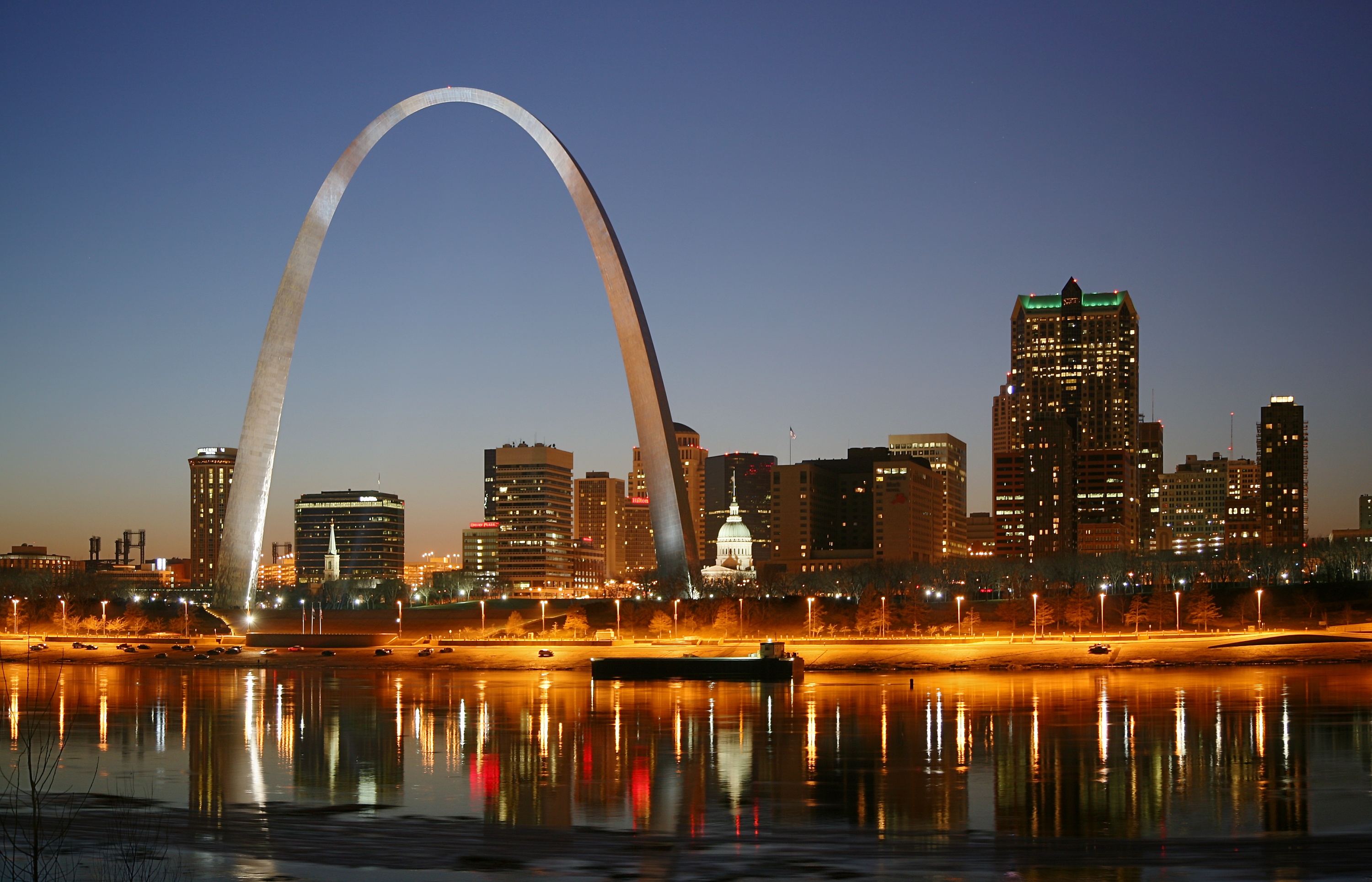
The Gateway Arch, designed by Eero Saarinen, rises 630 feet above the Mississippi riverfront - the tallest monument in the United States, stainless steel curves framing views of city and river. The Arch commemorates St. Louis's role as Gateway to the West: Lewis and Clark departed from here in 1804; the wagon trains assembled here; the outfitting businesses that supplied westward migration made fortunes here. The Arch was completed in 1965, just as St. Louis was beginning its long decline. The monument celebrates a past that no longer sustains the present - the Gateway still stands; the city it represents has contracted.
The Cardinals
The St. Louis Cardinals are the city's remaining source of unified pride - 11 World Series championships, more than any National League team, a fan base that extends across Missouri, Illinois, and beyond. The Cardinals are what St. Louis still does well: sell out Busch Stadium, produce championships, maintain a baseball culture that survived everything else. Stan Musial was a local god; Albert Pujols returned for retirement. The Cardinals brand themselves on fan loyalty - 'the best fans in baseball' - which other cities find insufferable. The insufferability is earned; the devotion is real.
The Decline
St. Louis's collapse has many causes: white flight to suburbs accelerated by the infamous Pruitt-Igoe housing projects (demolished in 1972); racial tensions that erupted in Ferguson in 2014; political fragmentation that separated the city from suburban St. Louis County (a unique arrangement that drains the city of tax base). The manufacturing that once employed thousands left for cheaper locations. The murder rate is among America's highest, though the statistics are skewed by the city-county division that counts only city proper. The decline is structural, accumulated over decades, without obvious solution.
The Food
St. Louis food reflects the German and Italian immigration that shaped the city. The toasted ravioli - breaded, fried, served with marinara - was invented here (at a restaurant on The Hill, the Italian neighborhood). The thin-crust pizza, cut in squares with Provel cheese, is distinctive and controversial (visitors find Provel weird; locals defend it). Ted Drewes frozen custard is a summer institution. The food culture is comfort-oriented, nostalgic, tied to neighborhoods that have maintained identity while the city around them changed.
Visiting St. Louis
St. Louis is served by Lambert International Airport (STL). The Gateway Arch National Park occupies the riverfront; the tram to the top offers views but requires advance tickets and tolerance for confined spaces. The City Museum is a sprawling, weird, wonderful playground built from industrial salvage - essential for visitors of any age. Forest Park, site of the 1904 World's Fair, contains the St. Louis Zoo, Art Museum, and Science Center (all free). The Hill provides Italian restaurants; Soulard preserves French colonial architecture. The experience reveals American urban decline alongside American urban possibility - a city that demonstrates both what cities can lose and what they retain.
From the Air
Located at 38.63°N, 90.20°W at the confluence of the Mississippi and Missouri Rivers. From altitude, St. Louis appears as urban development along the river - the Gateway Arch visible as a distinctive curve on the waterfront, the downtown skyline rising behind it. The Mississippi traces the Missouri-Illinois border; East St. Louis is visible across the river. The urban decline is visible in the empty lots and abandoned buildings in neighborhoods north of downtown. What appears from altitude as a major river city is the Gateway to the West - a monument to 19th-century optimism standing over a city that's spent 70 years searching for its 21st-century purpose.