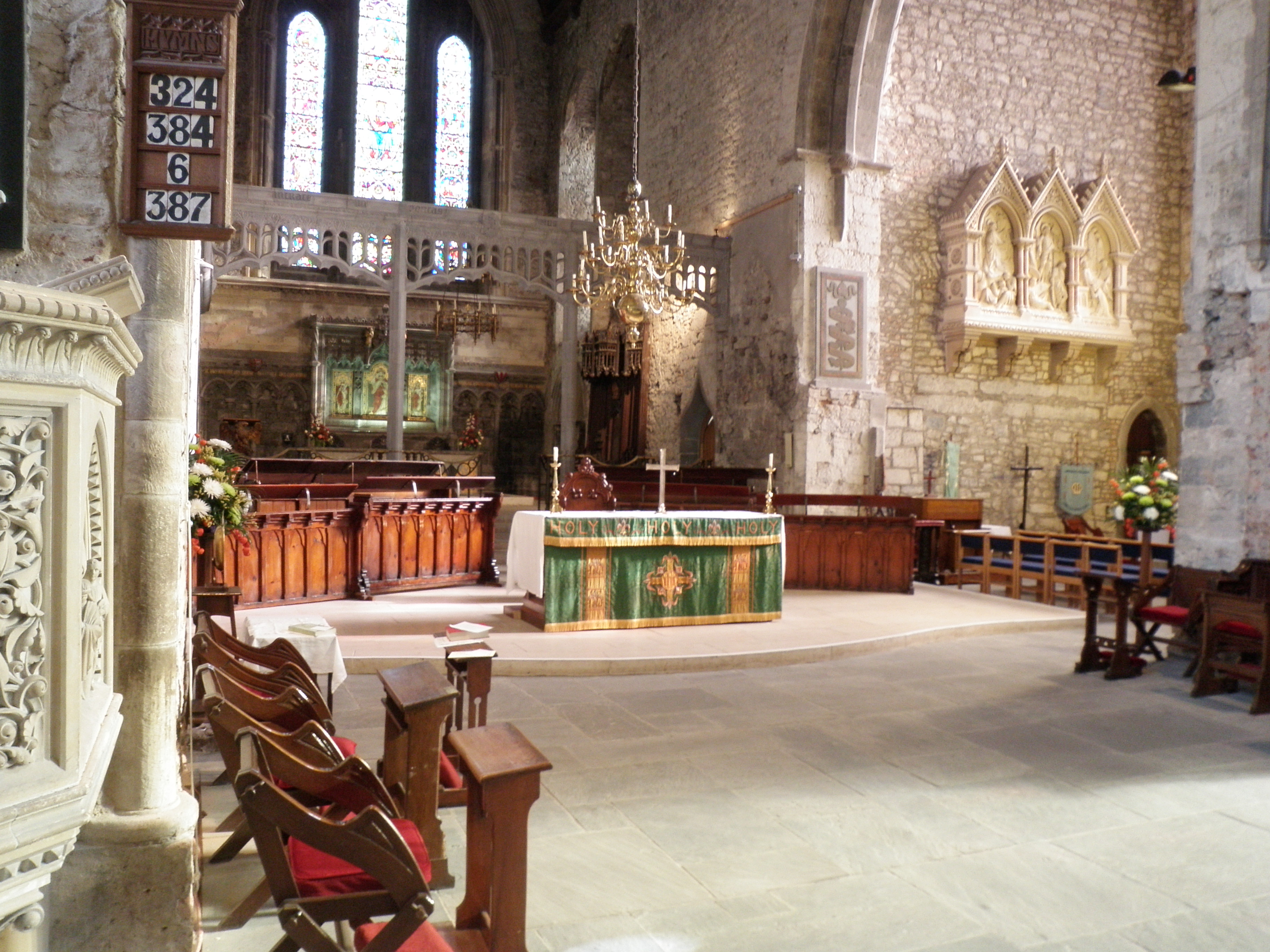
St Mary's Cathedral, Limerick
Run your fingers along the stonework flanking the west door of St Mary's Cathedral and you will feel grooves worn into the rock. According to tradition, the defenders of Limerick sharpened their swords and arrows on these stones during the city's many sieges. The marks remain visible today, a tactile record of desperation carved into the walls of what has been, since 1168, the oldest building in continuous use in Limerick. Before it was a cathedral, the site was a royal palace. Before that, a Viking Thingmote -- a meeting place for the Norse settlers who made this the westernmost extent of their European reach. The layers go deep.
A King's Gift
Domnall Mor Ua Briain, the last King of Munster, founded the cathedral on King's Island in 1168, converting his own palace into a house of worship. The Synod of Rath Breasail had designated St Mary's as the cathedral church of the Diocese of Limerick as early as 1111, but the present building dates from Domnall's act of transformation. He was supposedly buried in the cathedral itself, and fragments of what is believed to be his stone coffin remain visible in the chancel. The tradition of episcopal entry through the west door has persisted for centuries: each new bishop of Limerick knocks and enters through the same portal that Domnall's workmen built, a ceremony of continuity in a building that has survived everything Ireland's turbulent history could throw at it.
The Misericords
St Mary's holds the only complete set of misericords remaining in Ireland. These carved wooden mercy seats, attached to the underside of choir stall seats, allowed clergy to rest during long services while appearing to stand. Each misericord is individually carved, and the set represents a craftsmanship tradition that has otherwise vanished from Irish churches. The choir stalls themselves sit beneath five chandeliers that hang from the ceiling and are lit only on special occasions. The three largest were made in Dublin and presented by the Limerick Corporation in 1759. They illuminate a space that has been continuously used for worship for more than 850 years, through Reformation, siege, occupation, and restoration.
Cromwell's Stable
The cathedral's survival has not always been dignified. During the Irish Confederacy wars, the building was briefly transferred to Roman Catholic hands, and Bishop Richard Arthur was buried here in 1646. Five years later, after Cromwell's forces captured Limerick in 1651, the parliamentary army turned the cathedral into a stable. Horses stood where clergy had chanted. The desecration echoed what happened to other great cathedrals across Ireland during the Cromwellian campaign, and though it proved short-lived, the damage was real. After the Treaty of Limerick, King William III granted 1,000 pounds toward repairs. Cannonballs from the 1691 siege remain lodged in the walls of the Glentworth Chapel, still there after more than three centuries -- silent witnesses to the violence the building absorbed.
The Tower and the Bells
The tower was added in the fourteenth century, rising 120 feet above King's Island. It contains a peal of eight bells -- six cast by John Taylor and Company of Loughborough, two at the Whitechapel Bell Foundry in London -- plus a stationary service bell that can be rung from the ground floor. The tower anchors the cathedral's profile against the Limerick skyline and has served as a landmark for navigation on the Shannon for seven hundred years. A major restoration programme beginning in 1991 and costing 2.5 million pounds addressed centuries of accumulated damage, including the excavation and relaying of floors and the installation of underfloor central heating. The cathedral grounds now hold a United Nations memorial plaque bearing the names of Irish men who died serving as UN peacekeepers -- a contemporary layer added to a site that has been accumulating meaning since the Vikings first gathered here.
From the Air
St Mary's Cathedral is located at 52.67N, 8.62W on King's Island in Limerick city, at the confluence of the Shannon and Abbey rivers. From the air, look for the medieval cathedral tower (120 feet) rising from the north end of the city centre on the island between river channels. Shannon Airport (EINN) is 24 km to the west. Best viewed at 2,000-4,000 feet for urban context.