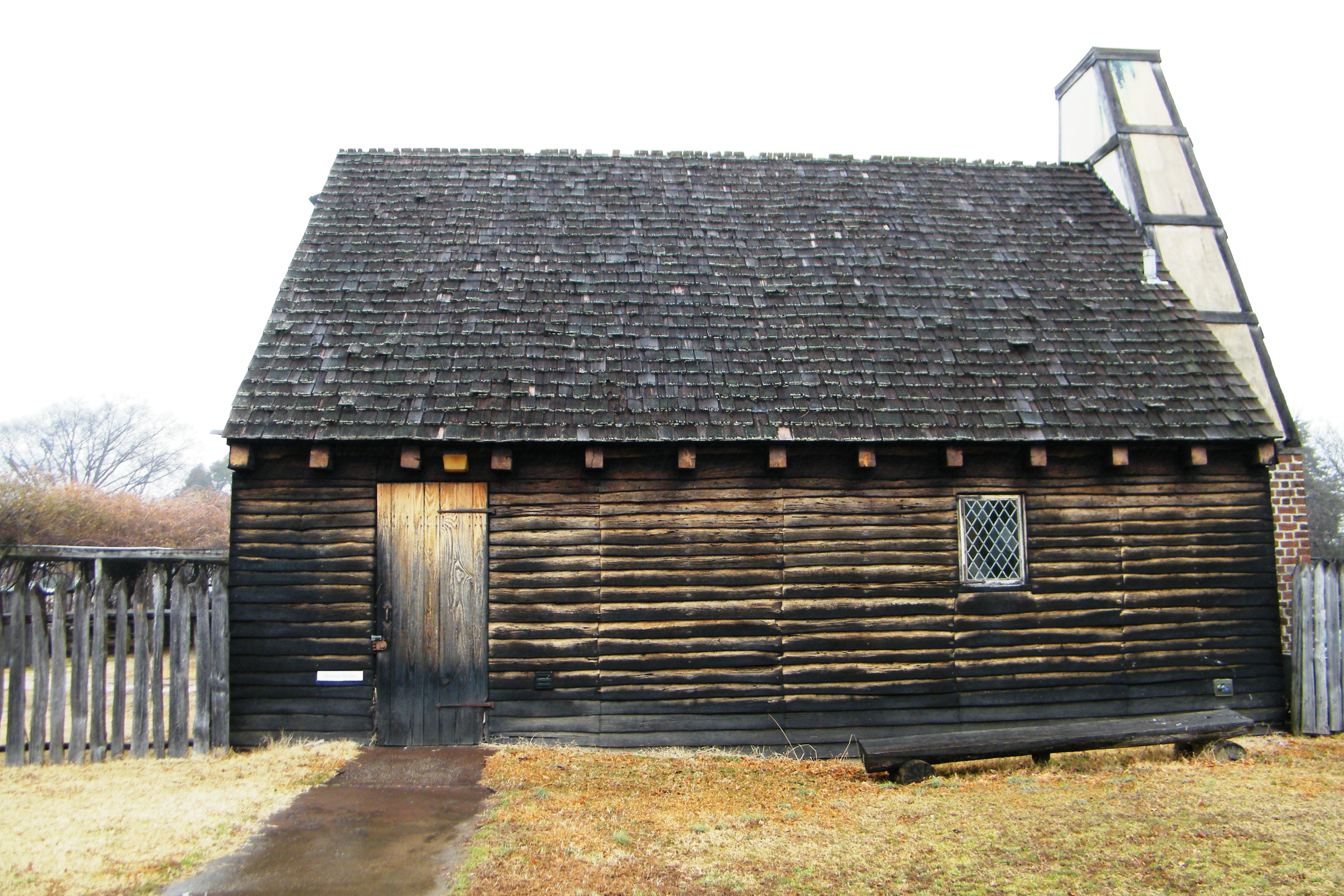
St. Mary's City, Maryland
In 1976, a young actor named Denzel Washington made his stage debut in an outdoor drama at St. Mary's City, playing Mathias de Sousa, one of the first Black men to arrive with the original colonists. It was a fitting place for a first performance. St. Mary's City has always been about beginnings: the beginning of Maryland, the beginning of religious freedom as colonial policy, and the beginning of a democratic assembly that would outlast the town itself. Founded in March 1634 on a bluff above the St. Mary's River near where the Potomac empties into the Chesapeake Bay, this settlement served as Maryland's capital for sixty-one years before being abandoned, built over, and very nearly forgotten. Today, with over 200 archaeological digs completed, the original town is being excavated and reconstructed piece by piece.
A Catholic's Dream in a Protestant World
The colony began as one man's vision. George Calvert, an English lord born in Yorkshire to a Catholic family, had been compelled by local authorities to study under a Protestant tutor at age twelve. He conformed to the established religion and built a career serving the Crown, but after his wife's death in 1622 and a shift in his political fortunes, Calvert returned to Catholicism in 1625, a dangerous choice during a period of intense religious persecution. His first colonial attempt, in Newfoundland's Province of Avalon in 1621, failed in the harsh northern climate. In 1631, he secured a grant from King Charles I for warmer land to the south, dreaming of a colony that would serve as a haven for persecuted Catholics. George died before the Maryland charter received the royal seal, but the King continued the grant to his eldest son, Cecil. It was Cecil's younger brother, Leonard Calvert, who would actually lead the settlers across the Atlantic and become the true founder of colonial Maryland.
The Ark, the Dove, and the Yaocomico
In November 1633, two ships, The Ark and The Dove, set sail from the Isle of Wight carrying settlers, Jesuit missionaries, and indentured servants. After a grueling ocean crossing with a resupply stop in Barbados, they reached Maryland in March 1634. Leonard Calvert chose a bluff overlooking the St. Mary's River, a calm tidal tributary near the mouth of the Potomac. The site had been occupied by the Yaocomico, a branch of the Piscataway Indian Nation, who had recently abandoned it due to vulnerability to Susquehanna attacks. A former Virginia colonist traveling with the English spoke the Yaocomico language, and negotiations moved quickly. The Tayac Kittamaquund, paramount chief of the Piscataway, sold thirty miles of land to the newcomers, seeking allies and trading partners. For a time, the Piscataway and English Marylanders coexisted peacefully. St. Mary's City was officially named and founded on March 27, 1634, becoming Maryland's capital and the fourth oldest permanent English settlement in America, after Jamestown, Plymouth, and Massachusetts Bay.
Freedom's Fragile Foothold
What set St. Mary's City apart from every other colony was its founding mandate: religious tolerance. It was the first North American settlement established with a specific provision offering haven to both Catholic and Protestant Christians. That principle was tested almost immediately. During and after the English Civil War, sectarian tensions flared in the colony. Margaret Brent, a remarkable woman who had traveled to Maryland unmarried and insisted on managing her own business affairs, stood before the assembly in St. Mary's City to defend her legal rights. She won, becoming the first woman in English North America to argue her own case in court. She also demanded the right to vote. William and Dinah Nuthead established the first printing house in the Southern colonies at St. Mary's City in 1678. After William's death in 1695, Dinah continued the business, having learned the trade by working alongside him. But by then, the English Crown had seized control of the colony, and Catholics were barred from public worship. The new Protestant governor, Sir Francis Nicholson, relocated the capital to Annapolis, and the colonial statehouse in St. Mary's was converted into a Protestant church.
Buried and Reborn
After losing its status as capital, St. Mary's City did not just decline; it vanished. The remaining farms were consolidated into a large antebellum slave plantation by the Brome-Howard family, their plantation house built directly over the ruins of a Calvert residence. During the Civil War, Union troops occupied the county, burning piers and wharves to cut off trade with the Confederacy across the Potomac. Enslaved men from the area escaped to join Union forces; at least two eventually received the Medal of Honor for valor at the Battle of Chaffin's Farm. The town's rediscovery began slowly. In 1840, a women's seminary was established on the grounds; it eventually became St. Mary's College of Maryland. The site was declared a National Historic Landmark in 1969. Archaeological work intensified in the 1980s, and after four years of digging, most of the original town layout was uncovered.
What the Ground Remembers
The archaeological discoveries at St. Mary's City read like a catalog of colonial ambition and daily life. Excavators have unearthed the site of the Nuthead printing house, identified by scattered lead type. They found a 1645 fort with a surrounding moat, the only known structural remains of the English Civil War in the American colonies. Three seventeenth-century lead coffins emerged from the soil, one suspected to belong to colonial chancellor Philip Calvert. Venetian-style glassware and rare Kutahya ceramics, one of only two such sets found in the United States, speak to the settlement's surprising cosmopolitan connections. The foundation of a Jesuit chapel, nineteenth-century slave quarters, and artifacts from successive Native American occupations layer the site with centuries of human presence. A silver coin dating to the reign of King Charles I links the ground physically to the grant that started it all. Today, Historic St. Mary's City operates as a living history museum with four public venues, period-dressed actors, and an active archaeological field school where students and professionals continue to pull the past out of the Maryland clay.
From the Air
St. Mary's City sits at 38.189N, 76.432W on a bluff above the St. Mary's River in southern St. Mary's County, Maryland, near the river's confluence with the Potomac and Chesapeake Bay. Best viewed at 1,500-2,500 feet AGL from the east or south. The site appears as a mix of open fields, scattered historic buildings, and the St. Mary's College campus along the river bluff. The reconstructed Maryland Dove sailing ship may be visible at the waterfront. Nearest airport is St. Mary's County Regional (2W6) approximately 8nm northwest. NAS Patuxent River (KNHK) is roughly 15nm north. Watch for restricted airspace R-4008 and R-4005 associated with military operations.