St. Petersburg
St. Petersburg was built to be unlike Russia - a European capital created by decree, its canals and palaces modeled on Amsterdam and Versailles, its construction costing an estimated 100,000 workers' lives in the swamps of the Neva Delta. Peter the Great founded the city in 1703 and made it his capital in 1712, forcing reluctant nobility to abandon Moscow for a construction site. The city held that role until 1918 when Lenin moved the government back to Moscow; it survived the 872-day Nazi siege that killed over a million residents through starvation and shelling. St. Petersburg holds 5.4 million people, Russia's second city, a place whose European architecture and cultural institutions set it apart from the country it no longer rules.
The Hermitage
The Hermitage Museum holds over 3 million items in six buildings, beginning with the Winter Palace that served as imperial residence until the 1917 Revolution. Catherine the Great started the collection in 1764 with 225 paintings purchased from a Berlin merchant; her successors expanded it obsessively, acquiring entire collections, commissioning purchases across Europe, building galleries to hold what they acquired. The result is one of the world's greatest museums.
The collection's scope defies comprehension. The Rembrandts and Rubens, the Impressionists and Old Masters, the antiquities from Egypt and Greece and the Scythian steppes - no visitor can see it all, and the building itself competes with the art for attention. The Winter Palace's rooms, designed for imperial ceremony, provide settings that modern museums cannot match. The Hermitage is Russia's cultural claim, proof that the empire Peter built could rival Europe in refinement.
The Canals
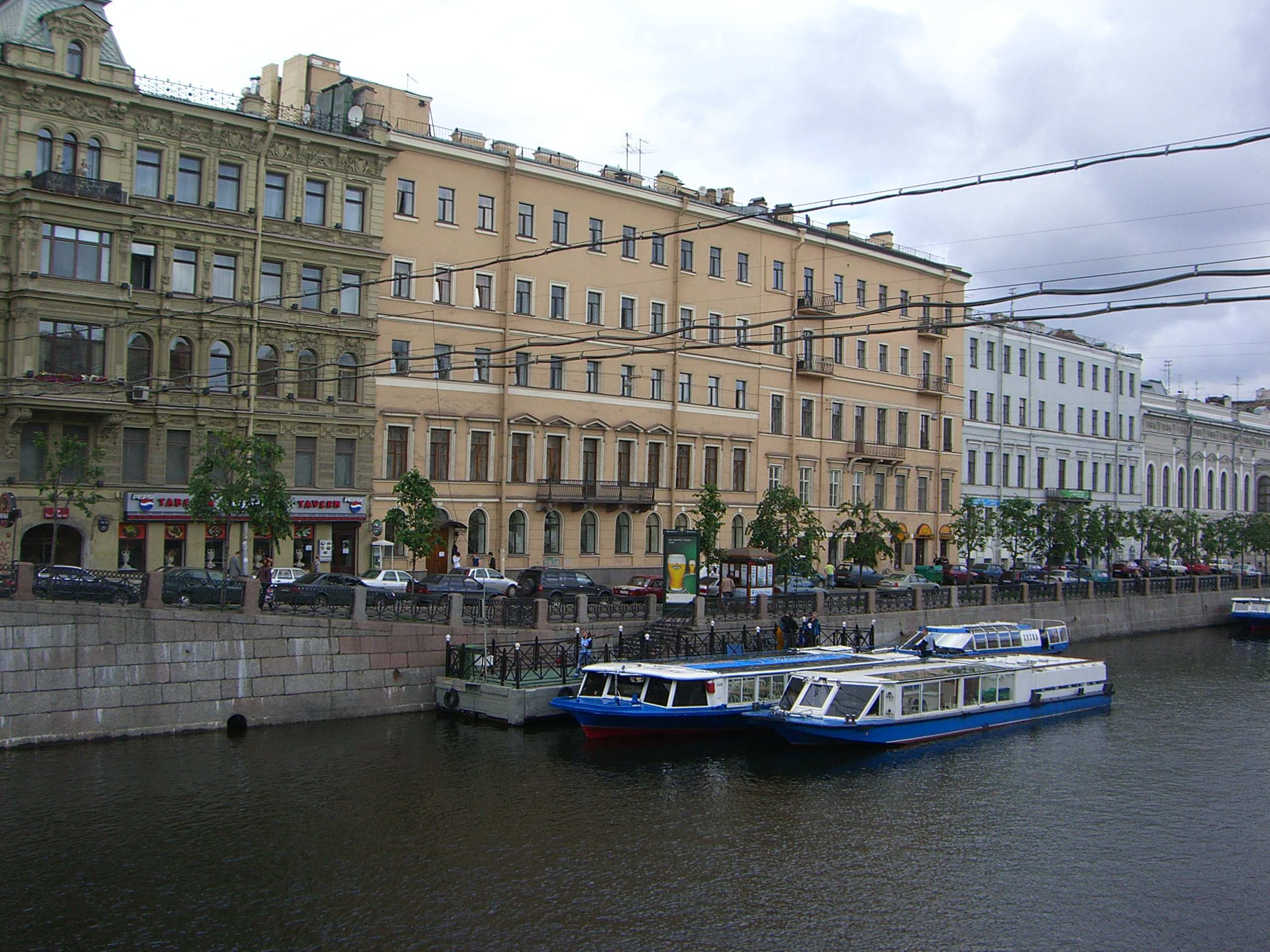
The Neva River spreads through St. Petersburg in a network of canals and channels that earned the city comparisons to Venice and Amsterdam. The bridges that span these waterways - over 300 of them - include drawbridges that open nightly to allow ships to pass, creating a summer ritual where crowds gather to watch the spans rise. The canals were Peter's vision: a capital connected by water, navigable by boat, European in its planning.
The waterways give St. Petersburg its character. The Moyka, the Fontanka, the Griboedov Canal wind through the historic center, their embankments lined with palaces and the apartment buildings where Dostoevsky's characters suffered. The boat tours that tourists take reveal facades visible only from water, the city designed to be approached by its canals. The flooding that periodically devastates St. Petersburg is the price of Peter's ambition - building on swampland means living with water that cannot be controlled.
The White Nights
St. Petersburg sits at latitude 59°N, far enough north that the summer sun barely sets. The white nights run from late May to mid-July, the sky never darkening beyond twilight, the population taking to the streets to enjoy light that southern latitudes never see. The festivals that mark this season - the Scarlet Sails graduation celebration, the Stars of the White Nights at the Mariinsky Theatre - exploit the phenomenon that makes St. Petersburg unique.
The white nights attract tourists and transform local life. The parks fill at midnight with families walking; the bars and clubs blur the distinction between night and day; the sleep that darkness enables becomes optional. The flip side is winter, when the sun rises after nine and sets before four, the darkness as extreme as the summer light. St. Petersburg's residents endure the darkness as the price of the white nights they treasure.
The Siege
The Siege of Leningrad lasted from September 1941 to January 1944 - 872 days during which German and Finnish forces surrounded the city, attempting to starve it into submission. The death toll exceeded one million, mostly from starvation during the first winter when daily bread rations fell to 125 grams. The ice road across Lake Ladoga - the Road of Life - provided the only supply route, trucks driving across frozen water while German aircraft attacked.
The siege remains St. Petersburg's defining memory. The Piskaryovskoye Cemetery holds mass graves where siege victims lie; the memorial at the Ladoga shore commemorates the evacuation route; the blockade museums preserve the stories of survival and death. The city's refusal to surrender - some say Stalin's order that they could not - became Soviet myth, the suffering transformed to heroism. The siege explains St. Petersburg's pride and its trauma, the survival that came at impossible cost.
The Imperial Suburbs
The palaces that ring St. Petersburg - Peterhof, Tsarskoye Selo, Pavlovsk - represented imperial ambition scaled to landscape. Peterhof's fountains rival Versailles; the Catherine Palace at Tsarskoye Selo held the Amber Room that the Nazis stole; Pavlovsk's English gardens cover 600 hectares. The German occupation destroyed much of what the Romanovs built; the Soviet restoration that followed rebuilt from photographs and fragments.
The reconstruction is itself remarkable - craftsmen trained in techniques forgotten elsewhere, amber sourced from Baltic deposits, gilding reapplied to surfaces fire had blackened. The restored palaces attract tourists who may not realize how little of what they see is original. The effort says something about Russian culture: the past matters enough to rebuild, the imperial heritage claimed even by governments that executed the emperors.
From the Air
St. Petersburg (59.93N, 30.32E) lies on the Neva River delta on the Gulf of Finland. Pulkovo Airport (ULLI/LED) is located 23km south of the city center with two runways: 10L/28R (3,782m) and 10R/28L (3,393m). The historic center with its canal network is visible from the air. The Neva River spreads through the city in multiple channels. The Gulf of Finland is visible to the west. Peter and Paul Fortress on Hare Island is a landmark. Weather is maritime continental - mild wet summers, cold winters with snow. White nights in summer (late May-July) provide extended twilight. Fog and low clouds common, especially autumn and winter.