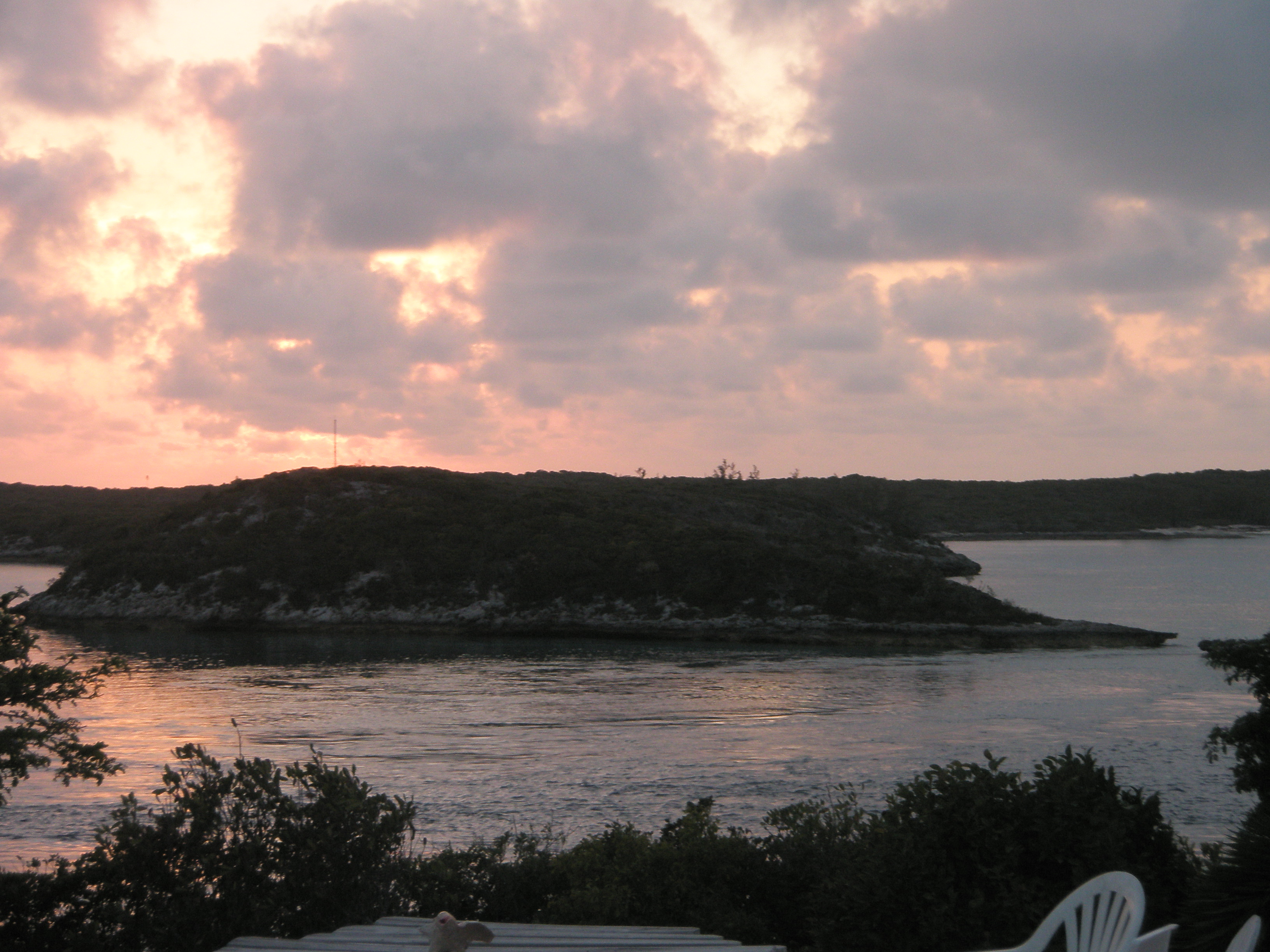
Staniel Cay
The cave did not have a name worth remembering until James Bond swam through it. Thunderball Grotto, a natural limestone cavern off the western coast of Staniel Cay, earned its name from the 1965 Bond film that used it as a location - and then earned it again when the 1983 film Never Say Never Again came back for more. Light enters through openings in the vaulted ceiling, falling in shafts through water where purple parrotfish, yellowtail snappers, and angelfish move through the glow. It is the kind of place that looks invented for a camera, which is exactly what happened. But Staniel Cay existed long before Hollywood noticed, and its real story is quieter, stranger, and more interesting than anything Ian Fleming wrote.
Loyalists, Charcoal, and a Yacht Club
American loyalists settled Staniel Cay in 1783, part of a broader migration that populated the Exuma archipelago after the American Revolution. The island they chose was small - less than five square kilometers - and remote, sitting roughly 120 kilometers south of Nassau and 400 kilometers southeast of Florida. A village grew along the western shore: a few houses, a church, a police station, a post office, and eventually a library. The settlement never exceeded a few hundred people, and today fewer than 118 full-time residents call it home.
The island's modern identity began in 1956, when Bob Chamberlain and Joe Hocher founded the Staniel Cay Yacht Club. The club put the island on the sailing map and transformed its economy from subsistence fishing to tourism. Every New Year's, the Yacht Club and the Staniel Cay Sailing Club organize a regatta that draws cruising yachtsmen from across the Exuma Cays to race against traditional Bahamian sloops - wooden boats that move through the water with a grace that fiberglass has never quite replicated.
Where the Reef Begins
Staniel Cay sits near the center of the Exuma Cays chain, positioned between Big Major Cay and Bitter Guana Cay. Coral reefs line the shores, shallow enough in places to reach within a few feet of the surface. Farther out, the bottom drops away to steep reef walls, shipwrecks, and the deep blue water that earned the Exuma Islands a ranking as the third-best destination for underwater photography.
The clarity of the water is the constant. Divers and snorkelers describe visibility that makes depth deceptive - the bottom looks ten feet away when it is thirty. Thunderball Grotto is the marquee attraction, accessible underwater or through a low entrance at low tide, but the surrounding reefs offer enough variety to sustain a dive operation year-round. Sharks, groupers, barracuda, and butterfly fish patrol the deeper water. In the shallows, miniature crabs pick through coral rubble while what the locals call daredevil shrimp dart between crevices.
Bougainvillea, Hutia, and the Brown Anole Experiment
Above the waterline, Staniel Cay wears a different kind of beauty. Palm trees, bougainvillea, hibiscus, and seagrape grow among red, black, and white mangroves that stabilize the shoreline. Sugar cane and tamarind appear in patches and find their way into local dishes. The vegetation is lush enough to surprise visitors who expect a bare sand spit.
In 1977, researchers released small groups of brown anole lizards on Staniel Cay, compact creatures 17 to 20 centimeters long with black markings on their backs. The lizards thrived, feeding on insects and establishing themselves in the forest understory. They joined a fauna that includes the Bahamian pig - a local fixture that achieved international fame on neighboring Big Major Cay - and the seabirds and shorebirds that use the Exuma Cays as a migration corridor. The island falls within the boundary of the Exuma Cays Land and Sea Park, a 455-square-kilometer no-take marine reserve managed by the Bahamas National Trust since 1958.
Junkanoo and the Bonefish Tournament
Staniel Cay's culture reflects the layered history of the Bahamas itself. The island's language blends African, English, and island dialects into Bahamian English - a creole shaped by the enslaved people who were brought to the Bahamas and the settlers who followed. Mount Olivet Baptist Church holds services every Sunday, and the community celebrates Junkanoo on Boxing Day and New Year's Day with music, art, and dance that draws on West African masquerade traditions.
Rake-n-scrape music - a distinctly Bahamian genre built on accordion, goatskin drum, and hand saw - fills the air during festivals. In August, the Annual Staniel Cay Bonefish Tournament draws anglers from abroad and brings locals home. Tourism accounts for roughly sixty percent of the Exuma Cays' GDP, and Staniel Cay has embraced it without surrendering its identity. Eighty percent of visitors to the Exuma Cays come to experience nature, according to the Bahamas National Trust, and Staniel Cay delivers nature at a scale where you can still learn a bartender's first name.
From the Air
Staniel Cay is located at approximately 24.17°N, 76.44°W in the central Exuma Cays, Bahamas. Staniel Cay Airport (ICAO: MYES) has a 3,000-foot runway accessible by scheduled flights, charters, and private planes. The airport closed for seven months in 2015 for runway repairs and reopened November 18, 2015. From altitude, the island is identifiable between Big Major Cay (Pig Beach) to the northwest and Bitter Guana Cay to the southeast. Thunderball Grotto is visible as a small rocky formation just off the western coast. The village clusters on the western shore with visible docks and mooring areas. Nassau's Lynden Pindling International Airport (ICAO: MYNN) is approximately 120 km north, and Exuma International Airport (ICAO: MYEF) lies further south on Great Exuma. The Exuma Cays chain runs north-south as a string of pale islands over turquoise shallows on the Great Bahama Bank. Weather is tropical with year-round water temperatures around 20°C; hurricane season runs June through November.