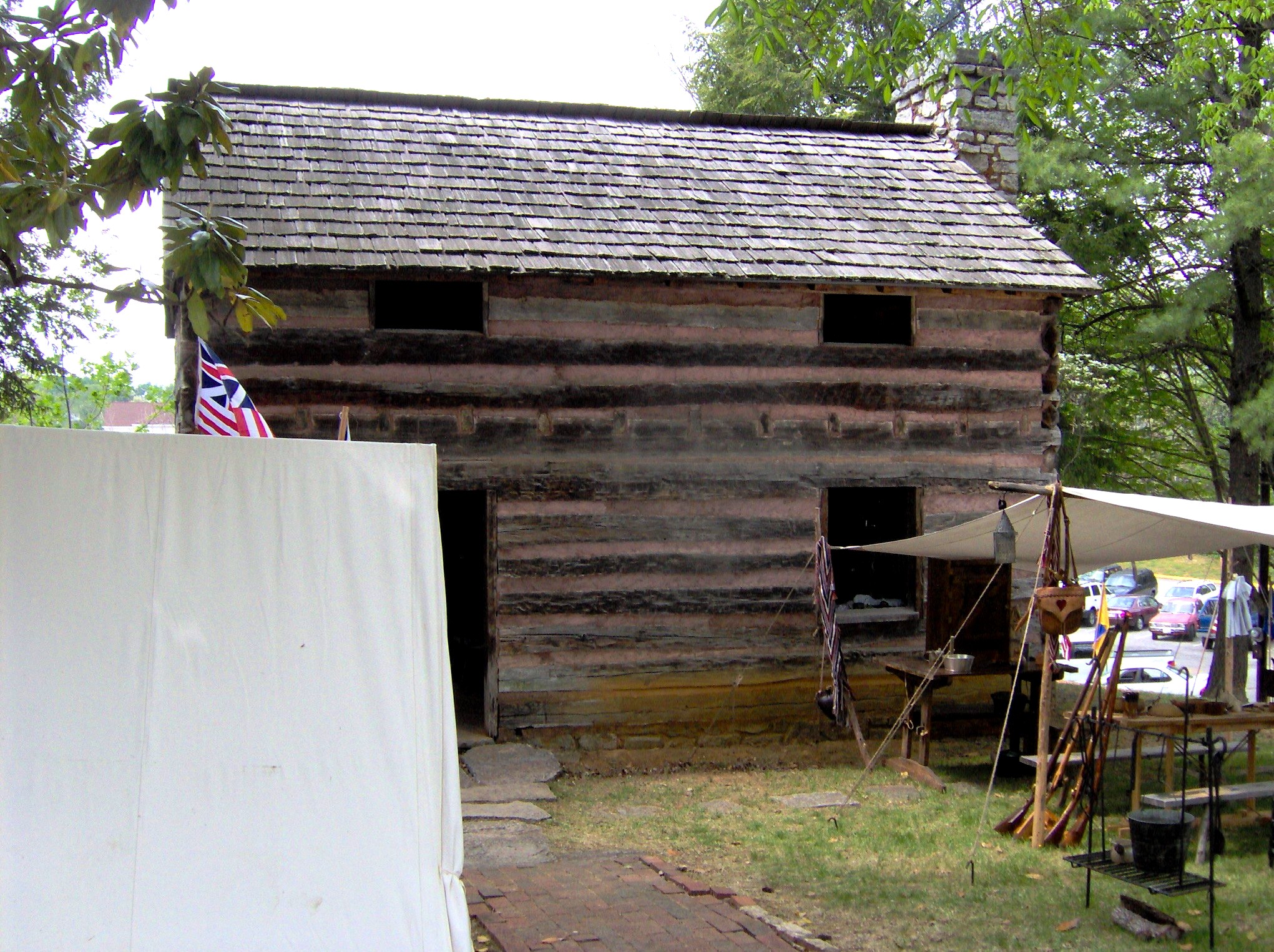
State of Franklin
For four and a half years, a place that no longer exists governed itself, elected a governor, drafted a constitution, petitioned Congress, and even flirted with becoming a Spanish colony. The State of Franklin, sometimes called the Lost State or the Free Republic of Franklin, occupied the ridges and valleys of what is now East Tennessee from 1784 to 1789. It came into being because North Carolina gave away its western territory to pay war debts, then changed its mind and took it back. Caught between an indifferent Congress and a resentful parent state, the settlers of the Appalachian frontier did what frontier people do: they made their own rules.
Ceded, Abandoned, Defiant
The American Revolution left Congress deeply in debt. In April 1784, North Carolina voted to cede its western lands, everything between the Appalachian Mountains and the Mississippi River, to the federal government. The offer came with a catch: Congress had two years to accept. For the settlers who had pushed beyond the mountains into the Watauga and Nolichucky valleys, the cession was an act of abandonment. These were people already dealing with Cherokee conflicts on their own, who feared that a cash-starved Congress might sell their homeland to France or Spain. When North Carolina rescinded the cession before Congress could act, the damage was done. The frontiersmen had seen how quickly their parent state could discard them. They decided to go their own way.
A Constitution That Banned Lawyers
John Sevier, a hero of the Battle of Kings Mountain, reluctantly accepted the role of governor. Landon Carter became speaker of the Senate. William Cage took the first speaker's chair of the House. The delegates gathered at Jonesborough for a constitutional convention in December 1784 and drafted a document that excluded lawyers, doctors, and preachers from running for the legislature. The voters rejected it in a referendum, and Franklin continued to operate under the North Carolina constitution instead. Still, the government functioned. It collected taxes, resolved disputes, and maintained order across what would have been 12 modern Tennessee counties, roughly 6,400 square miles of mountain territory. Had Franklin survived, it would rank today as the fourth smallest state by area, ahead of Connecticut, Delaware, and Rhode Island.
Seven Votes Short of Statehood
On May 16, 1785, Franklin's delegates submitted a petition for statehood to Congress. Seven states voted in favor, but admission required a two-thirds majority under the Articles of Confederation. The vote fell short. In a bid for influence, the delegates renamed their territory from 'Frankland' to 'Franklin,' hoping to win the endorsement of Benjamin Franklin himself. Sevier wrote to the famous statesman asking for his support. Franklin politely declined, noting that he was an old man who would be of little help and gently suggesting the frontiersmen might find a way to reconcile with North Carolina. After statehood failed, Franklin began operating as a de facto independent republic, running a parallel government alongside a re-established North Carolina bureaucracy. The two governments taxed the same people, appointed competing officials, and clashed with increasing bitterness.
Spanish Schemes and a Jailbreak
By 1788, Franklin was collapsing. Key supporters had defected to North Carolina. Chickamauga, Chickasaw, and other tribes attacked frontier settlements. Desperate for help, Sevier turned to Spain. With the assistance of James White, who was later discovered to be a paid Spanish agent, Sevier attempted to place Franklin under Spanish protection. North Carolina officials, alarmed at the prospect of a foreign power gaining a foothold in the mountains, arrested Sevier in August 1788. His supporters promptly broke him out of jail, and the governor retreated to a diminished territory his followers called 'Lesser Franklin.' By February 1789, Sevier and the last holdouts swore allegiance to North Carolina. The Lost State was gone. Its final chapter closed in 1791 when Governor William Blount of the newly created Southwest Territory met Cherokee leaders on the site of the future Knoxville and negotiated the Treaty of Holston.
A Ghost That Never Quite Vanished
Franklin's spirit proved more durable than its government. John Sevier became the first governor of Tennessee when it entered the Union in 1796. The town of Elizabethton was named for Landon Carter's wife, and Carter County for the Senate speaker himself, by the very political faction that had lost the Battle of Franklin in 1788. In the 1840s, East Tennessee Congressman Andrew Johnson, later President of the United States, led a movement to form a separate state called Frankland, echoing the old dream of mountain independence. That effort failed too, but the region's sense of separateness persisted through the Civil War and beyond. Today, State of Franklin Road runs through Johnson City, passing East Tennessee State University. The State of Franklin Bank operates there. In American law schools, a fictional State of Franklin serves as the standard placeholder for hypothetical legal problems. The lost state endures as a name, a road, a bank, and a legal fiction, proof that some ideas outlast the governments built to contain them.
From the Air
Centered on Greeneville, Tennessee at 36.17N, 82.82W, the State of Franklin encompassed the mountainous northeast corner of Tennessee. Jonesborough (the first capital) lies about 15 nm northeast; Elizabethton is 20 nm east. The territory stretched from the Great Smoky Mountains northwest to the Virginia border. Best viewed at 5,000-8,000 feet AGL to appreciate the ridge-and-valley topography that isolated these settlements from eastern North Carolina. Nearby airports: KTRI (Tri-Cities Airport, Johnson City, 20 nm northeast), KGCY (Greeneville-Greene County Municipal Airport, adjacent). The French Broad River, Nolichucky River, and Watauga River valleys are prominent visual landmarks that defined the boundaries of the lost state.