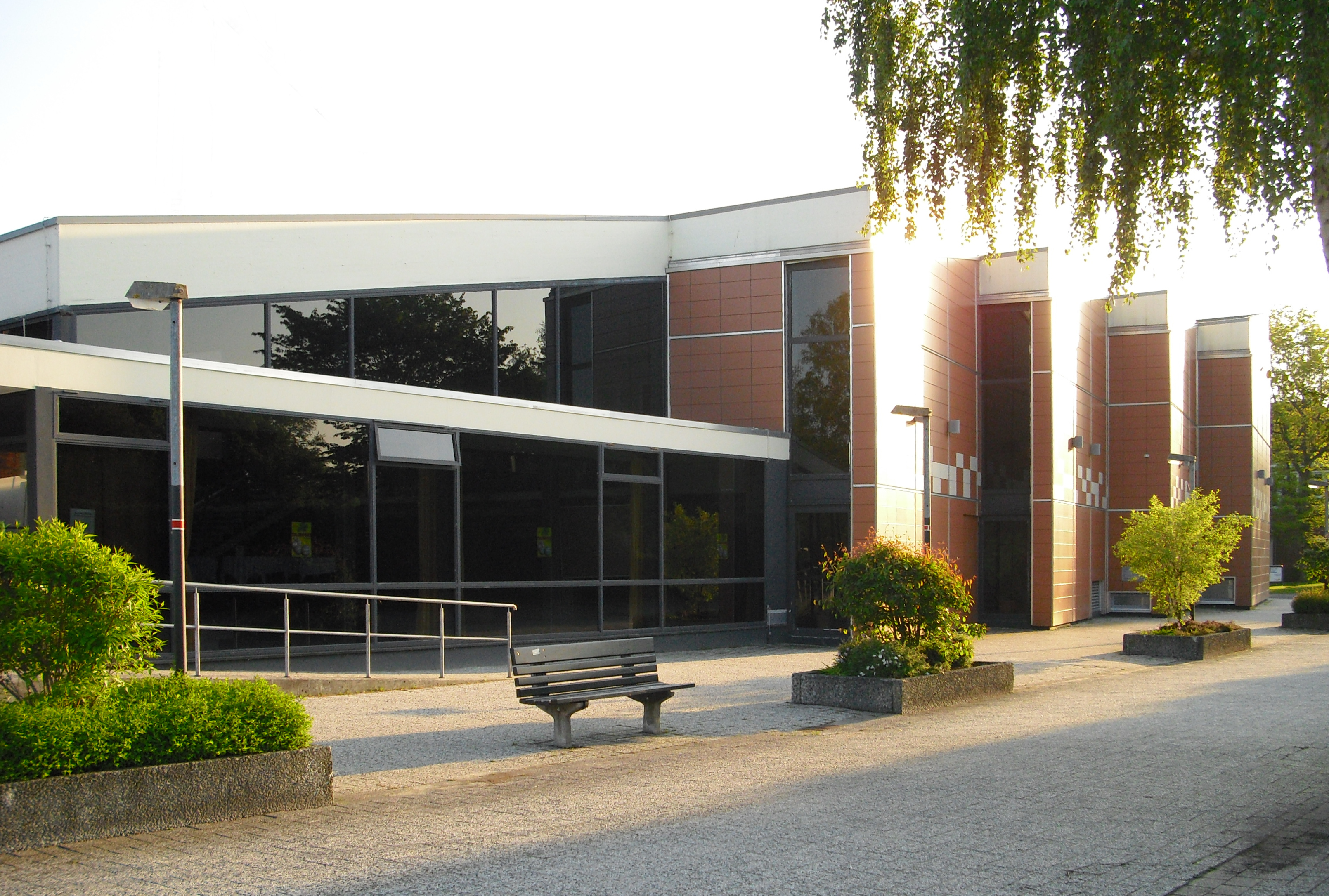
State Theater of Lower Saxony North
There is no city in the catchment area of the Landesbuehne Niedersachsen Nord. There is no metropolis, no university theatre district, no skyline. There are towns - Aurich, Emden, Esens, Jever, Norden, Norderney, Papenburg, Vechta, Weener, Wittmund - scattered across coastal flatland and marsh. Together they hold 720,000 people. Since 1952, a single theatre based in Wilhelmshaven has loaded sets onto trucks, sent actors out on long bus rides, and given that geographically dispersed audience something a city would call a season - which is how, as one of its directors put it, the Landesbuehne ended up playing for a big city in the area.
From Leer to the Coast
The theatre's roots lie inland, in the small East Frisian town of Leer, where in 1948 two struggling postwar companies merged into the Ostfriesische Landesbuehne. Leer turned out to be too far from too many of the venues that wanted them. Wilhelmshaven, with a theatrical tradition stretching back to its founding in 1869 and a substantial population, made more sense as a base. The city had lost its old municipal stage at the Seemannshaus to wartime bombing in 1943, and a public association formed in 1947 to build a replacement. They did not erect a new building. Instead, they converted a former naval directorate from 1904 at the corner of Virchowstrasse and Peterstrasse, roofed over the light court, and slotted in 873 seats. The seats themselves were donated by Wilhelmshaven residents, each contributor effectively buying a chair for a stage that did not yet have an ensemble.
The First Season
In 1952, Lower Saxony's culture ministry reorganized the Ostfriesische Landesbuehne into the Landesbuehne Niedersachsen Nord and gave it Wilhelmshaven as its administrative home. The first production was Hamlet, premiered on 19 October 1952 with the celebrated guest actor Bernhard Minetti in the title role. The municipal theatre had been officially opened that same morning. Early seasons leaned on classics - Schiller, Shakespeare, Calderon - but the directors also reached for harder material: Sartre's No Exit, Arthur Miller's All My Sons and The Crucible, an early German play by Rolf Honold reckoning with the war years. Critics noticed. One conceded, almost grudgingly, that the company could not be accused of refusing to engage with the intellectual currents of its time.
Buses, Schools, and a Director Named Stromberg
Rudolf Stromberg ran the theatre from 1958 to 1973 and shaped almost everything that came after. He pursued contemporary drama with a stubbornness that occasionally emptied the smaller halls - Ionesco, Brecht, Duerrenmatt, Kipphardt's J. Robert Oppenheimer - and refused to apologize for it. When audiences in Varel and Jever pushed back, his answer was not to soften the program but to add twenty-one public discussion evenings in a single spring of 1969. He also reshaped the touring infrastructure itself, designing a chain of standardized auditoriums tucked into school buildings, each with enough stage area and lighting to host a serious production. Schoolchildren made up much of the audience, scenery did not have to be rebuilt for every venue, and the model was studied and copied as far north as Schleswig-Holstein. By the theatre's twentieth anniversary in 1972, its actors and stagehands had logged more than 724,000 kilometres on the road.
Province, Refused and Embraced
Under Georg Immelmann, from 1979 to 1994, the Landesbuehne adopted a slogan: the refusal of provincial thinking, paired with a commitment to the province itself. In practice that meant a sharper repertoire - Ibsen's rarely staged The Lady from the Sea, Strindberg's monodrama The Stronger, Lessing's youth play The Jews adapted to confront contemporary xenophobia - and a willingness to anger paying audiences. When Immelmann opened a Norderney summer season with Dario Fo's subversive farce Bezahlt wird nicht, ticketholders walked out within twenty minutes. The trade journal Theater heute named the Landesbuehne the rising company of the 1985 season, ranking it fourth among all German-language theatres that year, behind only the Muenchner Kammerspiele, Freiburg, and the Munich Residenztheater - extraordinary placement for a stage whose actors spent half their working hours on coastal motorways.
A Theatre That Travels
Today the Landesbuehne employs more than 100 people and stages over 500 performances a year. The Wilhelmshaven house is one stop on a circuit that runs to Aurich's Stadthalle, the Neues Theater in Emden, the Theater am Dannhalm in Jever, Norderney's neoclassical Kurtheater from 1894, and a handful of school auditoriums where the seats fold up and the lighting rig descends from a fly tower someone had to fight for. The Stadttheater Wilhelmshaven is undergoing renovation, so since 2022 the company has performed in a former DIY warehouse refitted with 402 seats and christened, with the dry pragmatism that marks this whole institution, Provisorium 29. The trucks still roll out before dawn. The actors, often in their first permanent engagement, often play Hamlet or Nora in their twenties. And the bus rides, even now, can run well past midnight.
From the Air
Coordinates: 53.52 N, 8.12 E. The theatre sits in central Wilhelmshaven near the Suedstrand and the Grosser Hafen. From altitude, the Jade Bight - a sharp V cut into the German coast - is the unmistakable landmark; the dense urban core of Wilhelmshaven occupies its western shore. Recommended viewing altitude 1,500 to 3,000 feet for the city itself. Nearest airport: JadeWeserAirport Wilhelmshaven-Mariensiel (EDWI). Bremen (EDDW) is roughly 100 km southeast.