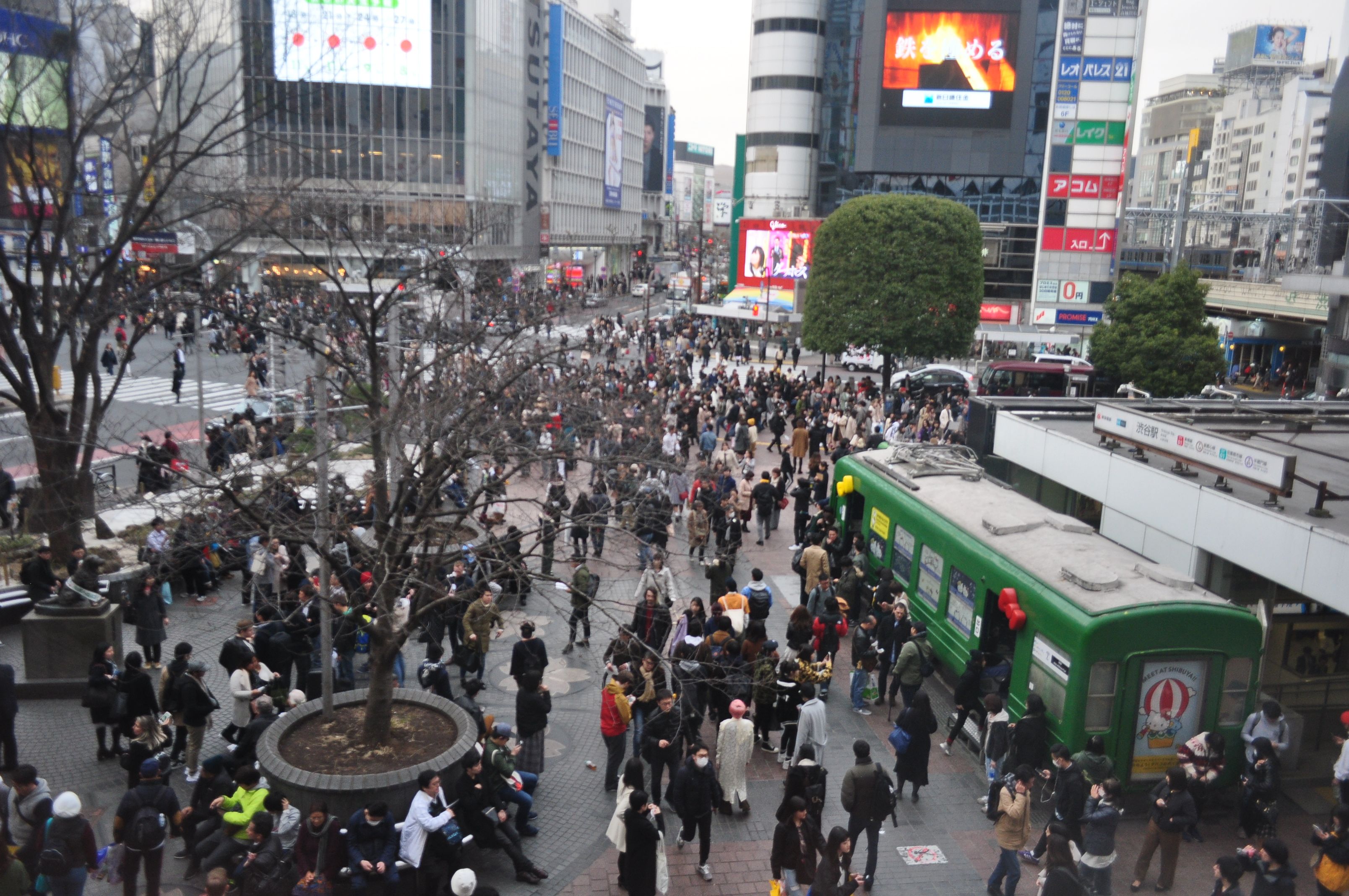
Statue of Hachiko
Every day for almost ten years, an Akita dog named Hachiko walked to Shibuya Station in Tokyo and waited. His owner, Professor Hidesaburo Ueno of Tokyo Imperial University, had died of a cerebral hemorrhage at work on May 21, 1925. Hachiko did not know this, or perhaps he did and went anyway. He appeared at the station each afternoon around the time the professor's train was due, waited, and eventually walked home alone. He did this until his own death on March 8, 1935. Today, a bronze statue of Hachiko stands at the exact spot where he kept his vigil, outside the west exit of Shibuya Station. It is arguably Japan's most famous piece of public art, and it exists because a nation recognized something extraordinary in the faithfulness of one dog.
The Professor and His Dog
Hidesaburo Ueno was a professor in the agriculture department at Tokyo Imperial University. In 1924, he brought home a young Akita puppy and named him Hachiko. The dog quickly fell into a routine: each morning he accompanied the professor to the front gate, and each evening he trotted to nearby Shibuya Station to greet him as he stepped off the train. The routine was unremarkable -- until May 21, 1925, when Ueno suffered a fatal cerebral hemorrhage at work — in a colleague's office after a faculty meeting — and never came home. Hachiko was given away to family friends, but he repeatedly escaped and returned to the station. He would appear in the afternoon, settle near the ticket gate, and wait until the last trains had come and gone. Station workers and commuters came to recognize him. For nearly a decade, the ritual continued.
From Stray to Symbol
Hachiko's story might have remained a local curiosity had it not reached the newspapers. In the early 1930s, Japanese papers began reporting on the faithful dog at Shibuya Station, framing his behavior as an embodiment of loyalty and devotion. The public response was immediate and emotional. Hachiko became a national figure, and the idea of honoring him with a statue gained momentum. In April 1934 -- the Year of the Dog in the Chinese zodiac -- sculptor Teru Ando completed a bronze statue that was unveiled at a ceremony outside Shibuya Station. Hachiko himself attended the unveiling, by then elderly and frail, sitting beside his own likeness. He died less than a year later, on March 8, 1935. His taxidermied remains were placed in the National Museum of Nature and Science in Tokyo, where they remain today.
Melted Down and Reborn
The original 1934 statue survived barely a decade. During World War II, Japan's war machine consumed enormous quantities of metal, and in 1944, Ando's bronze Hachiko was requisitioned by the government and melted down for the war effort. The empty pedestal at Shibuya became a quiet symbol of wartime loss. After the war ended, a movement to restore the statue began almost immediately. In 1948, the Society for Recreating the Hachiko Statue commissioned Takeshi Ando -- the original sculptor's son -- to create a replacement. The second statue was erected in August 1948 and has stood at the same spot ever since. The station exit nearest to the statue was officially named Hachiko-guchi, meaning the Hachiko Entrance, and it remains one of Shibuya Station's five main exits.
The Meeting Place of Millions
Today, the Hachiko statue is far more than a memorial. It is Tokyo's most recognized meeting point. On any given evening, dozens of people cluster around the bronze Akita, waiting for friends, dates, or colleagues. The statue has been described by Time Out Tokyo as possibly Japan's most famous example of public art. It has appeared in films, novels, and travel guides worldwide, including the 2009 Hollywood adaptation starring Richard Gere. In 2015, the University of Tokyo unveiled a separate statue showing Hachiko joyfully reuniting with Professor Ueno -- the reunion that never happened in life. The Shibuya statue, however, captures the more poignant truth: a dog sitting alone, alert and patient, still waiting. Each year on March 8, a memorial ceremony is held at the statue to mark the anniversary of Hachiko's death.
Loyalty Cast in Bronze
Shibuya has transformed beyond recognition since the 1930s. The quiet rail stop where a dog waited for a professor is now one of the busiest intersections on Earth, its famous scramble crossing funneling thousands of pedestrians in every direction. Skyscrapers have risen, neon has multiplied, and the station itself has undergone massive redevelopment for the 2020 Olympics and beyond. Through all of it, the bronze Akita has not moved. The city of Odate in Akita Prefecture, where the Akita dog breed originates, once proposed temporarily borrowing the statue during Shibuya's redevelopment, but it stayed put. In 2007, The Japan Times published an April Fools' article reporting the statue had been stolen by metal thieves -- the joke worked precisely because losing Hachiko was unthinkable. The statue endures as a fixed point in a city defined by constant change, a reminder that some things are worth waiting for.
From the Air
The Statue of Hachiko is located at 35.659N, 139.701E outside the west exit of Shibuya Station in central Tokyo. From the air, Shibuya is identifiable by its famous scramble crossing and the cluster of commercial towers surrounding the station complex. The statue itself is not visible from altitude, but the station area is unmistakable. Best viewed below 2,000 feet. The nearest major airport is Tokyo Haneda (RJTT), approximately 8 nm to the south. Tokyo Narita (RJAA) lies about 37 nm to the east-northeast. The area falls under dense Tokyo Class B airspace.