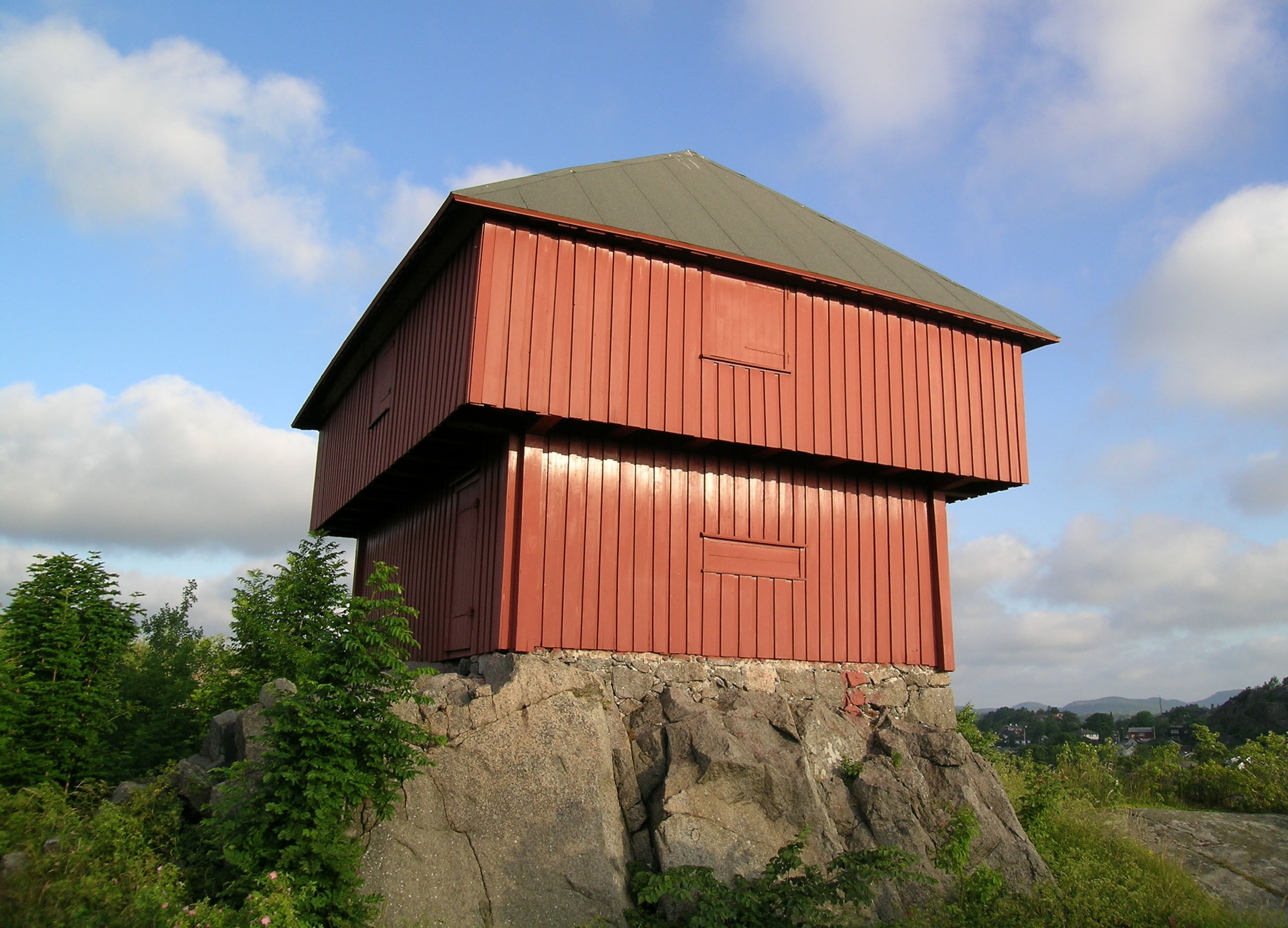
Staverns Fortress
The fortress sits on an island called Citadelløya -- Citadel Island -- and the name tells you exactly what it was. In 1677, during the Gyldenløve War between Denmark-Norway and Sweden, Ulrik Frederick Gyldenløve ordered a blockhouse built on a hill on the island of Karlsøy, with a battery of guns and a ring of wooden palisades. It was one piece in a larger puzzle: the systematic fortification of Norway's coastline during a century of nearly continuous warfare with Sweden. From these modest origins, the fortress grew into a naval base of genuine strategic importance.
From Blockhouse to Naval Base
Between 1687 and 1689, the fortress was expanded to include three cannon batteries and a proper blockhouse. The island's position off Stavern in Vestfold gave it command of the sea approaches along Norway's southern coast, making it a natural chokepoint for any fleet moving between the Skagerrak and the approaches to Christiania (modern Oslo). In 1750, the establishment of Fredriksvern and its shipyard transformed the older fortification into part of a full naval base. The fort was rechristened the Citadellet, and the island became Citadelløya. For eight years, until 1758, Fredriksvern served as headquarters for the Norwegian Fleet, and the fortress found itself at the center of Danish-Norwegian naval power.
Tordenskiold's Harbor
The fortress's most famous chapter came during the Great Northern War, the sprawling conflict that pitted Sweden's Charles XII against a coalition of rivals from 1700 to 1721. During the war's final Norwegian phase, from 1709 to 1720, Staverns Fortress served as the primary operating base for Peter Wessel Tordenskiold, Denmark-Norway's most celebrated naval commander. Tordenskiold -- his name means "Thunder Shield" -- earned his reputation through a series of audacious raids and engagements against Swedish forces. The fortress was his home port, the place his ships resupplied and his crews recovered between operations. It also served as the home port for the Danish-Norwegian Kattegat squadron and functioned as a major forwarding center for cannons produced at Norwegian ironworks.
The Slow Retreat of Purpose
By the 1800s, the strategic calculus had shifted. Fredriksvern's importance as a military base declined as Norway's relationship with Denmark dissolved and new political realities took shape. The Citadellet followed suit, losing its military function and falling into neglect. The guns were silent, the garrison reduced, the stone walls left to weather and moss. It was not until the twentieth century that restoration efforts brought the old buildings back from decay. Krutttårnet -- the powder tower, and the oldest surviving structure on the island -- proved to be the most compelling draw. Its distinctive architecture, squat and thick-walled against the possibility of explosion, has become a well-known tourist attraction, drawing visitors to a fortress whose wars ended two centuries ago but whose stones still carry the weight of the conflicts that shaped Scandinavian history.
From the Air
Coordinates: 59.00°N, 10.05°E. Staverns Fortress sits on the small island of Citadelløya off the coast of Stavern in Vestfold, Norway. From the air, the island and its fortifications are visible in the harbor area. The nearby town of Stavern is a popular seaside resort. Recommended viewing altitude: 1,500-2,500 feet. Nearest airports: Sandefjord Torp (ENTO) about 20 km to the northeast, Skien/Geiteryggen (ENSB) to the northwest.