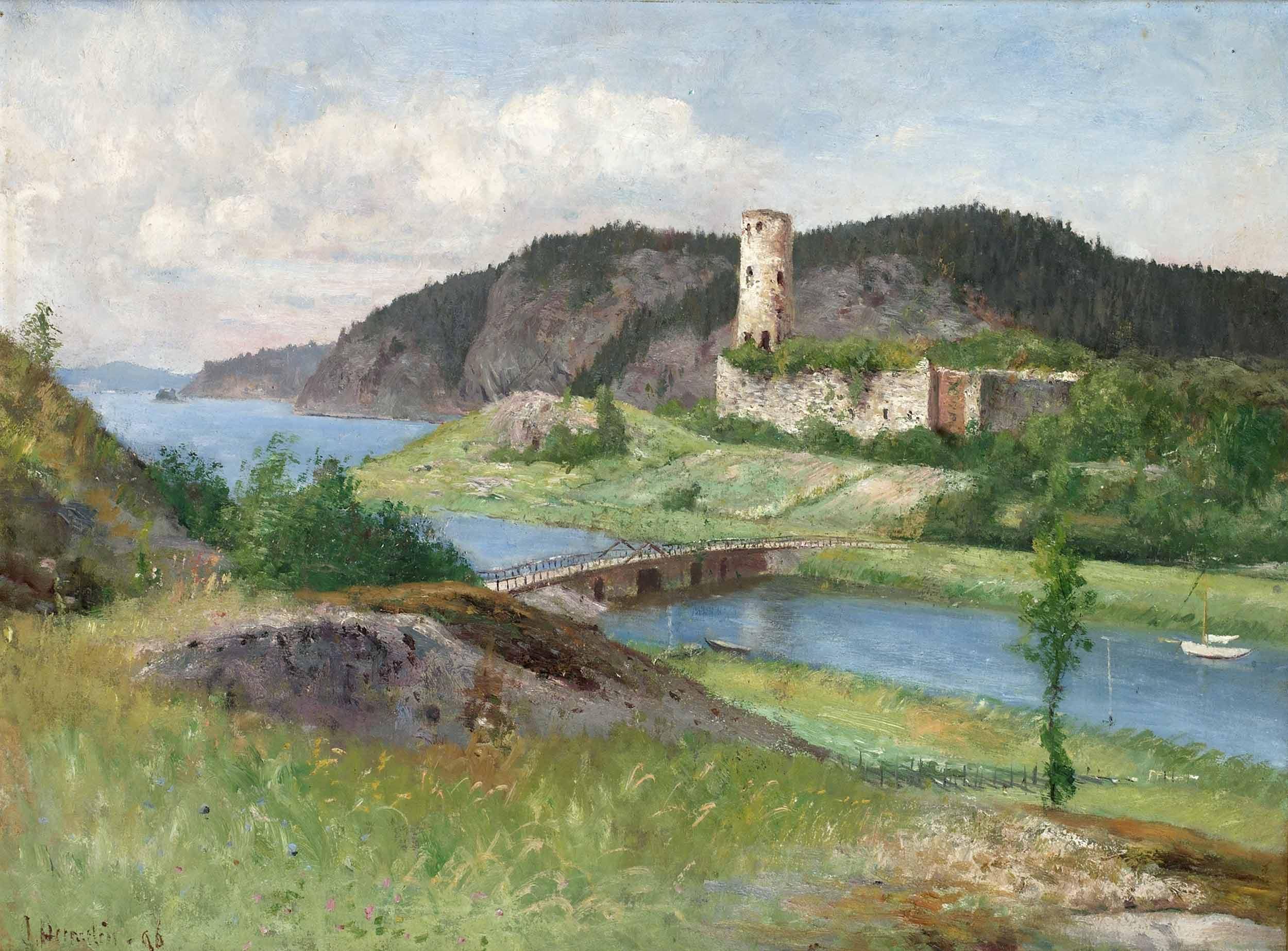
Stegeborg Castle
The name gives away the castle's original purpose. Stegeborg derives from the medieval Swedish word 'staek,' meaning stake or pile, referring to the underwater barriers of wooden pilings that once blocked this narrow channel. Archaeological evidence dates these submerged defenses to between the 7th and 9th centuries, making the site's strategic importance far older than the stone walls that eventually rose here. For over a millennium, whoever controlled this island in the sound at Slatbaken controlled access to Soderkoping, once one of Sweden's wealthiest cities.
Stakes in the Water
Long before the first stone tower rose on this island, the channel was defended by something simpler and remarkably effective. Multiple systems of wooden pilings, driven into the seabed, created underwater obstacles that could trap or damage unwelcome ships. The oldest of these stake barriers dates to the early medieval period, and they proved so durable that vessels still had to navigate around them in the 19th century. When the Bishop of Linkoping owned a farm on the nearby estate of Skallsvik in 1287, the strategic value of this chokepoint was already ancient. By 1305, King Birger had acquired the property and begun construction of a proper castle.
Seven Centuries of Siege
Stegeborg's history reads like a catalog of medieval Swedish conflict. After the infamous Nykoping Banquet in 1318, King Birger's son Magnus held the castle against a siege lasting from Easter to August before being captured and later executed. The Victual Brothers, Baltic pirates, sailed past in 1394 to attack Soderkoping. During the Engelbrecht Rebellion of 1434, the fortress fell after a brief siege. In 1487, troops laid siege again when the steward Ivar Axelsson turned to piracy with his seven ships. The castle changed hands through sale, gift, inheritance, siege, and betrayal, each transition adding another layer to its turbulent story.
Birthplace of Kings
On December 20, 1537, a future king entered the world within Stegeborg's walls. John III of Sweden grew up in this castle and never forgot it. When he became king, he poured resources into transforming the medieval fortress into a Renaissance palace, a project that continued until 1590. The round tower that still stands reached its current height during his reign. A castle church rose in the north wing. The rough defensive structure softened into something more fitting for royal residence. John III's sister Anna Vasa later made Stegeborg her residence after 1593, cultivating her interests in herbal medicine here. Several members of the Palatine dynasty who held the castle as their ducal seat were also born within its walls.
Sold for Building Materials
After the last Palatine duke died in 1689, Stegeborg reverted to the Swedish crown, but the age of castle living had passed. The governor of Ostergotland tried to maintain the structure, but a 1707 commission found that repairs would be prohibitively expensive. The following year, all wooden buildings on the island were auctioned off. In 1731, much of the castle itself was demolished, its stone carted away to Norrkoping for new construction projects. What survived owed its existence to the massive masonry of the bottom floors, too substantial to be worth dismantling. The crown had literally sold a royal residence for scrap.
Ruins and Renaissance
Protection came in 1901, though by then Stegeborg had spent 170 years as an abandoned ruin slowly consumed by vegetation. In 1938, the Swedish National Heritage Board began clearing trees and repairing masonry. Between 1948 and 1955, national servicemen excavated the site and erected protective roofing over the most vulnerable sections. Today, the Danielsson family operates tourist facilities in the old castle yard. An airfield occupies the Skallsvik meadow where the Battle of Stegeborg was once fought. The castle ruins host a marina and tavern, modern commerce filling spaces that once echoed with the politics of kings.
From the Air
Located at 58.44N, 16.60E on an island in Slatbaken bay, Ostergotland, Sweden. The castle ruins and adjacent airfield are visible from low altitude. A small airstrip exists in the Skallsvik meadow near the castle. Nearest major airport is Norrkoping Airport (ESSP), approximately 35 km northwest. The narrow sound and island position are best appreciated from 1,500-2,500 feet. The round tower remains the most prominent surviving feature.