Steve Jobs Theater
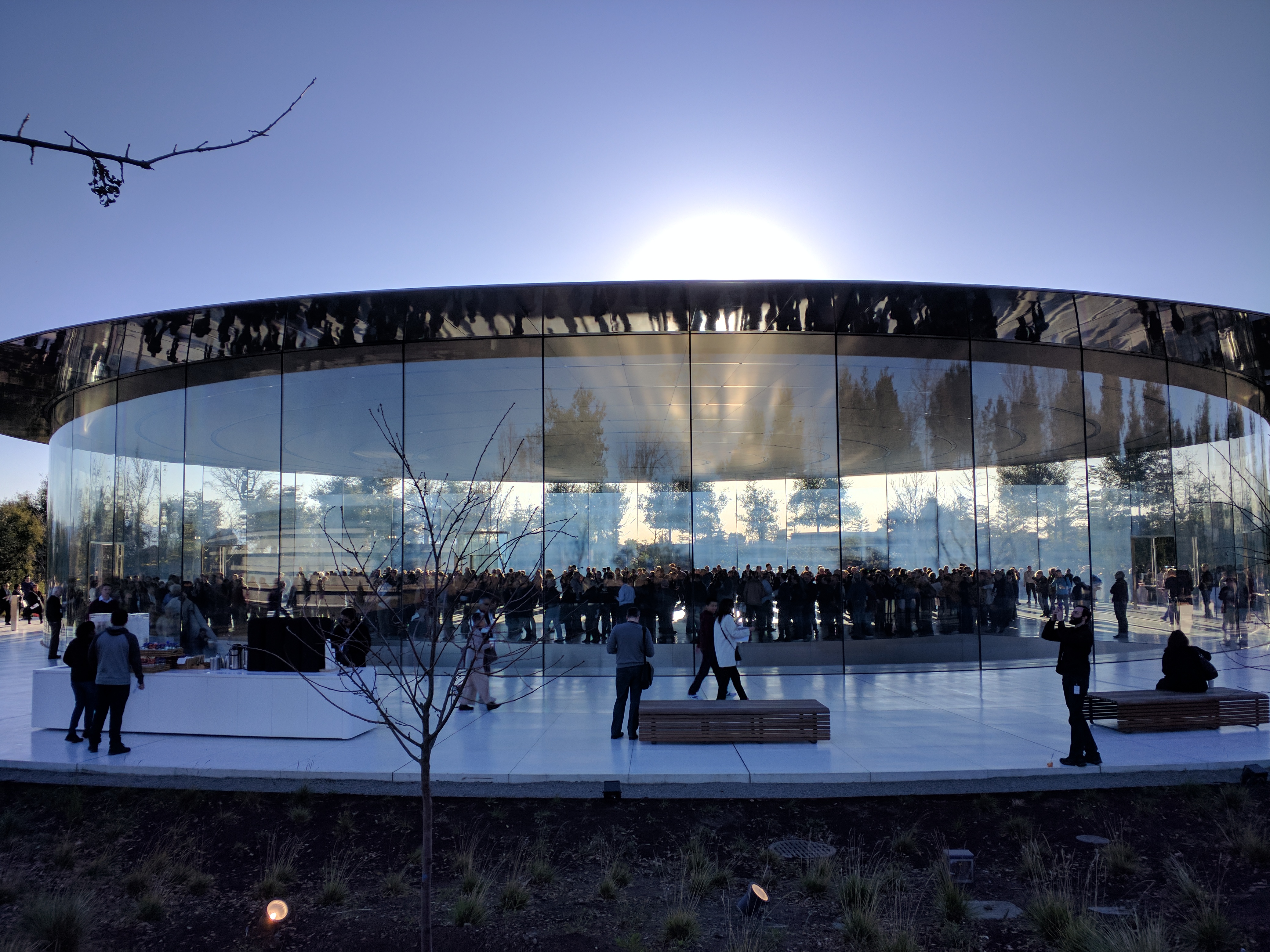
The building has no visible support columns. A 135-foot-diameter glass cylinder holds up a lens-shaped roof made of 44 identical carbon-fiber panels weighing a combined 80.7 tons, and from the outside it looks as though the roof is levitating over the hilltop. This is the Steve Jobs Theater at Apple Park in Cupertino, and its architectural sleight of hand is entirely deliberate -- a structure designed to make the impossible look effortless, which is a reasonable description of the man it is named for.
Engineering in Glass and Carbon
Designed by Foster + Partners, the Steve Jobs Theater pushes the boundaries of structural engineering in several directions at once. The lobby's glass cylinder, 22 feet tall, bears the full weight of the carbon-fiber roof with no interior columns -- every wire, pipe, and sprinkler line is hidden within the silicone joints between the curved glass panels. The theater includes what is considered the tallest free-standing glass elevator in the world, rising 42 feet and rotating 171 degrees as it carries visitors from the underground auditorium to the lobby level. The elevator has only a single door, which works because the rotation aligns with different openings at each floor. It is the kind of detail that reveals Apple's obsession with reducing complexity to its minimum visible expression.
The Auditorium Below
The theater itself seats 1,000 people and is located entirely underground, beneath the hilltop lobby. This subterranean placement achieves two things: it preserves the clean lines of the surface architecture, and it creates a sense of descent and arrival that transforms a product announcement into a theatrical experience. The space was purpose-built for Apple's keynote events -- the semi-annual occasions when the company unveils new hardware and software to a global audience. The first event held here, on September 12, 2017, saw the announcement of the Apple Watch Series 3, Apple TV 4K, iPhone 8, and the landmark iPhone X. The event was titled "Let's meet at our place," a phrase that underscored Apple's pride in finally having a stage that matched its self-image.
A Name and a Legacy
Steve Jobs did not live to see Apple Park completed. He died in October 2011, two years before the Cupertino City Council unanimously approved the campus plans after a six-hour debate. The decision to name the theater after Jobs, announced in February 2017, was both a memorial and a statement of values: the theater sits at one of the highest points in Apple Park, and its purpose -- unveiling products to the world -- was the activity Jobs had elevated to an art form. His keynote presentations, with their carefully paced reveals and one-more-thing surprises, had already made product launches a cultural event. The theater simply gave that ritual a permanent home, designed with the same attention to materials and hidden complexity that Jobs demanded of Apple's products.
On the Hill
From the air, the Steve Jobs Theater appears as a small glass disc atop a grassy hill within the enormous ring of Apple Park's main building. The contrast in scale is striking: the theater is intimate compared to the 2.8-million-square-foot spaceship that curves around it, but its hilltop position gives it visual prominence. The circular campus, the surrounding landscaping of native grasses and orchards, and the theater's transparent lobby create a composition that reads clearly from altitude. Below ground, where the auditorium sits in darkness between events, the engineering that holds the roof aloft continues working in silence -- 80 tons of carbon fiber resting on glass, making weight look weightless.
From the Air
Steve Jobs Theater is at 37.331°N, 122.007°W atop a hill at Apple Park in Cupertino. The glass-roofed lobby is small but sits prominently above the main ring building. Apple Park's circular shape is unmistakable from altitude. Nearest airport: San Jose International (KSJC) approximately 5 nm southeast. Moffett Federal Airfield (KNUQ) 4 nm north.