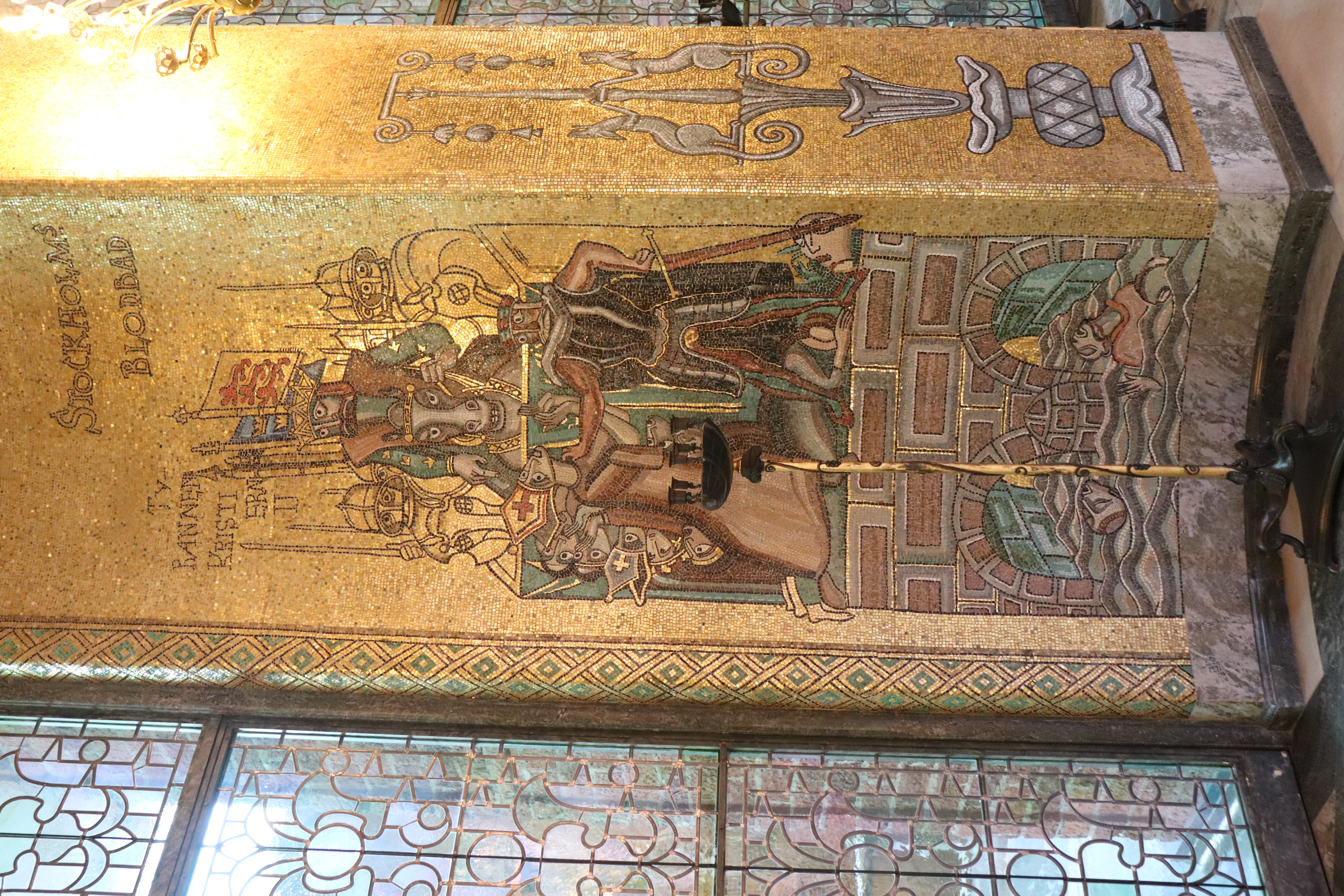
Stockholm Bloodbath
The invitation arrived with promises of amnesty and celebration. In November 1520, Swedish nobles traveled to Stockholm for the coronation of Christian II as their new king, unaware they were walking into a trap. Within three days, nearly one hundred people would lose their heads in the square below Tre Kronor castle, their blood staining the cobblestones in what became known as the Stockholm Bloodbath. This single act of treachery would shatter the Kalmar Union, birth a new nation, and haunt Scandinavian relations for three centuries.
A Kingdom Divided
The massacre grew from decades of simmering tension between those who supported the Kalmar Union binding Scandinavia under Danish rule and those fighting for Swedish independence. Sten Sture the Younger led the anti-unionist faction, while Archbishop Gustav Trolle championed the Danish cause. When Sture besieged Trolle in his fortress at Staket, Christian II saw his opportunity. After two failed invasions repelled by Swedish peasant soldiers, the Danish king returned in 1520 with an army of French, German, and Scottish mercenaries. Stockholm withstood a brutal siege for four months under Lady Kristina's command, but Christian's supplies dwindled faster than the defenders'. He offered generous terms: full amnesty, fiefs for the Swedish nobility, and a promise that all acts against him would be forgotten.
The Trap Springs
Christian was crowned on November 4, 1520, in Storkyrkan Cathedral, swearing to rule through native-born Swedes. Three days later, he invited the assembled nobility to a private conference at the palace. What followed was methodical betrayal. At dusk on November 8, Danish soldiers carrying lanterns and torches entered the great hall and arrested the guests one by one. Archbishop Trolle had prepared the list in advance, marking each victim under the pretense that supporters of Sture had committed heresy. Canon law, Trolle argued, demanded their deaths. Over three days, executioners worked through the proscription list. Even the dead were not spared. Christian ordered Sten Sture's body exhumed and burned, along with that of his child.
The Birth of a Nation
Among the executed was Erik Johansson, whose son Gustav Vasa had escaped earlier Danish captivity. When news of the massacre reached Vasa in the northern province of Dalarna, he found a population ready for rebellion. The peasants rallied to his cause, and together they launched the Swedish War of Liberation. Within three years, Christian's forces were defeated, Sweden was free, and Gustav Vasa sat on the throne as the first king of an independent Sweden. The Union that had bound Scandinavia for over a century was finished. Christian II earned the epithet 'Kristian Tyrann' in Sweden, a name that endures five hundred years later.
Shadows That Linger
The Bloodbath's legacy proved as enduring as the bitterness it created. For nearly three hundred years, Sweden and Denmark remained locked in cycles of war and territorial conflict, both nations viewing the other through the lens of November 1520. Even Swedish conquests, including the annexation of Scania in 1658, were framed as righteous retribution. A persistent Swedish myth claims Danes call Christian II 'the Good,' but Danish historians confirm no such flattering title exists in their tradition. Today, tour guides in Stockholm's Gamla Stan still invoke the massacre to visitors walking the narrow streets where the blood once flowed, the story as fresh as if it happened yesterday rather than half a millennium ago.
From the Air
Located at 59.325°N, 18.071°E in Stockholm's Gamla Stan (Old Town). The medieval street pattern is visible from altitude, with Tre Kronor castle's successor, the Royal Palace, dominating the island. Best viewed from 2,000-3,000 feet AGL. Nearby airports: Stockholm Bromma (ESSB) 5nm west, Stockholm Arlanda (ESSA) 22nm north.