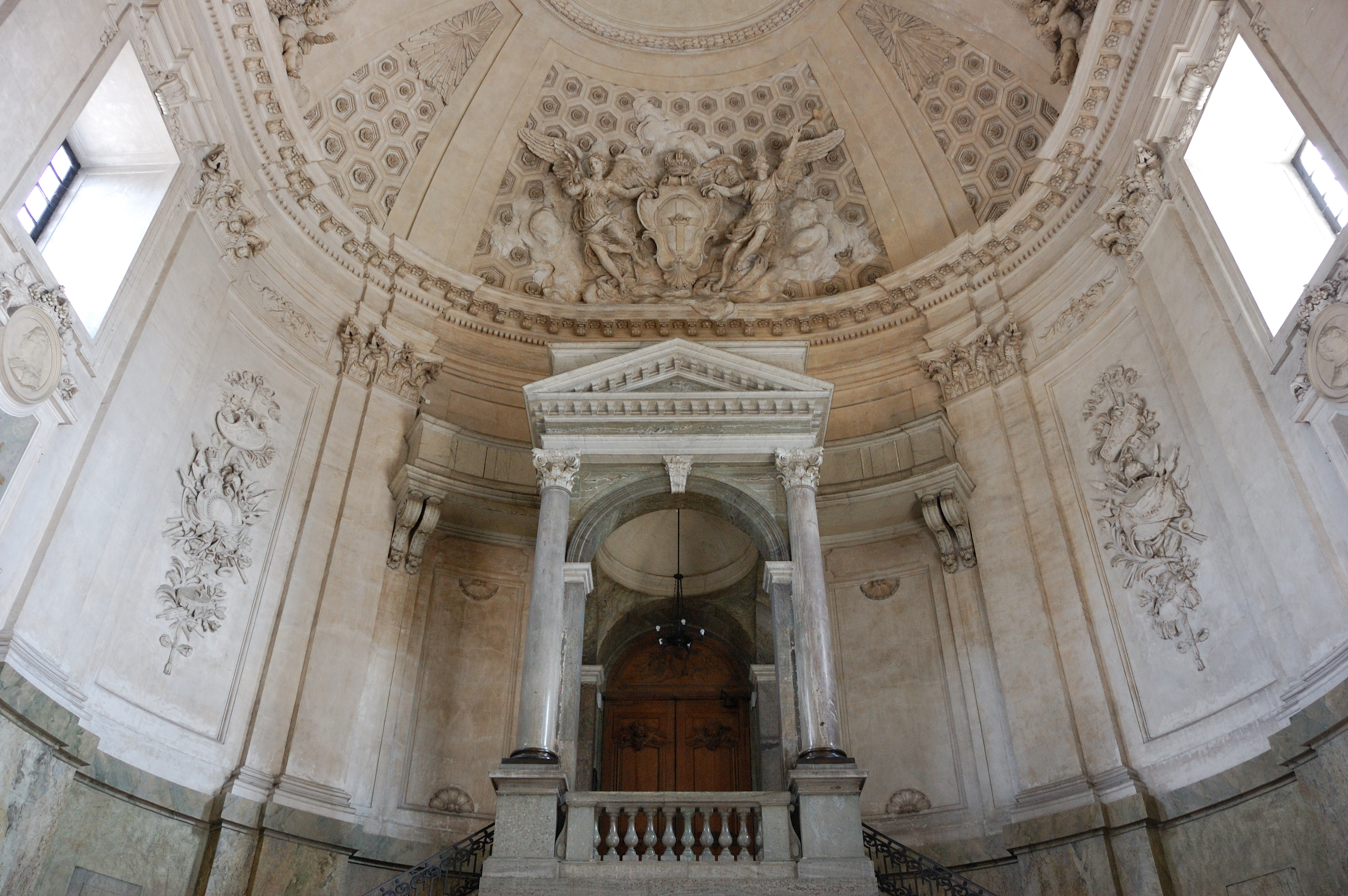
Stockholm Palace
In March 1871, Princess Eugenie saw a ghostly woman in white drifting through the palace corridors. Three days later, Queen Louise died. The White Lady appeared again in 1907, shortly before King Oscar II's death, and once more in 1920, hours before Princess Margaret drew her final breath. Whether one believes in spectral warnings or not, Stockholm Palace has accumulated enough history within its 1,430 rooms to generate legends. Rising on the island of Gamla Stan where the medieval Tre Kronor castle burned catastrophically in 1697, this baroque monument has served as the working headquarters of Swedish monarchy for nearly three centuries.
Born from Fire
The Tre Kronor castle's destruction gave architect Nicodemus Tessin the Younger his commission and his challenge. He designed a palace that would rival any in Europe, with four massive wings surrounding an inner courtyard. Construction stretched across decades. Tessin died in 1728, and Carl Harleman took over, completing work that would not see royal occupants until 1754, when King Adolf Frederick and Queen Lovisa Ulrika finally moved in. The sandstone came from Gotland, the decorative work from the finest craftsmen in Stockholm. Almost half the facade surface consists of that island sandstone, which has weathered problematically ever since oil paint was removed during 1890s renovations. A 22-year facade restoration begun in 2011 continues the perpetual work of preserving Tessin's vision.
Layers of Royal Life
The palace organizes its functions by floor and wing. The Ground Floor, largest in the palace, houses the Hall of State and Royal Chapel, divine and worldly power placed deliberately together in the southern row. The mezzanine's 115 rooms have sheltered court staff and occasionally princes and princesses. The First Floor contains the Bernadotte Apartments, named for Sweden's current royal house, where portraits of Bernadotte family members line the largest gallery. King Carl XVI Gustaf and his family lived in the eastern row's private quarters until moving to Drottningholm Palace in 1981. Of the 1,430 rooms, 660 have windows. The rest exist in the palace's interior maze.
Museums Within the Walls
Sweden's oldest museum occupies the cellars beneath the eastern row. King Gustavus Adolphus founded the Livrustkammaren in 1628, filling it with objects from the Swedish Empire era onward. Gustav III's Museum of Antiquities, opened to the public in 1794 in the northeast wing cellars, displays over 200 antique sculptures the king purchased during his Italian journey of 1783-84. In the southern row cellar, the Treasury has exhibited Sweden's regalia since 1970. The newest museum, the Tre Kronor, opened in 1999 in the northern and western wing cellars, the former kitchens of the burned castle, displaying remnants of the medieval fortress that preceded this baroque replacement.
Where Business Meets Ceremony
The palace remains a working building. About 200 full-time employees report here daily, more than half of them women, with additional staff hired for dinners, summer tours, and guided visits. The Royal Court of Sweden maintains offices throughout the structure, led by the Marshal of the Realm. Charles XI's Gallery in the State Apartments hosts Nobel laureate dinners and post-election receptions, accommodating 200 seated guests. Cabinet meetings with the Swedish government occur several times yearly in the Cabinet Meeting Room. The Princess Sibylla's Apartment serves as everyday reception rooms for the King and Queen, its Blue Drawing Room witnessing the engagement announcements of Carl XVI Gustaf and Silvia Sommerlath in 1976, and Crown Princess Victoria and Daniel Westling in 2009.
The Guard and the Curious
King Gustav I established the Royal Guards in 1523, originally to keep order throughout what is now Gamla Stan. Today they serve as guard of honor and castle security, participating in state ceremonies and visits by foreign dignitaries. The changing of the guards in the Outer Courtyard draws approximately 800,000 spectators annually, making it one of Stockholm's premier tourist attractions. The palace maintains exhibitions, public lectures, a gift shop, and tours through spaces where royal ancestors dined, plotted, prayed, and occasionally encountered a woman in white who seemed to know what was coming.
From the Air
Located at 59.33N, 18.07E on Stadsholmen island in Gamla Stan, Stockholm's old town. The palace dominates the island's northeastern edge, easily identified from the air by its massive rectangular footprint and inner courtyard. Approach from the east over the Baltic for the best view of the ornate southern facade. Stockholm Bromma Airport (ESSB) lies approximately 7km northwest. At 2,000-3,000 feet, the palace's relationship to surrounding waterways and the Royal Palace Park (Logarden) becomes clear.