Stone Mountain
Stone Mountain rises 825 feet above the Georgia piedmont east of Atlanta, a granite dome that has been sacred, commercial, and controversial throughout its history. On its north face, the world's largest bas-relief carving depicts three Confederate leaders on horseback: Robert E. Lee, Stonewall Jackson, and Jefferson Davis. The carving spans three acres - larger than a football field - and took over 50 years to complete. Stone Mountain was the birthplace of the modern Ku Klux Klan, which held its 1915 rebirth ceremony atop the summit. The carving was conceived as a Confederate memorial, funded partly by the Klan, and completed during the Civil Rights era as a statement of Southern white identity. Today, millions visit the state park surrounding the mountain, while the carving's meaning and future remain bitterly contested.
The Mountain
Stone Mountain is a monadnock - an isolated hill of erosion-resistant rock surrounded by lower terrain. The granite dome, formed from molten rock 300 million years ago, rises abruptly from the surrounding piedmont. Native Americans considered it sacred; Creek and Cherokee peoples used the summit for ceremonies. In the nineteenth century, quarrying operations supplied granite for buildings across America. The mountain became a tourist attraction by the 1840s, drawing visitors to climb its slopes. Its bare face would eventually become the canvas for the world's largest sculpture.
The Klan
On Thanksgiving night, 1915, fifteen men climbed Stone Mountain and burned a cross, reviving the Ku Klux Klan that had been dormant since Reconstruction. The rebirth was timed to coincide with the premiere of 'The Birth of a Nation,' D.W. Griffith's racist epic that glorified the original Klan. The new Klan spread rapidly, claiming millions of members by the 1920s. Stone Mountain became its spiritual home - the site of initiations, rallies, and cross burnings that continued for decades. In 1916, the United Daughters of the Confederacy acquired the mountain's north face and proposed a Confederate memorial. The Klan supported the project; Klan members funded early work.
The Carving
Sculptor Gutzon Borglum, who would later carve Mount Rushmore, began work on Stone Mountain in 1923. His original design included Confederate soldiers marching around the mountain. Conflicts with sponsors led to his departure in 1925; he destroyed his models and fled Georgia. Work resumed in 1964 - during the Civil Rights Movement - when the state of Georgia purchased the mountain and commissioned a new sculptor. The carving was completed in 1972, the same year Georgia added the Confederate battle emblem to its state flag. The timing was not coincidental: both were responses to civil rights progress, assertions of white Southern identity through Confederate symbolism.
The Controversy
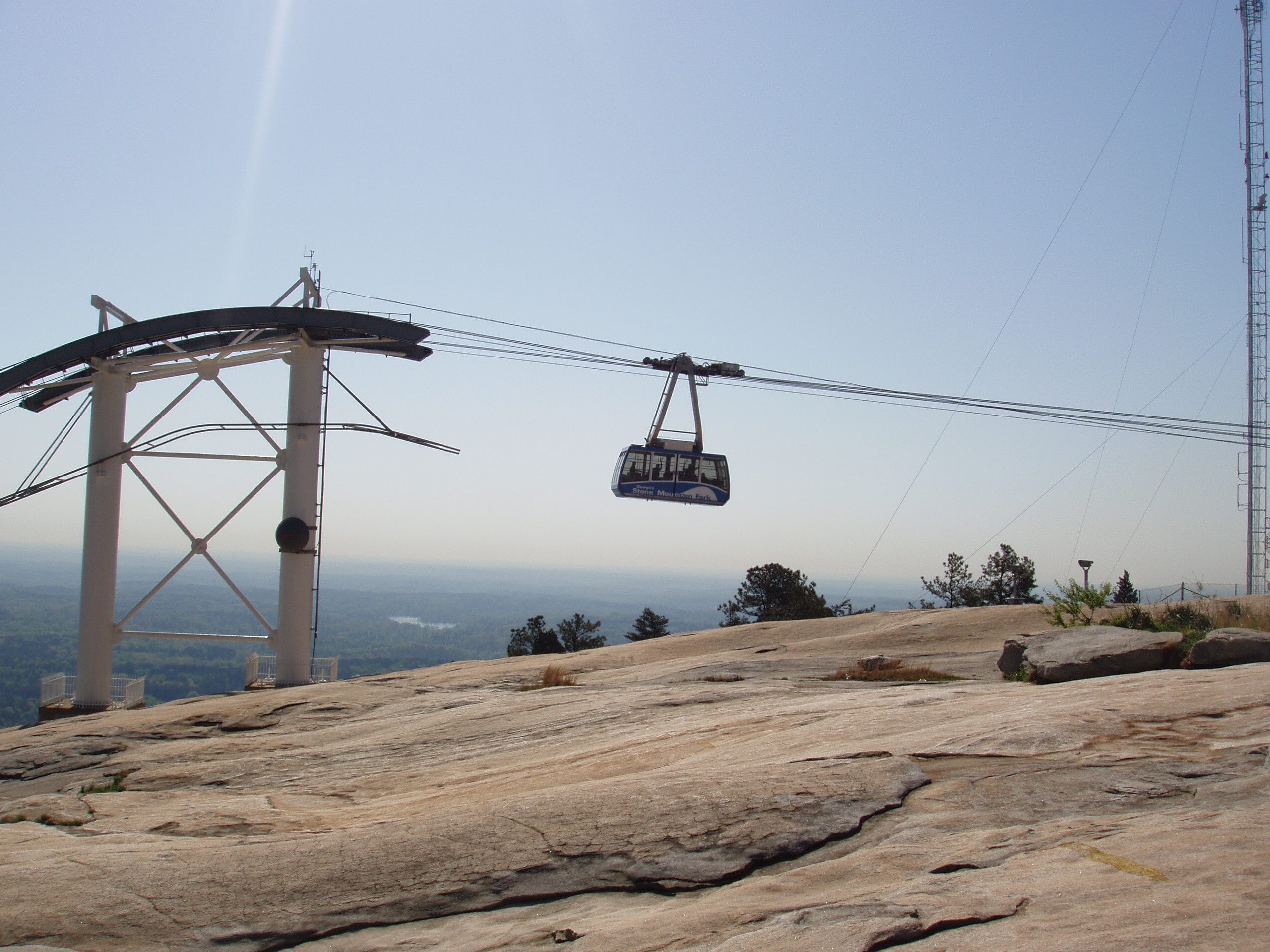
Stone Mountain's meaning has been contested from the beginning. Supporters see a memorial to Southern heritage and military valor. Critics see a celebration of white supremacy, created by Klan supporters during the Civil Rights era specifically to resist integration. In 2015, after the Charleston church massacre reignited debate over Confederate symbols, calls increased to remove or alter the carving. Georgia law protects it. Some proposed additions - figures representing civil rights leaders or interpretive context - have been rejected. The mountain continues to host a laser show celebrating the Confederacy while also serving as a state park with hiking trails, a cable car, and family attractions. The contradiction is unresolved.
Visiting Stone Mountain
Stone Mountain Park is located 16 miles east of downtown Atlanta. The park offers hiking to the summit (1-mile trail, steep), a cable car to the top, a scenic railroad, and various family attractions. The carving is best viewed from the Memorial Lawn on the mountain's north side. Summer evenings feature a laser show projected onto the mountain, controversial for its Confederate themes. The park draws millions of visitors annually, most for outdoor recreation rather than Confederate pilgrimage. The Discovering Stone Mountain Museum provides historical context, though interpretations vary. Hartsfield-Jackson Atlanta International Airport (ATL) is 30 miles southwest. The experience is complex: a beautiful natural landmark bearing an enormous political statement that means different things to different visitors.
From the Air
Located at 33.81°N, 84.15°W in DeKalb County, Georgia, 16 miles east of downtown Atlanta. From altitude, Stone Mountain is visible as a bare granite dome rising above the forested piedmont. The carving on the north face is visible from the air as a lighter area on the gray rock. The surrounding park includes a lake, golf courses, and developed recreation areas. Atlanta's skyline is visible to the west.