Stop Cop City
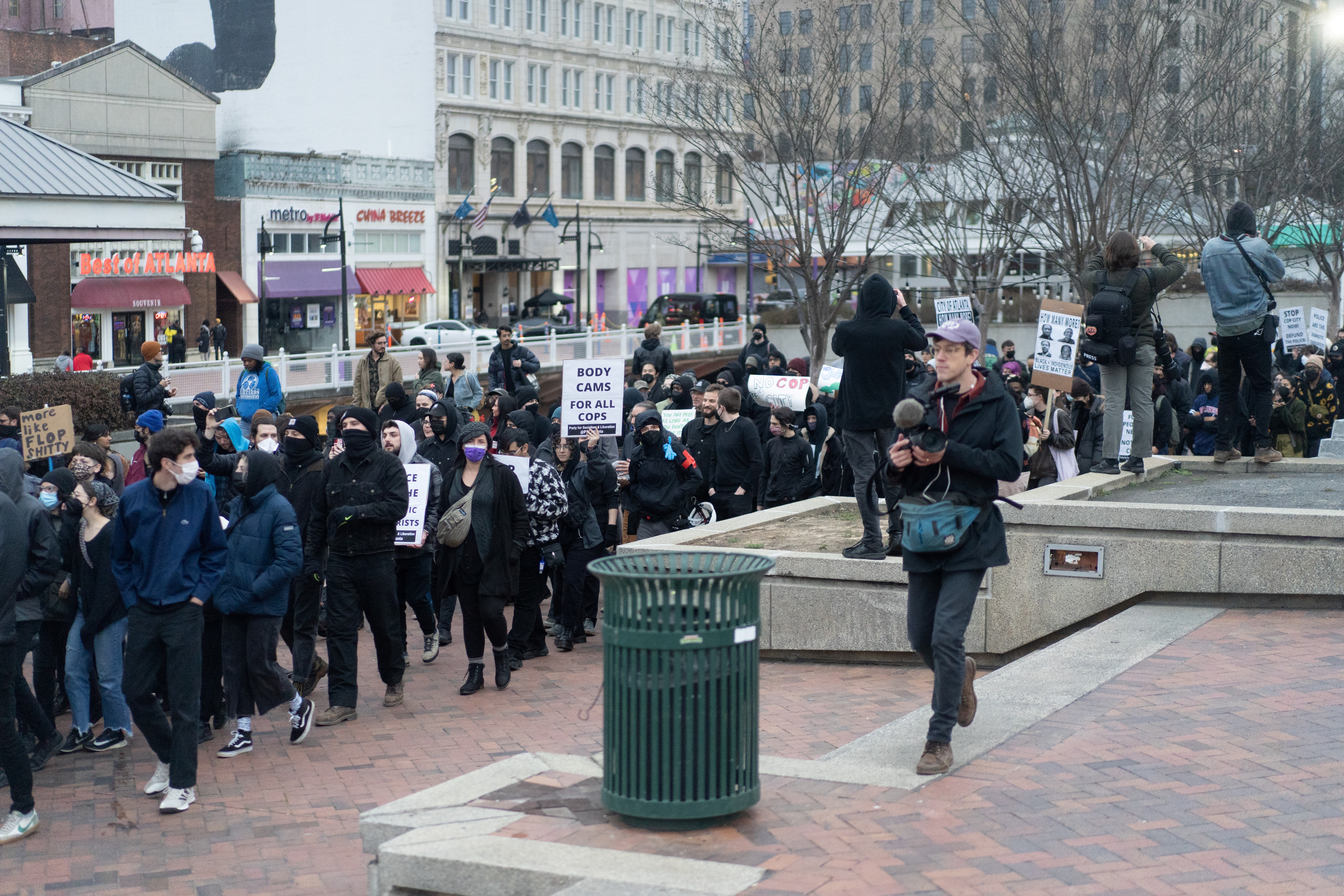
The 116,000 signatures filled boxes. Organizers from a coalition of Atlanta activist groups delivered them in September 2023, nearly double the 60,000 required to force a public referendum on a controversial 85-acre police training facility in the city's South River Forest. The Atlanta City Council refused to count them. That refusal became one chapter in a years-long collision between a city government determined to build what it called a public safety training center and a decentralized protest movement that called it Cop City -- a conflict that drew international attention, produced the largest RICO case ever filed against protesters in the United States, and ended with a protester shot dead by police in the woods.
A Forest and a Proposal
The Atlanta Police Foundation first proposed the facility in 2017 and Atlanta Mayor Keisha Lance Bottoms formally announced it in her 2021 State of the City address. The planned site was an 85-acre tract in the South River Forest, a stretch of urban woodland in unincorporated DeKalb County southeast of Atlanta. Proponents described it as essential infrastructure: a modern training campus that would professionalize the police force and help fight crime. The Atlanta Police Foundation argued the location was appropriate, contending it was "not a forest." Opponents saw it differently. Environmental justice advocates pointed to the site's role as one of Atlanta's largest remaining green spaces. Community organizations organized around racial, housing, food, and environmental justice joined the opposition. In September 2021, after 17 hours of public comment from over 1,100 people -- 70 percent of whom opposed the project -- the Atlanta City Council approved the plans anyway.
Tree Sits and Terrorism Charges
What began as public comment and community organizing escalated into direct action. Activists established encampments in the forest, building tree houses and occupying the land to physically block construction. The movement, operating under the banners "Defend the Atlanta Forest" and "Stop Cop City," drew participants from across the political spectrum -- environmental activists, prison abolitionists, neighborhood residents, and others. The response from law enforcement was severe. In December 2022, five people were arrested and charged with domestic terrorism -- a charge that drew immediate scrutiny from legal scholars and civil liberties organizations. Amnesty International, Human Rights Watch, the National Lawyers Guild, and the Center for Constitutional Rights co-signed a letter calling the domestic terrorism charges "an escalatory intimidation tactic" intended to chill First Amendment-protected activity. The Georgia Bureau of Investigation stated that road flares, gasoline, and explosive devices were found in the area.
January 18, 2023
The conflict turned fatal on a winter morning. Georgia State Troopers and other agencies launched a raid on the forest encampment. During the operation, a trooper was shot in the leg. Manuel Esteban Paez Teran, a Venezuelan protester known as Tortuguita, was shot and killed by police. Officers said Tortuguita had fired on them after they deployed pepper balls into Tortuguita's tent. The GBI's ballistic analysis matched the projectile from the trooper's wound to a handgun found in Tortuguita's possession. No body camera footage existed because Georgia State Patrol officers did not wear body cameras. An independent autopsy commissioned by Teran's family found that Tortuguita had been shot 14 times while sitting cross-legged with hands raised. Documents released in 2025 appeared to confirm Teran shot at police but also indicated officers may have precipitated the confrontation by escalating with pepper balls only three minutes after making contact. The killing brought national and international attention. Vigils erupted in cities from Bridgeport to Tucson. In Atlanta, protests turned to riots, and Governor Brian Kemp called in the National Guard.
Sixty-One Names on an Indictment
The legal aftermath was unprecedented. In May 2023, the GBI and Atlanta police conducted a SWAT-style raid on the Atlanta Solidarity Fund, a bail fund supporting arrested protesters. Three organizers were charged with charity fraud and money laundering; all 15 money laundering charges were dropped by September. Then in September 2023, the state brought its heaviest weapon: 61 people who had been arrested in the forest or at Stop Cop City protests were charged with racketeering under Georgia's RICO law. Legal observers called it likely the largest criminal conspiracy case ever filed against protesters in the United States. On June 6, 2023, the Atlanta City Council had voted to approve $31 million in funding after another marathon session -- over 16 hours of public comment, with more than 1,000 people signed up to speak, the vast majority opposed. Hundreds were not admitted to the building. As of April 2025, the racketeering case was stalled, with defendants reporting difficulty finding work during more than 20 months awaiting trial.
Built Over Objections
Construction proceeded through continued protests. Clergy members chained themselves to bulldozers. Over 400 protesters attempted to march onto the construction site in November 2023, and were met with pepper spray, tear gas, flash-bang grenades, and armored vehicles. Activists scaled a 250-foot crane at a contractor's site and unfurled a banner reading "Drop Cop City." The Atlanta Public Safety Training Center opened in April 2025. By that time, the movement had expanded far beyond the forest. It had prompted legal battles over referendum rights when the city refused to count those 116,000 signatures, drawn connections to international policing partnerships, and raised fundamental questions about how domestic terrorism statutes could be applied to protest. The South River Forest still stands around the facility's perimeter, diminished but present -- a green remnant of the contested ground where the boundaries of American protest law were tested, and where a protester named Tortuguita died in the trees.
From the Air
Located at approximately 33.694N, 84.336W in unincorporated DeKalb County, southeast of Atlanta, Georgia. The Atlanta Public Safety Training Center (completed 2025) sits within the South River Forest, visible as a cleared area within the urban tree canopy. Nearest airports: Hartsfield-Jackson Atlanta International Airport (KATL) approximately 8nm southwest, DeKalb-Peachtree Airport (KPDK) approximately 9nm north. The surrounding South River Forest is a notable green corridor. Best viewed at 2,000-4,000 feet AGL, where the contrast between the training facility and surrounding forest canopy is apparent.