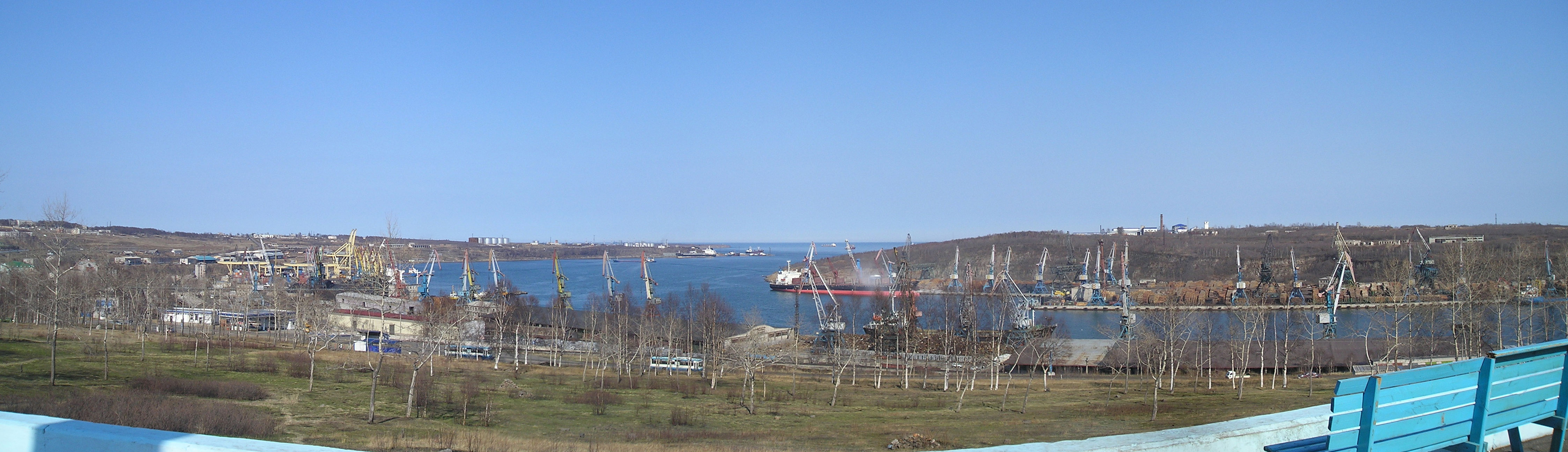
Strait of Tartary
Explorer after explorer turned back. In 1787, La Perouse sailed north into the narrowing channel between Sakhalin and the Asian mainland, watched the water grow shallow, and concluded he had reached the head of a bay. He reversed course, even though local people had told him Sakhalin was an island. A decade later, William Broughton reached the same conclusion and also turned south. In 1805, Adam Johann von Krusenstern failed to push through from the north. The Strait of Tartary kept its secret for decades -- a waterway connecting the Sea of Okhotsk to the Sea of Japan that looked, from every angle of approach, like a dead end. It was not until 1848 that the Russian admiral Gennady Nevelskoy finally proved the passage existed. The Russians then classified the discovery and used it to evade a British fleet during the Crimean War.
A Name from a Vanished World
"Tartary" was the European name for the vast steppe lands stretching from Inner Asia to the Pacific -- a label applied indiscriminately to the domains of Turkic and Mongol empires. When La Perouse charted the waters between Sakhalin and what Europeans called "Chinese Tartary" in 1787, the strait inherited the name. In Japan, the same body of water is called Mamiya Strait, after Mamiya Rinzo, who traveled there in 1808 -- a fact little known in Europe until Philipp Franz von Siebold published it decades later. On Russian maps, the geography is divided more precisely: the narrow pinch south of the Amur's mouth is Nevelskoy Strait, the waters into which the river flows are the Amur Liman, and the wider southern passage carries the Tartary name. During the Yuan dynasty, Mongol armies had crossed these very waters in their invasions of Sakhalin, and alleged remnants of a Chinese fort from that era can still be found on the island.
Cold War Waters
On September 1, 1983, the southeastern part of the strait became the site of one of the Cold War's most harrowing incidents. Korean Air Lines Flight 007, carrying 269 people including U.S. Congressman Larry McDonald, strayed into Soviet airspace and was attacked by a Soviet Su-15 interceptor just west of Sakhalin Island. The aircraft came down in the waters near Moneron Island, the strait's only significant landmass. An intensive naval search by American, Japanese, and Korean vessels covered 225 square miles of the strait north of Moneron. Three decades earlier, the strait had claimed another victim: the Soviet submarine S-117, a Shchuka-class boat lost on or about December 15, 1952, to unknown causes. All forty-seven crewmen died. Whether the sub struck a mine or collided with a surface vessel was never determined.
The Passage Nobody Uses
A glance at the map suggests the Strait of Tartary should be a natural shipping corridor between the Sea of Japan and the Sea of Okhotsk. In practice, it rarely works that way. The Sakhalin Shipping Company, which operates the route from Vanino to Magadan, sends its vessels around Hokkaido in winter via Tsugaru Strait, and around Sakhalin in summer via La Perouse Strait. Only on return trips from Magadan to Vanino, with light loads and favorable weather, do the ships take the direct route through the Amur Liman and Nevelskoy Strait. Since 1973, the Vanino-Kholmsk train ferry has operated across the strait, connecting Khabarovsk Krai on the mainland with the port of Kholmsk on Sakhalin. A tunnel under the strait was started under Joseph Stalin but abandoned after his death. Politicians have periodically revived proposals for a tunnel or bridge, but none has advanced beyond discussion.
Between Two Seas
The strait's fundamental character has not changed since it baffled La Perouse: it remains shallow, difficult, and easy to underestimate. In 1956, the Soviet government proposed building a causeway to block cold water from flowing south into the Sea of Japan, claiming it would raise regional temperatures -- a geoengineering fantasy that quietly died. What persists is the strait's geographic reality as a hinge point between two enormous bodies of water, a borderland where the Amur River empties into the Pacific and where the interests of Russia, Japan, China, and Korea have collided for centuries. From the air, the narrowest section is barely visible as a gap between Sakhalin's western coast and the mainland hills -- the same ambiguity that turned back three generations of European navigators.
From the Air
Located at 52.18N, 141.62E between Sakhalin Island and the Russian mainland. The strait connects the Sea of Okhotsk to the Sea of Japan. From cruising altitude, look for the dramatic narrowing at Nevelskoy Strait near the Amur River mouth. Nearest airports: Nikolayevsk-on-Amur (UHNN) to the north, Yuzhno-Sakhalinsk (UHSS) on Sakhalin. Best viewed at 10,000-15,000 ft to appreciate the full length of the waterway and Moneron Island to the south. Ice coverage varies dramatically by season.