Structure of the Common Security and Defence Policy
On the third floor of an office block on the Avenue de Cortenbergh in Brussels, a few dozen military officers sit at workstations watching live feeds from Mali, Somalia, and Mozambique. They wear different uniforms. They report through a chain of command that did not exist before 2017. They work for an institution most Europeans cannot name and which most of their own governments would describe, in private, as a polite fiction with growing teeth. This is the Military Planning and Conduct Capability - the MPCC, in the inevitable acronym - and it is the closest thing the European Union has ever had to a permanent military headquarters. Its existence is the most concrete answer yet to a question the EU has spent twenty-five years trying to answer: what does common security and defence actually mean?
What the Treaty Says
The Common Security and Defence Policy is a creature of Articles 42 through 46 of the Treaty on European Union, the founding document of the post-Maastricht EU as amended at Lisbon in 2009. Article 42.2 commits the Union to the progressive framing of a common defence policy that will lead, when the European Council unanimously agrees, to a common defence. That last clause is doing a lot of work. Unanimity in the European Council means twenty-seven heads of government in the same room agreeing on something - and where defence is concerned, several of those governments are constitutionally neutral. Austria and Ireland have explicit neutrality traditions. Malta and Cyprus have political reasons to be cautious. The treaty thus describes a destination without specifying when, or if, the Union will arrive. Everything the CSDP has built since then has been built within that constraint.
Operation Atalanta
The most successful EU military mission to date was launched at sea, far from Brussels. Operation Atalanta - formally EU NAVFOR Somalia - began in December 2008 in response to Somali piracy that was costing the world economy billions of dollars a year and putting humanitarian shipments to East Africa at risk. EU naval vessels from Germany, France, Spain, Italy, the Netherlands, and a rotating cast of smaller contributors patrolled the Gulf of Aden and the Indian Ocean off the Horn of Africa, escorting World Food Programme deliveries and intercepting pirate skiffs. The mission's headquarters was originally at Northwood, near London - awkward, after Brexit - and was relocated to Rota in Spain in 2019. Successful piracy attacks off Somalia fell from 176 in 2011 to single digits within a few years. Atalanta is still running. It is the proof that the CSDP can do real things when member states actually agree to do them.
The Acronym Forest
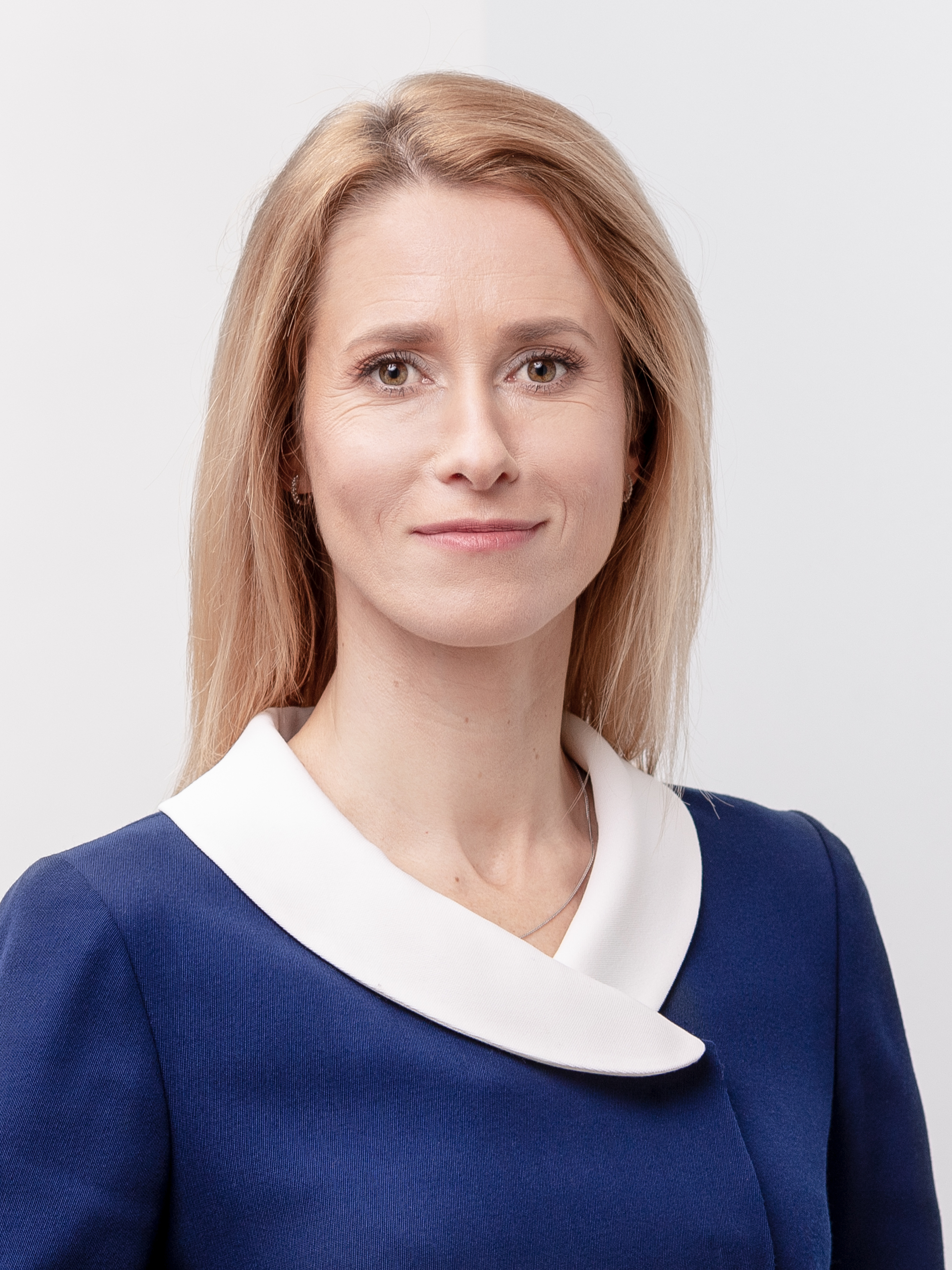
The institutional map is dense. The High Representative of the Union for Foreign Affairs and Security Policy - HR/VP, currently Kaja Kallas, who took office in December 2024 - sits at the top, simultaneously chairing the Foreign Affairs Council, serving as vice-president of the European Commission, and heading the European Defence Agency. The External Action Service (EEAS) is the EU's diplomatic and defence ministry; inside it sit the EU Military Staff (EUMS), the Intelligence and Situation Centre (EU INTCEN), the Crisis Management and Planning Directorate (CMPD), and the Civilian Planning and Conduct Capability (CPCC) that runs every civilian mission. The Council of the European Union contributes its own preparatory bodies - the Political and Security Committee (PSC), the Military Committee (EUMC) representing member states' Chiefs of Defence, the Committee for Civilian Aspects of Crisis Management (CIVCOM), and the Politico-Military Group (PMG). Four agencies sit alongside: the European Defence Agency in Brussels, Frontex in Warsaw, the Institute for Security Studies in Paris, and the Satellite Centre at Torrejon de Ardoz in Spain. Each acronym has staff, budget, mandate, and history.
The MPCC and PESCO
Two changes since 2017 have moved the architecture from theoretical toward operational. The Military Planning and Conduct Capability, established that year and expanded in 2020, finally gave the EU a permanent operational headquarters for non-executive military training missions in Mali, the Central African Republic, Mozambique, and Somalia. Before MPCC, every EU mission needed an ad-hoc headquarters volunteered by a member state - a structural weakness NATO never had. The Permanent Structured Cooperation, or PESCO, launched the same year, is the framework in which twenty-six of the twenty-seven national armed forces pursue structural integration on specific projects: shared cyber response teams, joint training centres, common vehicle platforms. Denmark, the historical CSDP holdout, abandoned its opt-out in 2022 after Russia invaded Ukraine. The European Defence Fund, also created in 2017, became the first time EU budget money funded multinational defence research and development - a quiet but consequential shift.
Europe's Brussels Pentagon
Walk past the Kortenberg building, the Justus Lipsius, and the European External Action Service headquarters on the Rond-point Schuman and you can locate most of the CSDP's nervous system within a few blocks. The pattern is deliberate. The CSDP was built in Brussels, by people who needed to walk between meetings, and the result is a defence architecture organised around the politics of consensus rather than the geography of a war. Critics call it the European Defence Union - sometimes hopefully, sometimes dismissively, depending on who is speaking. Supporters point to Operation Atalanta, the training missions in the Sahel, the rapid coordination after Russia's 2022 invasion of Ukraine, and the steady expansion of PESCO projects as evidence that something real is being built, however slowly. The treaty still says common defence will come when the European Council unanimously decides. Until that day, the structure keeps quietly growing inside its constraints.
From the Air
The CSDP's core institutions cluster around the European quarter at roughly 50.845 N, 4.390 E. The Rond-point Schuman - with the Berlaymont Commission building, the Justus Lipsius Council building, and the EEAS - sits 1 km east; the EU Military Staff and PESCO secretariat are 500 m north on the Avenue de Cortenbergh. The European Parliament's Espace Leopold lies 700 m south. Brussels Airport (EBBR) is 9 km north-east; Brussels-Charleroi (EBCI) is 45 km south. Brussels Class C TMA covers the area to FL095; expect frequent EBBR arrival traffic descending overhead toward runway 25L.