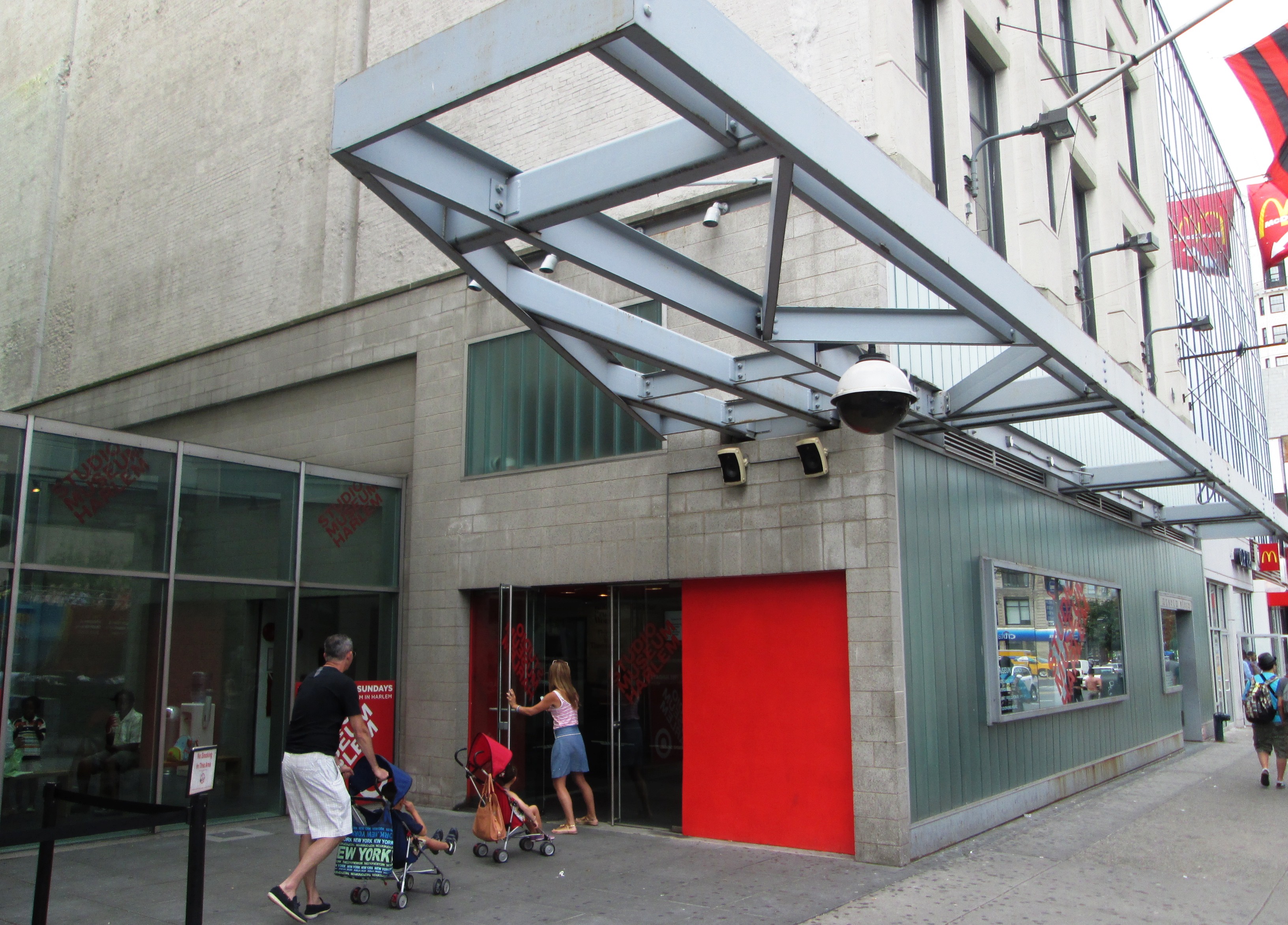
Studio Museum in Harlem
The first exhibition was a light show. In September 1968, in a rented loft where Fifth Avenue meets 125th Street, the Studio Museum in Harlem opened with Electronic Reflections II, featuring the technology-driven light sculptures of Tom Lloyd. There were no marble halls, no endowment, no permanent collection. What there was, instead, was an idea: that the African-American community deserved a museum woven into the fabric of its daily life, not kept at a distance in some other neighborhood's grand institution. Painter William T. Williams and sculptor Melvin Edwards rolled up their sleeves and converted the industrial space at 2033 Fifth Avenue into working studios with their own hands. The first artist to claim the top-floor space was printmaker Valerie Maynard. From that scrappy beginning grew one of the most important art institutions in the United States.
The Studio in the Museum
The name says everything. This was never meant to be a place where art merely hung on walls. The Studio Museum's founding vision centered on creation itself -- giving artists of African descent a place to work, to experiment, and then to show what they had made to the community around them. The Artist-in-Residence program, which grew from that original impulse, offers three emerging artists each year an eleven-month residency with free studio space and a stipend. Over a hundred alumni have passed through the program, many going on to major careers. The permanent collection now holds approximately 2,000 works spanning drawings, prints, photographs, and installations, including pieces by Romare Bearden, Jacob Lawrence, Elizabeth Catlett, and Betye Saar. The museum also serves as custodian of the extensive archive of photographer James VanDerZee, whose images chronicle Harlem life through the 1920s, '30s, and '40s.
Keepers and Builders
The museum's history reads as a chain of visionary leaders. Gylbert Coker, its first chief curator from 1970 to 1978, built the registration system for the art collection and rescued Works Progress Administration murals at Harlem Hospital that had been painted by Charles Alston. She curated landmark shows on Bob Thompson and Hale Woodruff that reshaped how their work was understood. In the education department, a young Carrie Mae Weems -- who would later become one of the most celebrated artists in America -- cut her teeth. Directors from Edward Spriggs through Mary Schmidt Campbell to the current director, Thelma Golden, have each expanded the institution's reach while keeping its roots firmly in Harlem soil. In October 2024, the Ford Foundation affirmed that commitment with a $10 million grant to endow the director and chief curator positions.
Seven Stories Rising
For years, the museum operated out of a modest building at 144 West 125th Street. When plans for a new structure were announced, the institution raised more than $300 million for construction, endowment, and operations. The project weathered turbulence -- the museum severed ties with its original architect in 2023 following allegations of misconduct -- but work continued. On November 15, 2025, the doors opened on a seven-story building of glass and gray precast concrete, its facade punctuated by openings of varying sizes that let Harlem's light filter through. Inside, five floors of exhibition space cover 82,000 square feet. A roof terrace crowns the top floor. The inaugural exhibition circled back to the beginning, featuring new work by Tom Lloyd alongside pieces by more than one hundred Artist-in-Residence alumni. The gala celebrating the opening raised over $3.7 million.
Harlem's Living Room
Walk along 125th Street and you feel the pulse of Harlem's cultural corridor -- the Apollo Theater to the west, Marcus Garvey Park to the east. The Studio Museum sits in the middle of that current, drawing energy from the neighborhood while feeding it back. Its public programming includes lectures, panel discussions, and performances that are as much community gathering as art event. David Hammons's African-American Flag, which flew outside the old building, became one of the most recognized symbols of the museum's philosophy: art is not separate from identity, from struggle, from celebration. The museum's $160 million new home is the most tangible statement yet that Black art deserves not just space, but permanence.
From the Air
Located at 40.808N, 73.948W on West 125th Street in Harlem, Manhattan. The seven-story building sits along Harlem's main commercial corridor. Nearby airports include KLGA (LaGuardia, 6 nm east) and KJFK (JFK, 14 nm southeast). Best viewed at 2,000-3,000 ft AGL. Look for the dense urban grid of upper Manhattan with Central Park visible to the south.