Suchitoto
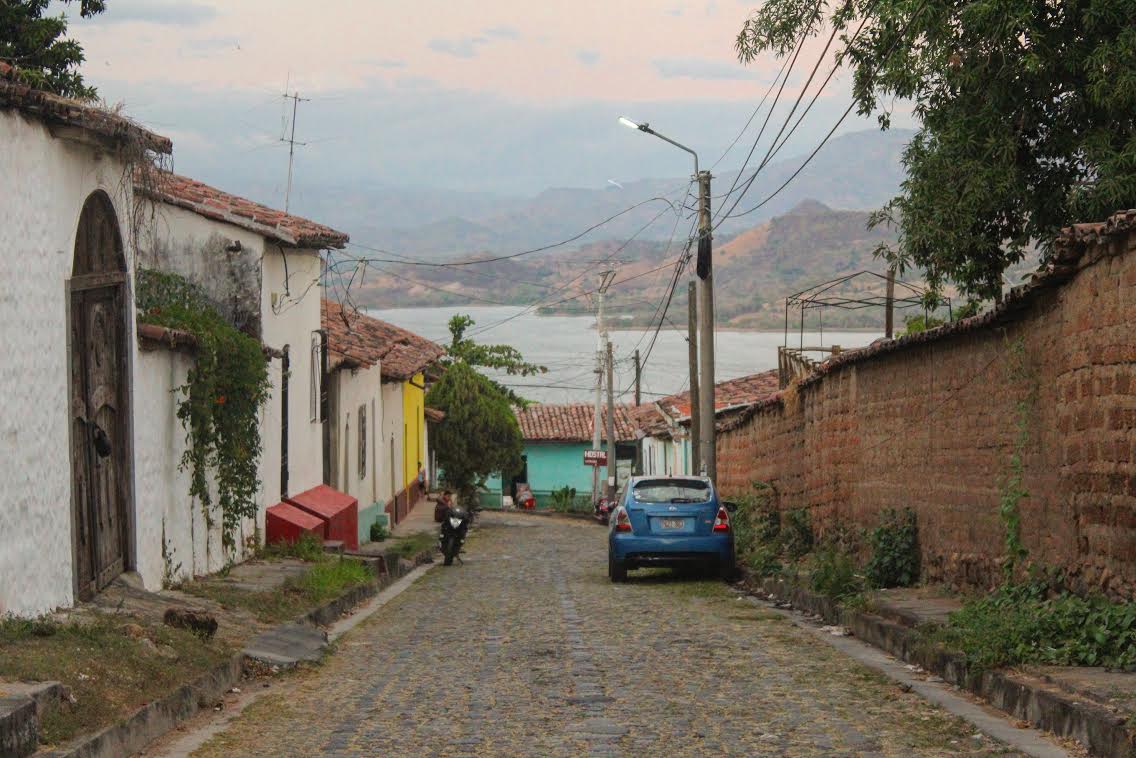
The cobblestones are original. That matters in a country where civil war, earthquakes, and modernization have erased much of the colonial built environment. In Suchitoto, a town of about 7,700 people perched on a hillside above the Lempa River valley in central El Salvador, the Spanish colonial streetscape has survived largely intact -- whitewashed walls, iron balconies, terracotta roofs, and the kind of unhurried atmosphere that convinces travelers to stay longer than they planned. Within its municipal territory lies the site where the Villa of San Salvador was first founded in 1528, abandoned shortly after, and eventually reestablished in its current location. Suchitoto has been inhabited continuously since long before the Spanish arrived, and today it is quietly becoming one of Central America's most appealing small towns.
Cobblestones and Chicken Buses
Getting to Suchitoto is part of its charm. Frequent buses run from San Martin on the Pan-American Highway, connecting to eastbound services from San Salvador or westbound from San Miguel. From the Honduran border at La Palma to the northwest, travelers transfer between chicken buses at Aguilares and wait at the crossroads for the Suchitoto connection. The town itself is small enough to cover entirely on foot, though the walk back uphill from the lake earns its sweat in the midday heat. For those unwilling to climb, tiny enclosed red taxis -- distinctive and faintly comical -- make the run from the lakeshore for a few coins.
Where the Lake Meets the Hills
Below Suchitoto, the Lempa River widens into a reservoir that locals treat as a lake. Boat tours leave from the shore -- thirty minutes for a flat twenty dollars regardless of passenger count, though haggling is considered acceptable. Turtles surface at the water's edge, more commonly during the wet season and in the evening hours. The waterfall at Cascada los Tercios drops over a wall of hexagonal basalt columns that look engineered but are entirely natural, formed by the slow cooling of ancient lava. Above it all, the Iglesia Santa Lucia anchors the central plaza, its white facade visible from the lake below. The town's elevation keeps it slightly cooler than the Salvadoran lowlands, though "slightly" is doing heavy lifting in a country where the heat is relentless.
Art Where War Once Was
Suchitoto's rise as a cultural destination is recent and deliberate. The town was heavily affected during El Salvador's civil war, which ended in 1992, and its recovery has been shaped by a growing community of artists, gallery owners, and café proprietors who saw in its preserved architecture and hilltop setting something worth building upon. Arts and cultural spaces have opened throughout the town, providing creative outlets and alternative opportunities for local youth. The Thousand Plates and More Museum -- a small, eccentric collection covering its walls with plates and antique objects from around the world -- is run by a Salvadoran couple who spent 35 years in Los Angeles before returning home. Their enthusiasm is infectious, their English fluent, and their guided tour free with the modest admission.
Horchata at Sunset
The social life of Suchitoto revolves around its central square and the cafes that have multiplied with tourism. Casa 1800 Suchitoto, set in a garden with views down to the lake, serves what at least one local insists is the best horchata in town -- a claim worth testing even if the prices run a little higher than the market stalls. For something louder, Rockochitlan Grill and Music keeps the beer cheap and the rock music steady. Cheap, filling canteen meals are served on the top floor of the Suchitoto Municipal Market, just steps from the plaza, though finding the restaurant area requires a little wandering. That wandering is the point. Suchitoto is a town designed for aimless walking, accidental discoveries, and the quiet realization that you have nowhere you need to be.
From the Air
Coordinates: 13.94N, 89.03W. Suchitoto is visible from altitude as a compact hilltop settlement north of the Lempa River reservoir (Cerron Grande) in the Cuscatlan Department. The lake and its irregular shoreline are the dominant visual feature from above, with the town clustered on the hillside to the north. Nearest major airport is El Salvador International (MSLP) at Comalapa, approximately 60 km south. San Salvador is about 47 km to the south. The Pan-American Highway runs east-west through San Martin, the main transit connection point.