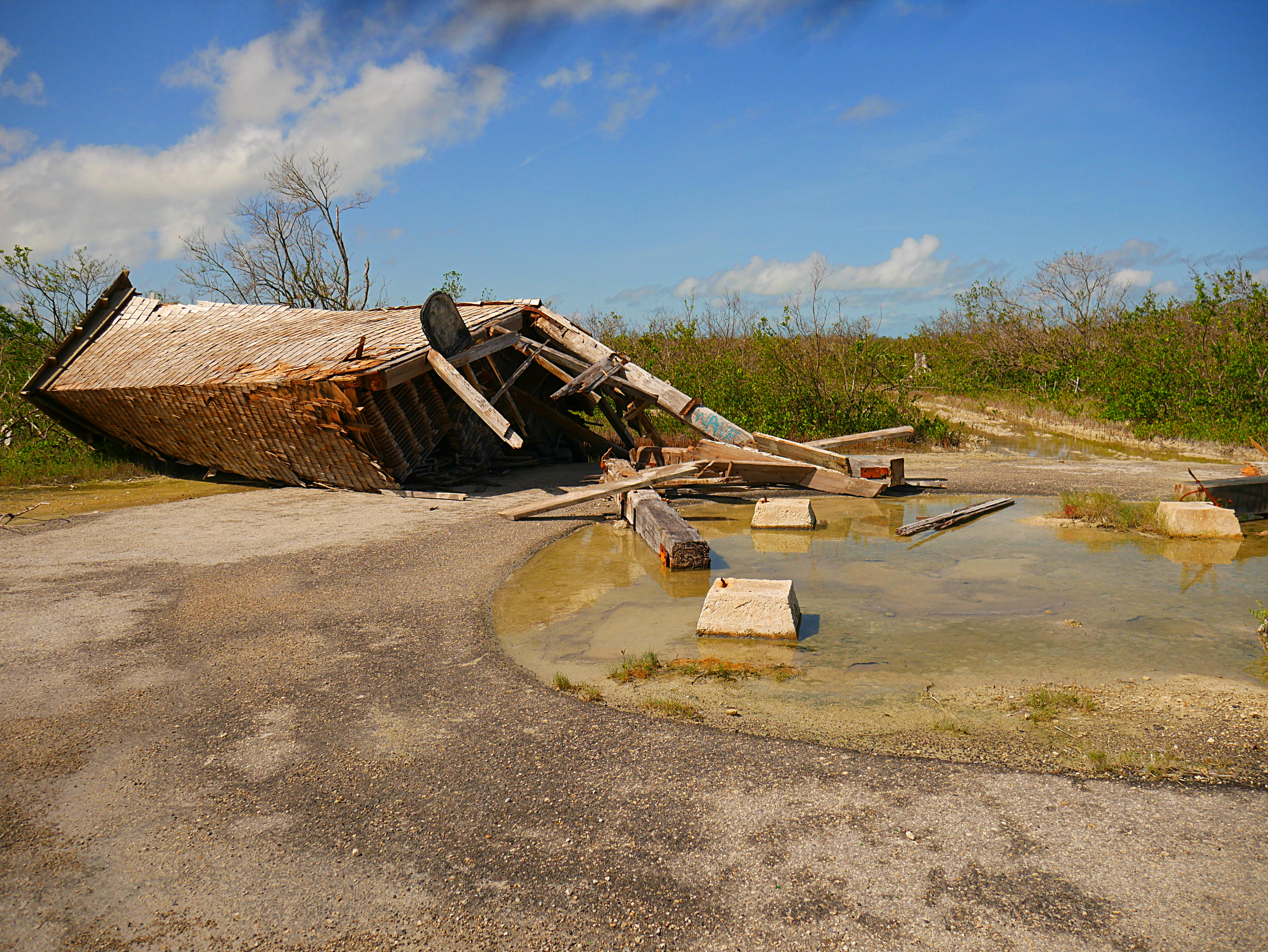
Sugarloaf Key Bat Tower
The plan was elegant in its simplicity: build a tower, fill it with bats, and let the bats eat the mosquitoes. Richter Clyde Perky, a real estate developer from Denver who had sunk his fortune into a fishing lodge on Lower Sugarloaf Key, was desperate. The mosquitoes in the Florida Keys were legendary, thick enough that his construction manager complained you had to rake the bugs off your arms in the late afternoon. Perky's lodge was beautiful, waterfront, positioned to attract wealthy fishing enthusiasts. But no one wants to fish in a cloud of mosquitoes. So in 1929, Perky purchased plans from Charles Campbell of Texas, an early pioneer of bat studies, and spent $10,000 to construct a Hygiostatic Bat Roost on his property. He coated the interior with bat guano laced with pheromones to attract the bats. Then he waited. The bats never came.
A Man, a Lodge, and a Plague of Mosquitoes
Richter Clyde Perky was not a man who did things halfway. He had come to the Florida Keys from Denver with a vision: a handsome waterfront resort on Lower Sugarloaf Key, positioned at mile marker 17 along what would become U.S. Route 1, catering to sport fishermen drawn by the tarpon and bonefish of the backcountry flats. The lodge was built, the guests were invited, and the mosquitoes arrived first. The Lower Keys in summer are a breeding ground for mosquitoes on a scale that is difficult to overstate. Malaria was a genuine threat. Guests fled. Perky needed a solution that did not involve dousing his paradise in kerosene smoke, and he found one in the work of Dr. Charles Campbell, a San Antonio physician who had been championing bats as natural mosquito control since the early 1900s. Campbell designed structures he called Hygiostatic Bat Roosts and sold the plans to anyone willing to build one.
The Tower That Bats Refused
The tower Perky built was a tapered, 30-foot-tall structure of pine and cypress, with louvered openings facing the prevailing wind, a central shaft for guano removal, and dense honeycombed walls of cypress bat corrugation that served as roosting shelves. It was, by Campbell's standards, a well-designed roost. Perky imported bat guano and smeared it throughout the interior as bait, adding pheromone mixtures that Campbell claimed would attract colonies of free-tailed bats. The bats were unimpressed. In its entire existence, not one bat ever roosted in the Sugarloaf Key Bat Tower. Whether the location was wrong, the bait insufficient, or the local bat population simply uninterested, no one knows for certain. Perky's lodge eventually failed. The tower, however, endured, standing empty and eccentric beside the Overseas Highway for decade after decade, a monument to optimism and mosquitoes.
Eighty-Eight Years of Standing Empty
The Sugarloaf Key Bat Tower outlasted its builder, his lodge, and the original road that ran past it. It became a roadside curiosity, one of those strange Florida landmarks that travelers stopped to photograph without quite understanding what they were looking at. On May 13, 1982, the National Register of Historic Places added the tower, recognizing it as one of only a handful of surviving Campbell bat roosts in the world. At the time, fourteen had been built worldwide; by the twenty-first century, only two others still stood, both in Texas: one in Comfort and one at the Shangri-La Gardens in Orange. At least one of the Texas towers has been internally reconstructed and successfully hosts roosting bats. A fourth tower, in Temple Terrace, Florida, burned in 1979, leaving only its concrete base and legs. The Sugarloaf tower, never having attracted a single bat, remained the most famous failure of the lot.
Hurricane Irma and the Fall
On September 10, 2017, Hurricane Irma's devastating winds toppled the Sugarloaf Key Bat Tower. After 88 years of standing against tropical storms, salt air, and the general entropy of the Florida Keys, the empty roost finally fell. The tower had survived without bats, without a purpose, and without much maintenance, held upright by the stubborn engineering of its cypress frame and the dry humor of the Keys, where failure is just another kind of local character. As of late 2017, it had not been decided whether the tower would be repaired or re-erected. The tower had already achieved a kind of literary immortality: it appears in Tim Dorsey's novel Torpedo Juice, Neil Gaiman's American Gods, and Tom Corcoran's Gumbo Limbo. According to local folklore, a skunk ape, Florida's answer to Bigfoot, was responsible for some early damage to the structure and for driving off some of the bats. Whether this explains anything is left to the reader.
From the Air
Located at 24.650N, 81.573W on Lower Sugarloaf Key, approximately one mile northwest of U.S. Route 1 at mile marker 17. The tower was toppled by Hurricane Irma in September 2017, so the structure is no longer standing. The site is on the bayside (north) of the key. From altitude, Lower Sugarloaf Key is visible as one of the larger keys in the lower chain, with the Overseas Highway cutting across it. Key West International Airport (KEYW) is approximately 15 nautical miles southwest. Naval Air Station Key West (KNQX) is also nearby. The mangrove-lined shoreline and shallow backcountry flats surrounding the key are characteristic of the lower Florida Keys.