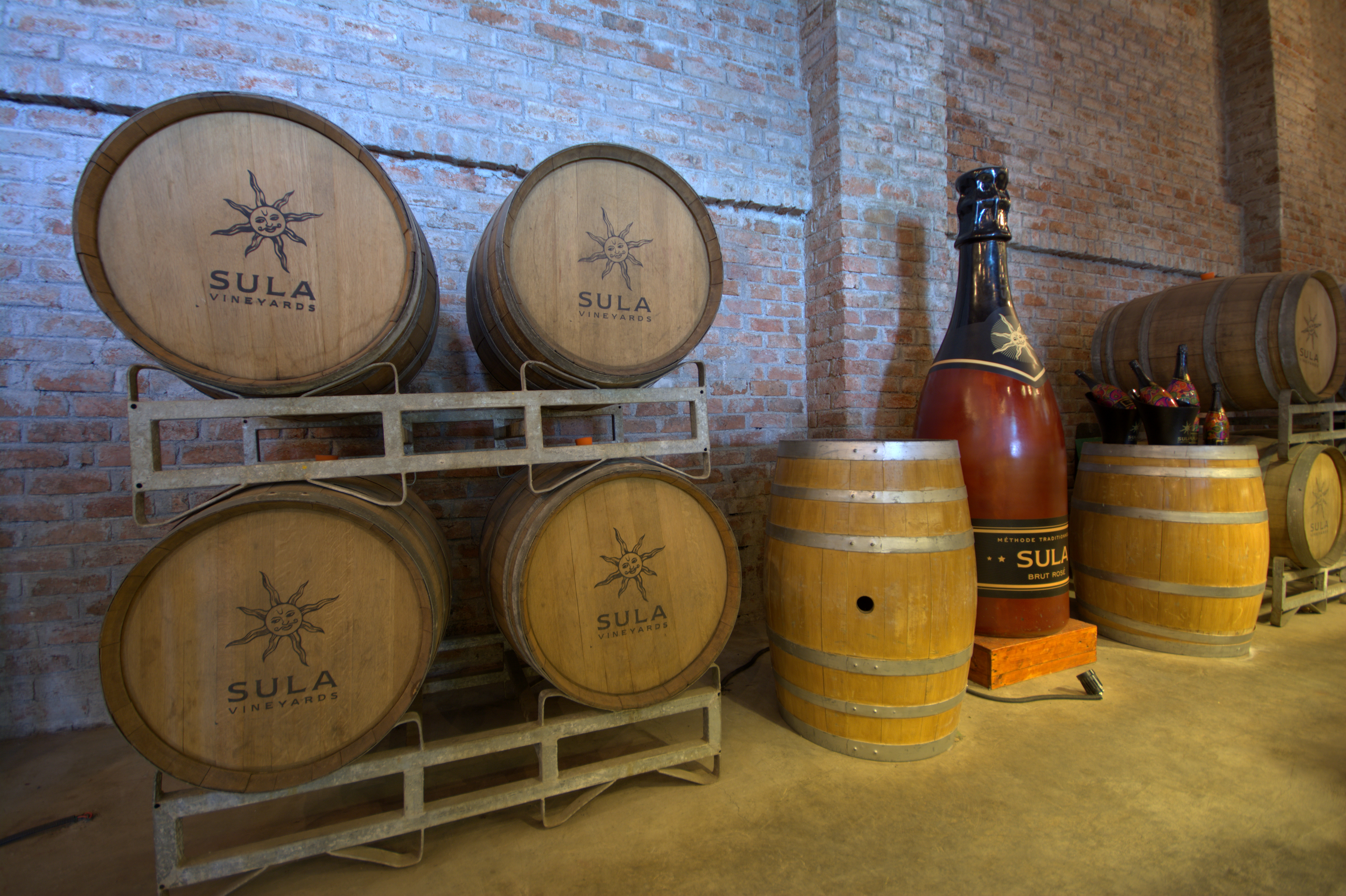
Sula Vineyards
Rajeev Samant was working at Oracle in California when he decided to do something that, in 1990s India, sounded mildly absurd. He would go home to Nashik, a city 180 kilometers northeast of Mumbai known primarily for its onions and its Hindu pilgrimage sites, and grow wine grapes. India had no wine culture to speak of. There was no domestic Sauvignon Blanc, no Chenin Blanc, no Riesling. Samant planted his first vines anyway, named the winery after his mother Sulabha, and crushed his first vintage in 1999. A quarter century later, Sula Vineyards is India's largest wine producer, and Nashik calls itself the Wine Capital of India, a title that would have drawn blank stares when Samant put his cuttings in the ground.
Grapes Where No One Expected Them
The Nashik region sits at an elevation of about 600 meters on the western edge of the Deccan Plateau, shielded by the Western Ghats from the full force of the monsoon. The combination of altitude, moderate rainfall, and significant day-night temperature variation creates conditions that, it turned out, suit grape cultivation surprisingly well. Samant introduced varietals that had never been commercially grown in India: Chenin Blanc in 2000, Sauvignon Blanc the same year, Zinfandel in 2003, and Riesling in 2008. Each was a first for the country. Sula's Chenin Blanc became India's best-selling white wine, and its Cabernet Shiraz became the best-selling red. The Dindori Reserve Shiraz went further, becoming the first Indian wine to appear on Wine Enthusiast's Top 100 list.
Thirty Wines and a Sparkling Shiraz
From that initial planting, Sula expanded into over 30 varietals. The portfolio spans the full spectrum: sparkling wines matured for months in oak, a Brut Tropicale blending Chenin Blanc with Shiraz and Riesling, India's first and only sparkling Shiraz, and a late harvest Chenin Blanc dessert wine. The Rasa line ages its Cabernet Sauvignon in French oak barrels for over a year. The Dindori collection focuses on reserve-quality wines from the estate's own vineyards. In 2019, Sula launched Dia, the country's first wine in a can, as a line of sparkling wine targeted at younger drinkers in Goa and Maharashtra. The company also created Kadu, a wildlife-focused wine made in partnership with Sanctuary Nature Foundation, directing proceeds toward grassroots conservation across India.
Beyond the Bottle
Sula recognized early that Indian wine culture would not emerge from retail shelves alone. The company built two wine resorts near its Nashik plant: The Source at Sula and Beyond by Sula. A tasting room at the winery introduced visitors to proper wine evaluation, while a second tasting facility opened at the Domaine Sula vineyard in Karnataka. Starting in 2008, the annual SulaFest drew thousands to a wine-and-music festival at the Nashik vineyard, running for thirteen editions before the COVID-19 pandemic interrupted it in 2020; the festival returned in February 2025. Sula also became one of the few authorized providers in India for WSET courses, the globally recognized Wine and Spirit Education Trust certification. The wines now appear on Air India flights, in Marks and Spencer stores in the United Kingdom, and are exported to over 30 countries.
Sunlight on the Vines
Over half of Sula's energy now comes from solar panels installed at the Nashik winery. The company's packaging is 99 percent recyclable, and it has planted more than 30,000 trees around Nashik in recent years. Sula Vineyards listed on both the National Stock Exchange and the Bombay Stock Exchange, a corporate milestone for an industry that barely existed when Samant returned from California. The transformation extends beyond the company itself. Nashik now hosts multiple wineries, and the region has developed a wine tourism economy that complements rather than competes with its older identity as a sacred city on the Godavari River. What began as one man's unlikely bet on Indian terroir reshaped a landscape, an industry, and the drinking habits of a nation.
From the Air
Located at 20.01N, 73.69E in the Nashik wine region of Maharashtra, approximately 180 km northeast of Mumbai. From the air, vineyard rows are visible on the plateau landscape, distinct from the surrounding agricultural parcels. The Western Ghats ridge is visible to the west. Nearest airport: Nashik Airport (VANR), approximately 15 km away. Mumbai's Chhatrapati Shivaji Maharaj International Airport (VABB) is approximately 170 km southwest. Best viewed at 5,000-8,000 feet to see vineyard patterns against the Deccan Plateau terrain.