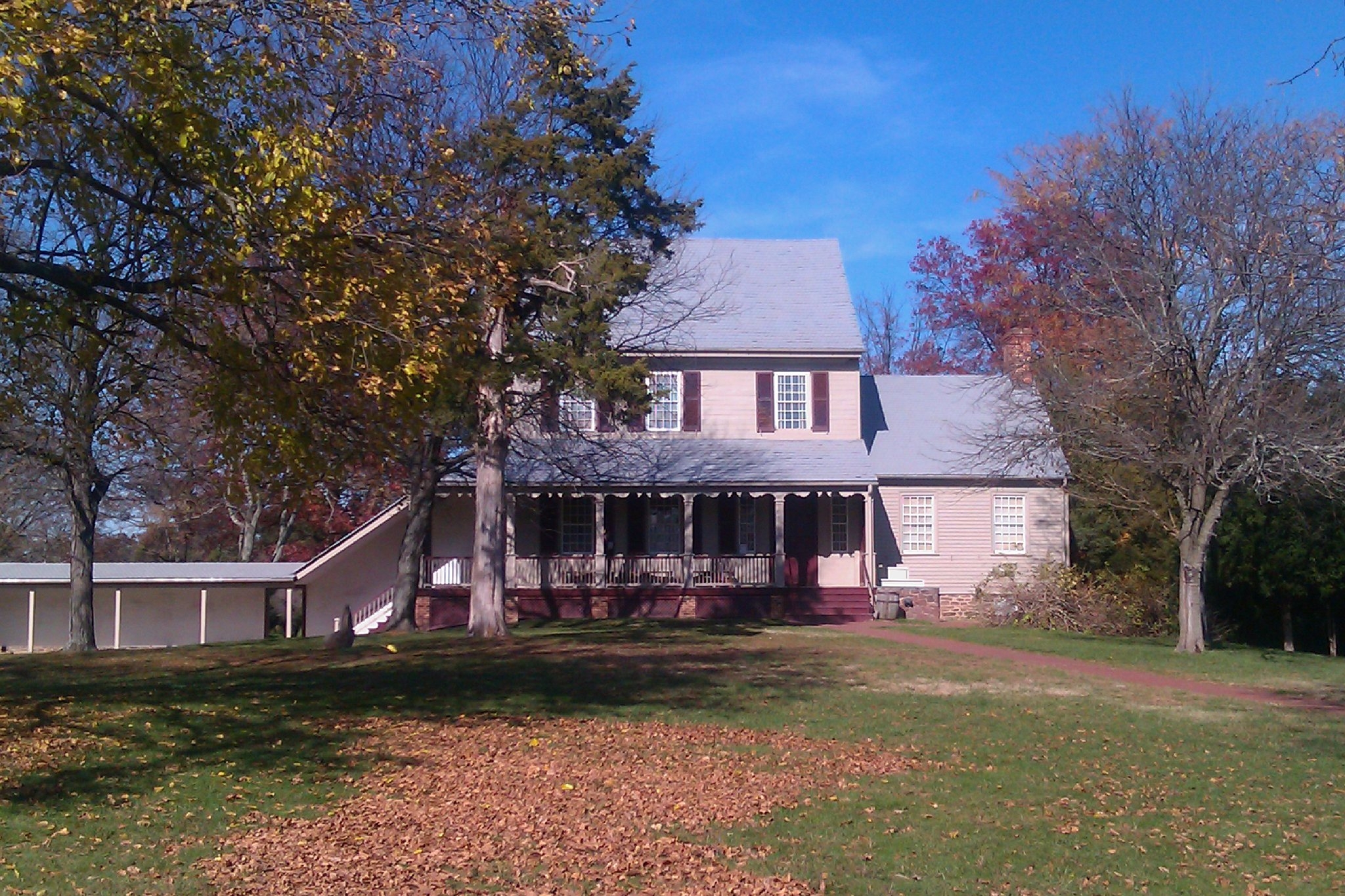
Sully Historic Site
Richard Bland Lee named his estate before he ever built a house on it. In 1789, heading to Philadelphia to serve in the first United States Congress, he scrawled the word "Sully" into his papers and left his brother Theodorick behind to manage the Northern Virginia farmland their father had divided between them two years earlier. Construction on the main house would not begin for another five years. Today that house still stands in Chantilly, Virginia, mere minutes from the runways of Dulles International Airport, a survivor of two centuries of family drama, financial ruin, and the federal government's appetite for land.
Before the Lees
Long before any Lee set foot on this land, the Doeg people held it. Algonquian speakers who lived across what is now Northern Virginia, the Doeg clashed repeatedly with English colonists through the 1660s. Their 1675 raid helped ignite Bacon's Rebellion, one of the most turbulent episodes in colonial Virginia. By 1666, after the colonial governor dispatched the Rappahannock County militia, the English had wrested control of the territory. The land then passed through obscure grants and patents until 1725, when Henry Lee I claimed the tract that would eventually become Sully. Three generations of Lees would shape it, and be shaped by it, before the family's grip finally broke.
A Congressman's Farm
Richard Bland Lee was a reformer before the word had currency. Inheriting the more fertile northern half of his father's land in 1787, he looked at the exhausted tobacco fields and made a radical choice: he pulled out the tobacco and planted wheat, corn, rye, and barley instead. Crop rotation replaced the ruinous single-crop cycle. He planted peach and apple orchards and distilled the fruit into spirits. In 1801 his wife Elizabeth Collins Lee took charge of a newly built stone dairy, its walls thick enough to keep milk cool through Virginia summers. That dairy still stands, its mortar joints studded with small pressed stones in a technique called galleting, a masonry style so rare in North America that architectural historians treat it as a curiosity. Richard's ambitions reached beyond agriculture. Elected to Congress in 1789, he left Theodorick to oversee spring planting, fall harvests, rent collection from tenant farmers, and the construction of the main house, which rose beginning in 1794.
Debt, Breakdown, and Ruin
The Lee family's hold on Sully unraveled through a cascade of misfortune. By 1811, Richard Bland Lee had exhausted himself bailing out his brothers Henry Lee III and Charles Lee from crippling debts. He sold the plantation for $18,000 to his second cousin Francis Lightfoot Lee II. For a few years, the new owner and his wife Jane Fitzgerald Lee turned a steady profit of $1,500 to $2,500 annually. Then Jane died from complications during childbirth in 1816. Four years later, Francis suffered either a nervous breakdown or a stroke. Unable to care for himself, he was committed to the Pennsylvania Hospital in Philadelphia in 1825. Sully was handed to a nephew whose management was marked by negligence and outright embezzlement. Administrators came and went. A prospective buyer was arrested in England before completing the purchase. Finally, in 1838, merchant William Swartwort bought the estate, ending over a century of Lee ownership.
Rescued from the Runway
Sully passed through the hands of ten private owners after the Lees departed. Then, in 1958, the federal government acquired the property as part of the footprint for Dulles Airport. The historic house faced demolition. A preservation campaign launched almost immediately, rallying Lee descendants, former owners, and a determined neighbor named Eddie Wagstaff, who later endowed the Sully Foundation that still supports the site today. Their effort succeeded in 1959 when President Dwight D. Eisenhower signed legislation designating Sully a national historic site. The Fairfax County Park Authority took over operations and has since expanded the grounds. Visitors now walk through rooms furnished entirely with Federal-period antiques, exploring the world Richard Bland Lee built while jets roar overhead on approach to the airport that nearly erased it all.
From the Air
Located at 38.91N, 77.43W in Chantilly, Virginia, directly adjacent to Dulles International Airport (KIAD). Best viewed at 2,000-3,000 feet AGL on departure or arrival. The plantation house and outbuildings sit just south of Sully Road, easily identifiable against the suburban development. Look for the cluster of historic structures contrasting with the airport infrastructure to the east. Nearby airports: KIAD (Dulles, 2 nm east), KJYO (Leesburg Executive, 12 nm northwest).