Sultanate of Cirebon
The name itself carries the scent of the sea. Cirebon likely derives from cai rebon -- Sundanese for "shrimp water" -- a reference to the tiny crustaceans that coastal villagers once harvested along Java's northern shore to make pungent shrimp paste. From that humble fishing hamlet grew one of the earliest Islamic sultanates on the island, a kingdom that by the sixteenth century commanded trade routes stretching from Arabia to China. Founded in 1445 as a small settlement and declared independent from the Hindu Sunda Kingdom in 1482, the Sultanate of Cirebon became a crucible where Javanese courtly tradition, Sundanese highland culture, Islamic scholarship, and Chinese commerce fused into something entirely its own.
From Fishing Village to Royal Court
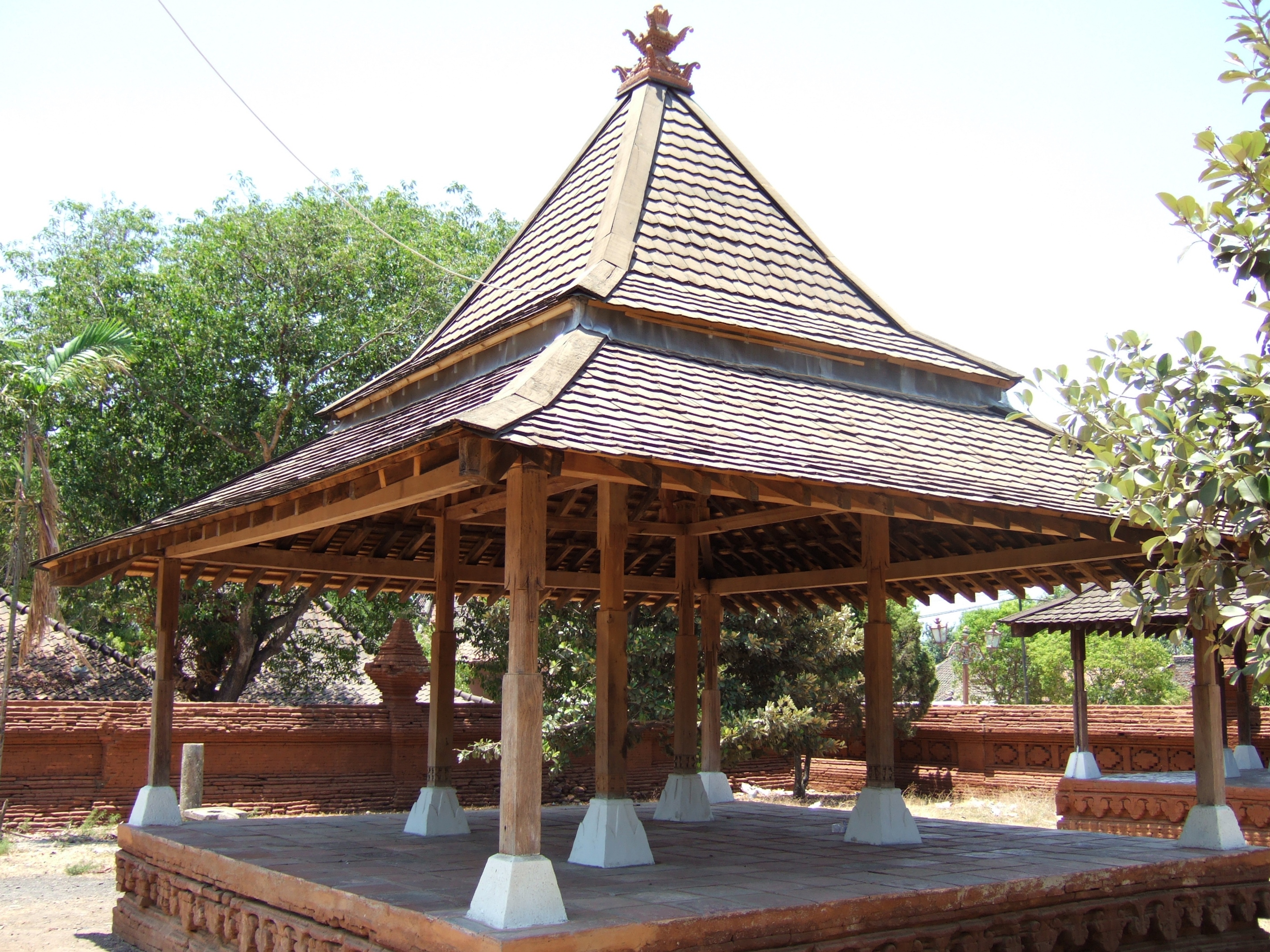
Before there was a sultanate, there was Muara Jati -- a coastal village about fourteen kilometers north of modern Cirebon, administered by a wealthy port master named Ki Ageng Tapa under the authority of the Hindu Sunda Kingdom. Muslim traders arriving at the busy harbor began converting locals, including Ki Ageng Tapa's daughter, Nyai Subang Larang. She married King Siliwangi of the Sunda Kingdom, and their grandson, Prince Cakrabuana, would change everything. After performing the hajj and taking the name Haji Abdullah Iman, Cakrabuana returned to build the Pakungwati Palace -- a compound of pendopo pavilions enclosed by red brick walls in the Majapahit style. He established his court in Cirebon around 1447, and the port town began its transformation from tributary outpost to independent power.
The Sultan Who Built Two Kingdoms
Cakrabuana's nephew, Sharif Hidayatullah, arrived in Cirebon after years of study in Mecca, Baghdad, and the courts of East Java. Known posthumously as Sunan Gunung Jati, he ascended the throne in 1479 and three years later sent a letter to his grandfather King Siliwangi flatly refusing to pay further tribute to the Sunda Kingdom. The date -- April 2, 1482 -- is still celebrated as the anniversary of Cirebon Regency. Under Sunan Gunung Jati, Cirebon became both a commercial powerhouse and a center of Islamic learning, its ulamas spreading the faith as far inland as Majalengka and Kuningan. He also founded the Sultanate of Banten to the west, creating a dynasty that controlled much of Java's northern coast. Foreign traders flocked to the port. Chinese relations deepened when Gunungjati married Princess Ong Tien, said to be a daughter of the Chinese Emperor, cementing a strategic alliance. The treasures she brought from China are still preserved in Cirebon's royal museums, and the Megamendung cloud pattern on Cirebon batik -- one of Indonesia's most recognizable textile designs -- traces its imagery to Chinese influence from this era.
Caught Between Giants
By the seventeenth century, Cirebon found itself squeezed between two expanding powers. To the east, the Mataram Sultanate under Sultan Agung demanded military allegiance for his campaigns against the Dutch in Batavia. To the west, the Sultanate of Banten watched with suspicion as Cirebon drifted into Mataram's orbit. The pressure proved fatal for one ruler: Panembahan Girilaya, summoned to the Mataram court at Plered by his own father-in-law, Amangkurat I, was executed there. His two eldest sons were taken hostage. The youngest, Prince Wangsakerta, spent ten years negotiating with Banten's Sultan Ageng Tirtayasa to free his brothers -- but the rescue came with strings attached. Tirtayasa crowned the freed princes as rival sultans, deliberately splitting Cirebon into three competing courts in 1677. It was a calculated act of division, designed to ensure Cirebon could never again threaten Banten or serve as a useful ally for Mataram.
Four Palaces, One City
That 1677 fracture hardened into permanence. A fourth royal house, Keraton Kacirebonan, split off from Keraton Kanoman in 1807 with Dutch backing. By the early twentieth century, all four kratons had been stripped of political authority, reduced to ceremonial institutions under the colonial government. The palaces themselves -- Kasepuhan, Kanoman, Keprabonan, and Kacirebonan -- still stand in modern Cirebon, each maintaining its own line of descent. They host traditional ceremonies, patron Cirebon's distinctive mask dance traditions (Topeng Cirebon, drawn from the Javanese Panji cycle), and preserve the cultural artifacts of a kingdom that once stretched across four regencies. Lacking funding and maintenance, the kratons have deteriorated, though a government restoration plan was announced in 2012. The royal lineage commands no political power, yet the families remain respected figures in Cirebonese life -- living reminders of a port city where Hindu kings married Muslim converts, Chinese princesses brought cloud patterns to Javanese batik, and Arabic calligraphy was arranged in the shape of tigers.
A Cultural Crossroads in Cloth and Stone
Walk through Cirebon today and the sultanate's layered heritage is visible everywhere. The Pakungwati Palace ruins show Majapahit red-brick construction. The royal banner, Macan Ali, renders Arabic calligraphy in the shape of a panther -- simultaneously Islamic and a reference to King Siliwangi's Hindu tiger standard. The royal carriage Singa Barong combines an eagle, an elephant, and a dragon to symbolize Indian, Arabian, and Chinese influences in a single ornate vehicle. Cirebon's Pecinan, or Chinatown, ranks among the oldest Chinese settlements in Java. The batik workshops produce Megamendung patterns whose billowing cloud motifs arrived with Chinese traders centuries ago and became inseparable from Cirebonese identity. This is a place that never belonged to just one tradition. Sitting at the boundary of Javanese and Sundanese cultural realms, shaped by trade winds that brought merchants and missionaries from across Asia, Cirebon absorbed everything and made it local.
From the Air
Located at 6.71S, 108.56E on Java's northern coast. The city of Cirebon sits along the coastal plain, visible from altitude as a dense urban area between rice paddies and the Java Sea. Nearby airports include Cakrabuwana Airport (WICD) in Cirebon. The four kratons are clustered in the old city center near the waterfront. Mount Ciremai (3,078m) rises prominently to the south-southeast.