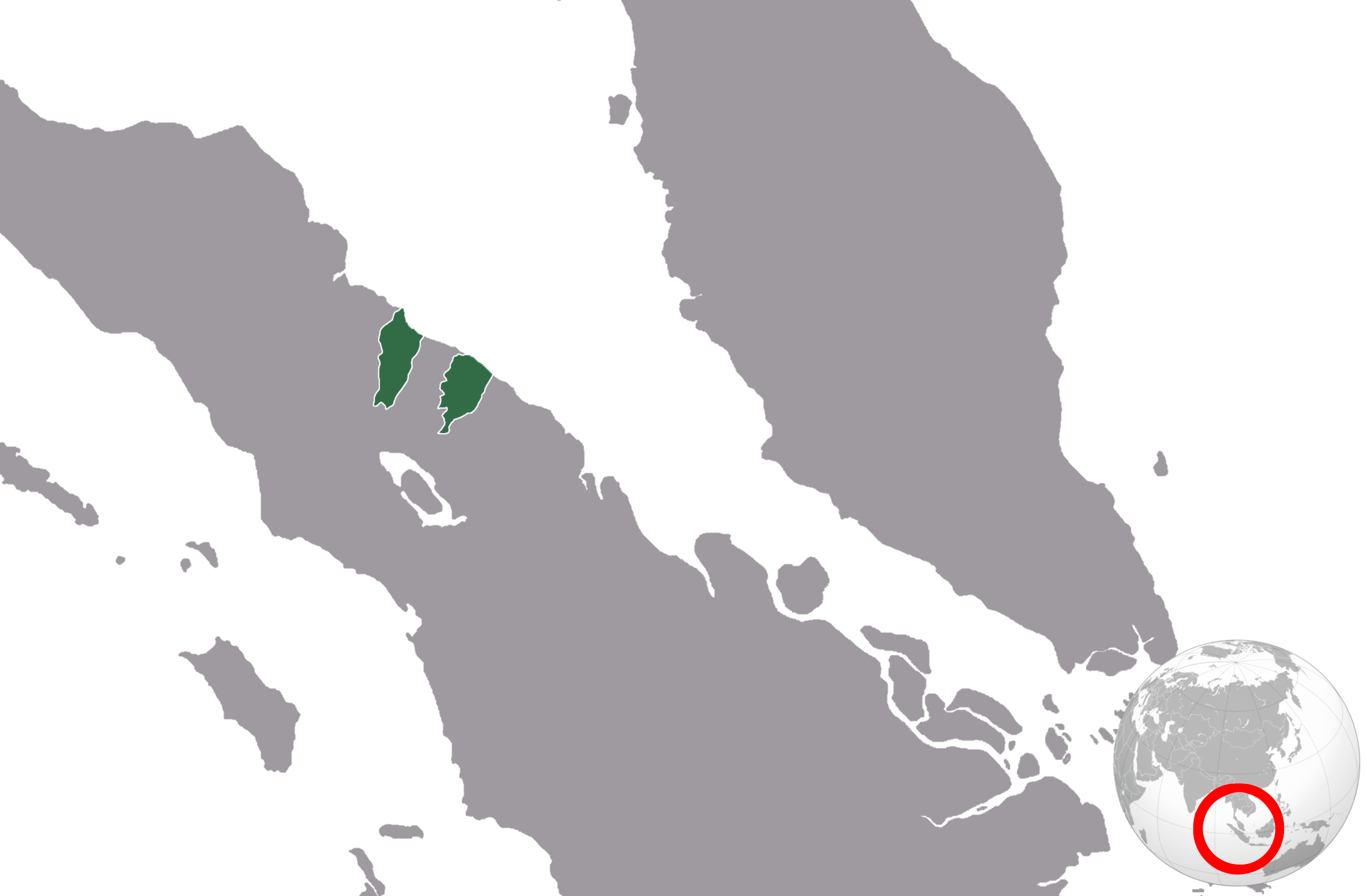
Sultanate of Deli
In 1632, an Acehnese war commander named Gocah Pahlawan -- nicknamed Laksamana Kuda Bintan, "Admiral Horse of Bintan" -- received a reward from Sultan Iskandar Muda for his military campaigns across Sumatra: the conquered territory of the Kingdom of Aru, on the island's eastern coast. What Gocah Pahlawan built there would outlast the Acehnese empire that created it, survive civil wars and colonial contracts, endure revolution and republic, and still exist today as one of Indonesia's most symbolically resonant royal houses. The Sultanate of Deli spanned nearly four centuries, and the city it shaped -- Medan, capital of North Sumatra -- still carries its imprint in palace walls, mosque domes, and family names.
A Warrior's Inheritance
Gocah Pahlawan was no ordinary soldier. A descendant of Indian nobility through his ancestor Amir Muhammad Badar ud-din Khan and of Sumatran royalty through Princess Chandra Dewi of Samudera Pasai, he had led Acehnese troops against the Portuguese in 1629 and conquered Pahang, Kedah, and Nias in the preceding decade. When Sultan Iskandar Muda granted him the former Aru territory in 1632, Gocah Pahlawan did something strategically brilliant: he won the allegiance of the four Batak Karo kings whose domains surrounded his new realm. They crowned him Datuk Tunggal -- a position equivalent to prime minister -- and formed the Lembaga Datuk Berempat, an advisory council that would govern alongside Deli's rulers for generations. He married Princess Nang Baluan Beru Surbakti, daughter of one of those kings. By the time Gocah Pahlawan died in 1641, the sultanate rested on both Malay and Batak foundations.
Brothers at War
The sultanate's third ruler, Tuanku Panglima Paderap, died around 1720 and left behind a succession crisis that would fracture the realm. His eldest son was passed over because of impaired eyesight. His second son, Tuanku Panglima Pasutan, seized the throne by force, even though custom favored the fourth son, Tuanku Umar Johan Alamsyah, who had been born of the queen. Civil war erupted. By 1732, Pasutan had driven his brother from the palace. Umar Johan Alamsyah fled with his mother to a place that would become Kampung Besar, where -- backed by two Batak Karo kings and an Acehnese nobleman -- he founded the rival Sultanate of Serdang in 1723. A third brother quietly established territory in Denai, later merging it with Serdang. The internal fracture left Deli weakened and vulnerable, a prize fought over by the sultanates of Siak, Johor, and Aceh for the next century.
Tobacco and Gold
Deli's fortunes transformed in the 1860s, when the sultanate signed a political contract with the Dutch East Indies government. The Dutch brought security; Deli brought soil. The earth of the east Sumatran plain turned out to be extraordinarily suited to tobacco -- world-class cigar wrapper leaf that fetched premium prices on the European market. By 1872, thirteen foreign-owned plantations operated in Deli territory. A year later, when Sultan Makmun Al Rashid Perkasa Alam took the throne, that number had grown to forty-four estates, harvesting 125,000 packs of tobacco annually. Amsterdam became the world's largest tobacco market largely on the strength of Deli leaf. The wealth that flowed from land rents and plantation payments made the Sultan of Deli fabulously rich, and he spent accordingly: Kampong Bahari was built in 1886, and the Maimoon Grand Palace followed in 1888 -- a symbol of triumph designed by a captain in the Dutch colonial army, KNIL. The Great Mosque of Sultan Al Mansun rose in 1906.
Revolution and Survival
Indonesian independence in 1945 brought existential danger to Sumatra's royal families. Anti-monarchist sentiment ran high; the sultans were seen as feudal remnants and collaborators with the Dutch. The violence peaked during the Social Revolution of 1946, part of the broader Indonesian National Revolution. Across North Sumatra, kings and their families were murdered and their property seized. The Indonesian poet Tengku Amir Hamzah was beheaded in Kuala Begumit. The Deli and Serdang royal families survived only because Allied soldiers -- on the ground to accept the Japanese surrender -- provided protection. When the bloodshed subsided, the Deli heirs moved into Maimoon Palace, which had been guarded by those same Allied troops while nearly every other palace in the region was destroyed or burned.
A Dynasty Without a State
The Sultanate of Deli lost its political authority after independence, yet the institution persisted. Deli's territory was absorbed into North Sumatra province in 1950, but sultans continued to be installed. Sultan Azmy Perkasa Alam Alhaj held the throne from 1967 to 1998. His successor, the 13th sultan, was a lieutenant colonel in the Indonesian Army who died in a military plane crash at Malikus Saleh Airport in Aceh on 21 July 2005. The very next day, the Crown Prince was installed as Sultan Mahmud Lamanjiji Perkasa Alam, the 14th sultan. Maimoon Palace still stands in central Medan, the royal family still occupies it, and the sultanate remains a living thread connecting the city to a history that stretches back through tobacco barons and civil wars, through Dutch contracts and Batak alliances, all the way to a warrior named Admiral Horse of Bintan.
From the Air
The Sultanate of Deli was centered around what is now Medan, the capital of North Sumatra, at approximately 3.59N, 98.67E. Maimoon Palace sits in central Medan. The nearest major airport is Kualanamu International Airport (WIMM), about 39 km southeast of central Medan. The original capital at Labuhan is approximately 20 km from central Medan. The flat east Sumatran coastal plain where the sultanate's territory lay is visible from altitude, bounded by the Barisan Mountains to the west and the Strait of Malacca to the east.