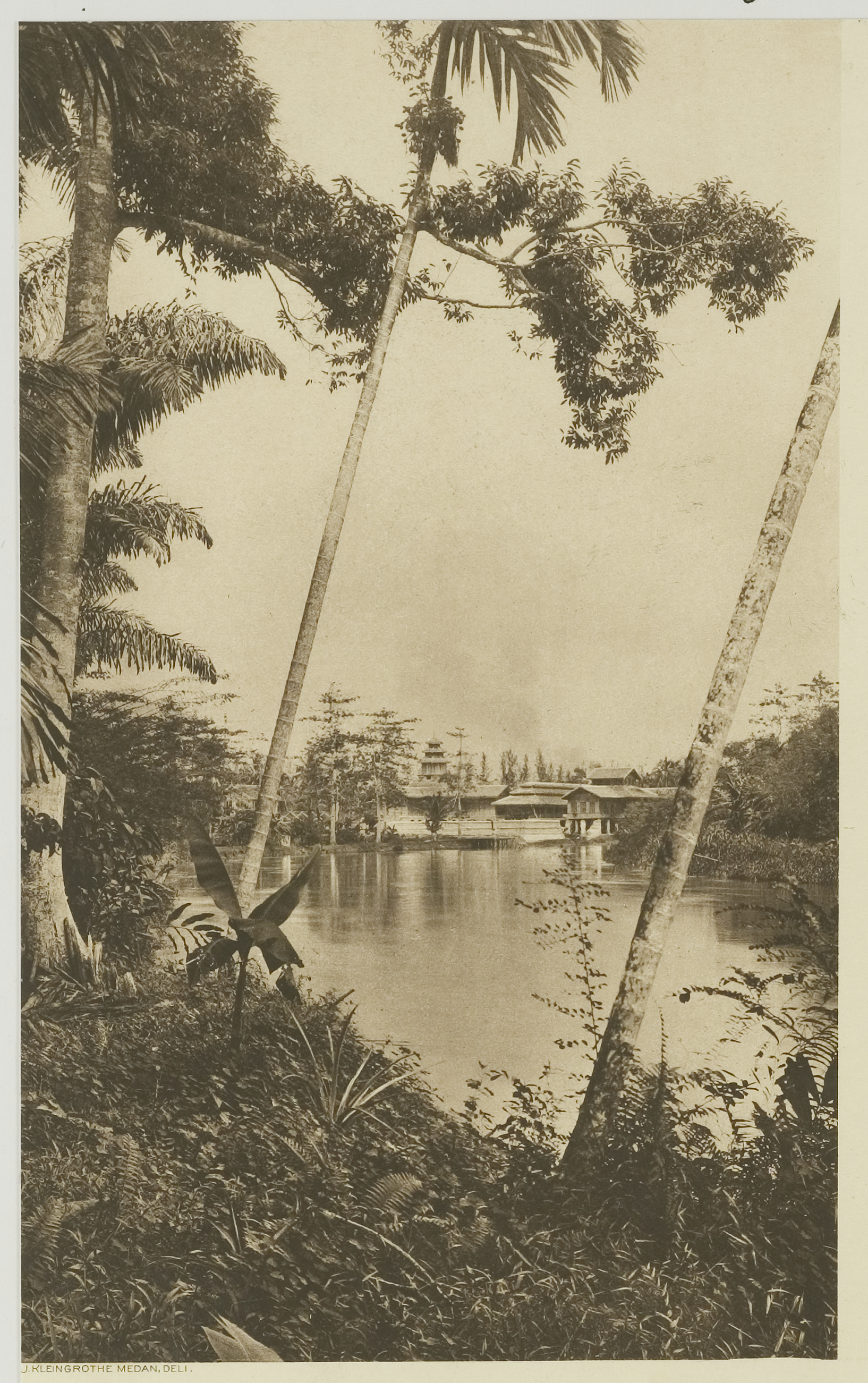
Sultanate of Langkat
By 1933, Sultan Mahmud Abdul Jalil Rahmad Shah owned 13 limousines, a stable of racehorses, and a boat he never used. Within thirteen years, revolutionaries would seize his palace, kill seven of his aristocrats, and hand him over to republican authorities. The Sultanate of Langkat, which had endured in some form since 1568, collapsed in the space of a single week in March 1946 -- a casualty of the Indonesian independence movement and the feudal bargain that had made the sultanate rich.
From Aru's Ashes
The roots of the Langkat Sultanate reach back to approximately 1568, when a military commander from the Kingdom of Aru established a domain in what is now Langkat Regency, on the northeast coast of North Sumatra. For more than three centuries, the kingdom passed through a succession of rulers -- Panglima Dewa Shahdan, Panglima Dewa Sakti, their descendants -- without formal recognition as a sultanate. No historical records from before the 17th century survive. The territory sat at the intersection of Malay maritime trade and Sumatran hinterland agriculture, a position that would prove enormously profitable once European colonial interests arrived. Islam had taken root in the region, and the rulers identified as Muslim, but the formal apparatus of a sultanate -- the title, the mosque, the court rituals -- would come later, bestowed by the very colonial power that would ultimately control the realm.
The Dutch Bargain
In 1887, the Dutch monarch formally awarded the title of sultan to the ruler then known as Sultan Musa, along with similar honors for the rulers of neighboring Deli, Serdang, and Asahan. The gesture was not generosity; it was strategy. By elevating Malay rulers to sultans, the Dutch East Indies administration created a network of cooperative local authorities who could control eastern Sumatra without the expense of direct rule. The sultans signed political contracts, granted land concessions for tobacco plantations, and received personal royalties for every hectare they opened to foreign exploitation. In return, they were guaranteed control over their Malay subjects and the security of their domains. It was a system that enriched both parties while the profits flowed, and it produced a Sumatran aristocracy of remarkable -- and ultimately ruinous -- wealth.
Oil, Mosques, and Thirteen Limousines
Sultan Abdul Aziz, who inherited the throne from his father Sultan Musa in 1893, presided over the sultanate's golden age. By 1915, fully 37.9 percent of the Langkat Sultanate's income passed directly to him. He used the wealth to build the grand Azizi Mosque in Tanjung Pura, the seat of the sultanate, and to establish a religious education center. When his son Mahmud succeeded him, the income only grew, fed by rubber plantations, tobacco concessions, and especially the discovery of oil at Pangkalan Brandan. Mahmud became the richest of all the Sumatra Malay sultans. But the spending outpaced even oil money. By the end of 1934, his extravagant lifestyle had produced a crushing debt, and the Dutch stepped in to manage the finances of the East Sumatran sultans, arranging loans and reducing the rulers to monthly allowances.
The Poet and the Princess
The sultanate's entanglement with colonialism produced a particularly poignant collision between loyalty and nationalism. Amir Hamzah, the sultan's nephew and one of Indonesia's greatest poets, was recalled from his studies in Batavia (present-day Jakarta) in 1935 because his involvement in the independence movement had alarmed both the Dutch authorities and his royal family. The popular nationalist Partindo party had already been banned in Langkat in 1933, and the sultan's cooperation with the colonial regime left no room for dissent from within his own household. Amir Hamzah returned to Langkat and married the sultan's daughter, Kamailia, but the tension between inherited privilege and national aspiration would define the final years of the sultanate itself.
Five Days in March
The East Sumatra social revolution of March 1946 targeted what its participants saw as feudal, pro-Dutch aristocracies that had no place in the new Indonesian republic. On March 5, the Sultanate of Langkat was declared abolished. Four days later, on March 9, the Darul Aman Palace was seized. Seven aristocrats were killed. Sultan Mahmud was handed over to republican authorities. He was released in July 1947 by Dutch forces during Operation Product, a military offensive against the Republic of Indonesia, but the sultanate he returned to existed only in memory. Mahmud died in April 1948. Today the Azizi Mosque still stands in Tanjung Pura, and the sultanate's descendants maintain a ceremonial lineage -- but the palace is gone, the concessions are gone, and the 13 limousines are a story people tell about how wealth and power can vanish in five days.
From the Air
Coordinates: 3.91°N, 98.42°E, over the town of Tanjung Pura in Langkat Regency, North Sumatra. The Azizi Mosque is the most prominent landmark. At 5,000-10,000 feet, the patchwork of palm plantations that replaced the sultanate's tobacco estates stretches in all directions. The Wampu River, which once flowed past the sultan's palace, is visible winding toward the Strait of Malacca. Nearest major airport is Kualanamu International Airport (WIMM), approximately 80 km to the southeast near Medan.