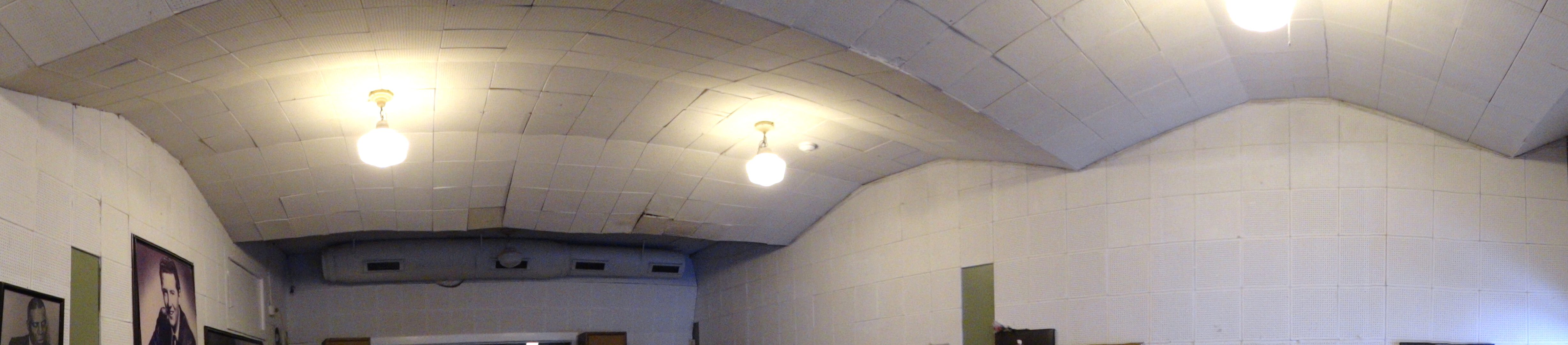
Sun Studio
"I don't sound like nobody." The 18-year-old who said those words to receptionist Marion Keisker in August 1953 had walked into a storefront recording studio at 706 Union Avenue in Memphis, Tennessee, to cut a two-sided acetate disc for a few dollars. He claimed it was a gift for his mother. Elvis Presley probably had bigger ambitions. Sun Studio -- then called Memphis Recording Service -- was the creation of Sam Phillips, a radio engineer who had opened the place in January 1950 with a slogan that promised everything: "We Record Anything, Anywhere, Anytime." Within a decade, that modest storefront would launch the careers of Elvis Presley, Johnny Cash, Jerry Lee Lewis, Carl Perkins, Roy Orbison, and a constellation of blues and rockabilly artists who collectively invented rock and roll.
Rocket Fuel
Before Elvis ever walked through the door, Sun Studio was already making history. Phillips opened Memphis Recording Service to give Black musicians in the South a place to record when no one else would. His first label, Phillips Records, folded after a single release -- "Boogie in the Park" by Joe Hill Louis sold fewer than 400 copies. But Phillips kept the lights on by recording masters for Chess Records and Modern Records. In 1951, Jackie Brenston and his Delta Cats recorded "Rocket 88" at the studio, with Ike Turner on keyboards. Many music historians consider it the first rock and roll single. Blues and R&B artists followed: Howlin' Wolf, B.B. King, Junior Parker, Little Milton, James Cotton, Rufus Thomas. Phillips was building something, even if he did not yet know its name.
The Night Everything Changed
Phillips had noted Presley's name after that first visit -- Keisker wrote "Good ballad singer. Hold" -- but nothing happened until June 1954, when Phillips brought him back to try a ballad demo. Presley could not make it work. Phillips paired him with guitarist Scotty Moore and upright bass player Bill Black for a proper session on the evening of July 5. It went nowhere until late that night, when Presley grabbed his guitar and launched into Arthur Crudup's "That's All Right," jumping around the studio and acting the fool. Moore and Black joined in. Phillips stuck his head out of the control booth: "What are you doing?" "We don't know." "Well, back up, try to find a place to start, and do it again." Three days later, Memphis DJ Dewey Phillips played the record on his Red, Hot, and Blue show. Listeners called in relentlessly, and Phillips played it on repeat for the last two hours of his broadcast.
The Million Dollar Quartet
On an afternoon in December 1956, Carl Perkins was recording at Sun when Elvis Presley dropped by. Jerry Lee Lewis was playing piano on the session. Johnny Cash wandered in. Engineer "Cowboy" Jack Clement thought, "I'd be remiss not to record this," and hit the tape. The four artists jammed through gospel numbers and country songs for over an hour, an impromptu session that became one of the most famous moments in recording history. Sam Phillips, sensing a publicity opportunity, called the Memphis Press-Scimitar. The next day, entertainment editor Bob Johnson published an article under the headline "Million Dollar Quartet," accompanied by the now-iconic photograph of Elvis at the piano with Lewis, Perkins, and Cash gathered around him. Cash later wrote that "no one wanted to follow Jerry Lee, not even Elvis."
From Auto Parts Back to Music
Phillips moved Sun to larger premises at 639 Madison Avenue in 1959 and eventually lost interest in recording, branching into radio stations. In 1969, he sold the Sun label to producer Shelby Singleton, who moved the operation to Nashville. The building at 706 Union Avenue was sold to a plumbing company, then to an auto parts store, which used the original studio for inventory storage. The room where Elvis cut "That's All Right" held transmission fluid and brake pads. In 1987, Gary Hardy reopened the space as Sun Studio, both a working recording studio and a tourist attraction. U2, Def Leppard, Bonnie Raitt, Ringo Starr, John Mellencamp, and Chris Isaak have all recorded there. In 2003, it was designated a National Historic Landmark -- a recognition that this unassuming storefront on Union Avenue changed the course of popular music.
From the Air
Sun Studio is located at 35.139N, 90.038W at 706 Union Avenue in midtown Memphis. The building is a modest single-story commercial structure, identifiable by its distinctive signage and the Gibson guitar-shaped neon sign. Nearby airports include Memphis International (KMEM) about 9 miles south. The studio is northeast of downtown Memphis along Union Avenue. Best viewed at 1,500-2,500 feet AGL. A large guitar-shaped sign on the roof helps identify it from the air.