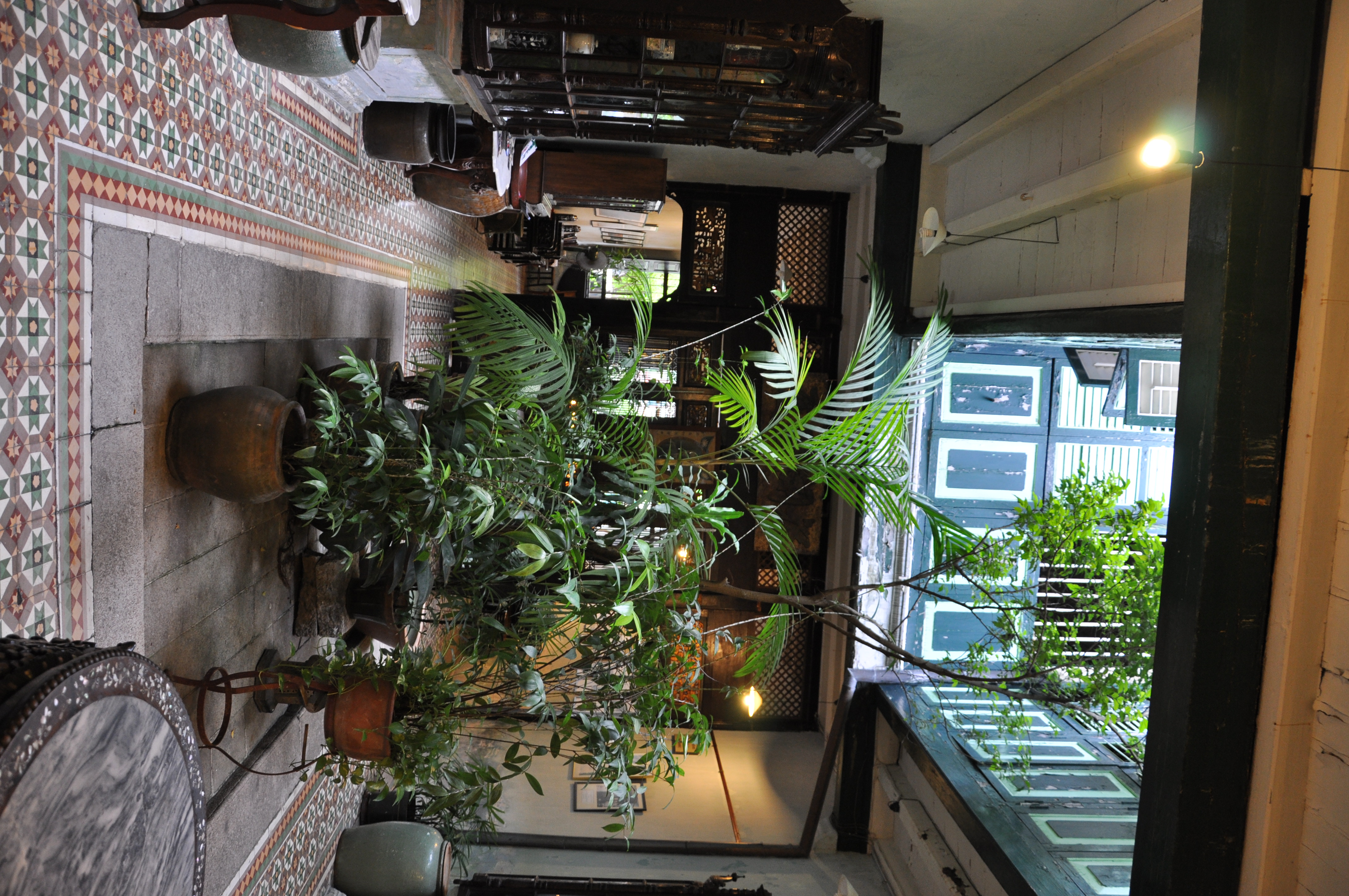
Sun Yat-sen Museum Penang
The reading club was a front. When Sun Yat-sen arrived in Penang in 1910, the building at 120 Armenian Street housed the Penang Philomatic Union, an organization ostensibly dedicated to the love of learning. In reality, it served as the Southeast Asian headquarters of the Tongmenghui, the revolutionary alliance working to topple the Qing dynasty and end two millennia of imperial rule in China. Today the building is a museum, but in 1910 it was something far more dangerous: a nerve center for revolution, hidden in plain sight on a quiet street in British Malaya.
A Revolutionary in Exile
Sun Yat-sen had been running for years. Wanted by Qing authorities, he moved between sympathetic communities across Southeast Asia, rallying the vast network of overseas Chinese who kept his cause alive with money, connections, and safe houses. Penang, with its large and politically engaged Chinese population, became a natural base. The island's position at the crossroads of maritime trade routes made it ideal for coordinating activities across the region, and the British colonial government, while watchful, proved less hostile than the Qing agents who pursued Sun across the continent. He brought his family here, settling into the life of an exile who happened to be planning a revolution.
The Night the Money Was Raised
On 14 November 1910, Sun Yat-sen convened an emergency meeting of the Nanyang Tongmenghui in this very building. The purpose was urgent: to raise funds for the Second Guangzhou Uprising, a military operation that Sun believed could spark the collapse of the Qing dynasty. He delivered what would become one of his most famous speeches, laying out the case for action with such conviction that the assembled supporters pledged Straits Dollars $8,000 on the spot. It was an extraordinary sum, gathered in a single evening from a community thousands of miles from the battlefields where it would be spent. The 1910 Penang Conference, as it came to be known, marked a turning point in the revolutionary movement's momentum.
From Plotting Room to Museum
The building survived where the dynasty did not. The Xinhai Revolution of 1911 succeeded in overthrowing the Qing, and Sun Yat-sen became the first provisional president of the Republic of China. The Penang house that sheltered his conspiracy passed through decades of quieter uses before its significance was formally recognized. Extensive renovations in 2010 and 2011 restored the building's facade and roof, with craftsmen brought from Quanzhou in southern China to ensure authenticity. In 2007, the Chinese film Road to Dawn reenacted the pivotal 1910 conference inside these walls, bringing the building's clandestine past to a global audience.
Walking the Revolutionary's Trail
The museum now anchors the Sun Yat Sen Heritage Trail, developed by the Penang Heritage Trust in 2010 and launched by historian Wang Gungwu. The trail links more than a dozen heritage sites across George Town associated with Sun and his supporters, making it Southeast Asia's first heritage trail of its kind. Walking it reveals how deeply embedded the Chinese revolutionary network was in Penang's fabric: printing presses that produced seditious pamphlets, homes of key financiers, meeting halls where loyalty oaths were sworn. The trail transforms George Town's UNESCO-listed streets into a living map of early twentieth-century political intrigue, connecting a Malaysian city to one of the defining upheavals in Chinese history.
From the Air
Located at 5.4158°N, 100.3360°E in the heart of George Town's UNESCO World Heritage Site on Penang Island. The museum sits on Armenian Street in the historic core, visible amid the dense urban grid of the old town. Best viewed at 1,500-2,000 ft. Penang International Airport (WMKP) lies 16 km to the south. The Penang Bridge connecting the island to the mainland is a prominent visual reference to the southeast.