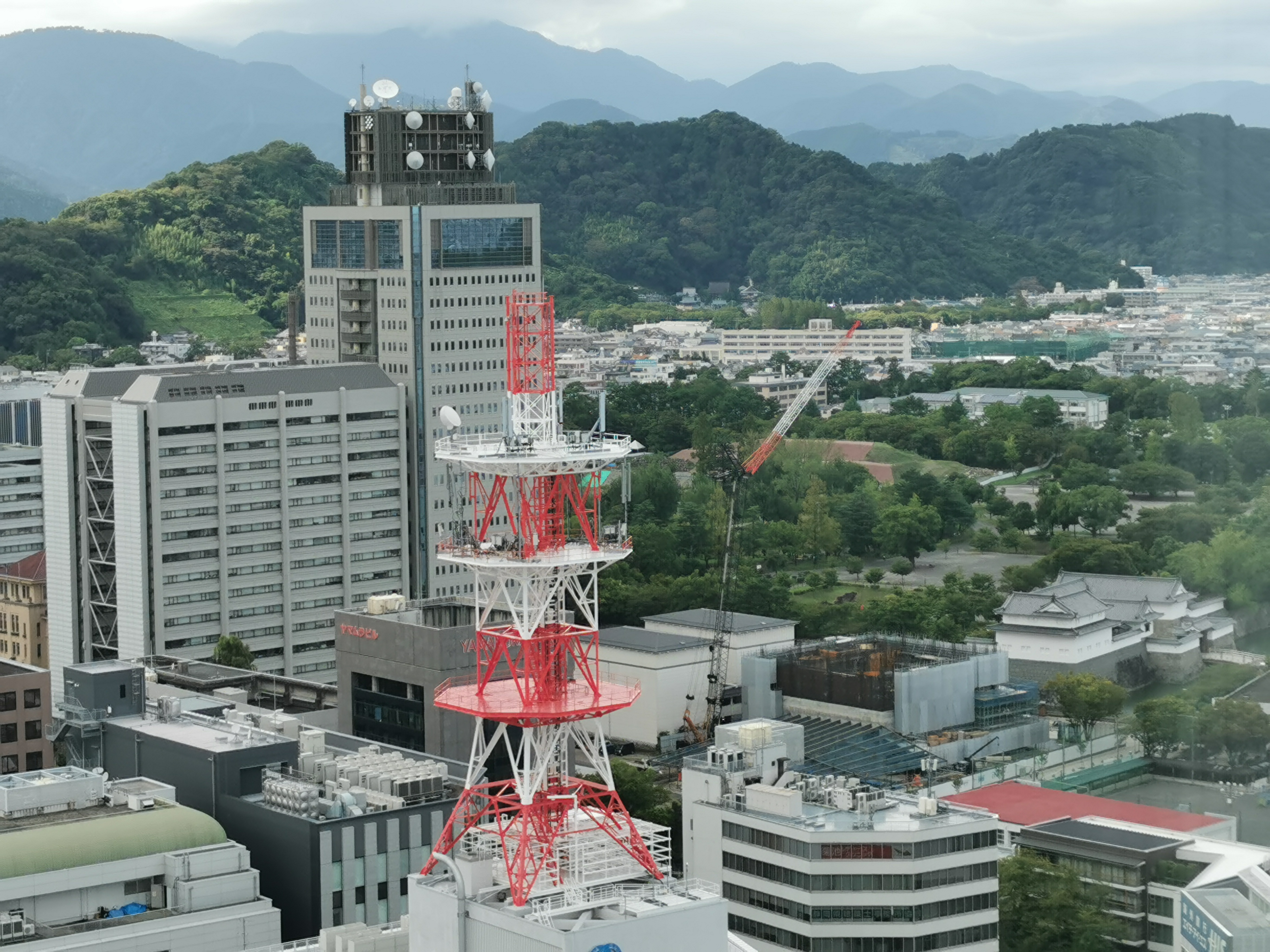
Sunpu Castle: The Floating Isle Where a Shogun Pulled the Strings
In 1613, English sea captain John Saris sailed into Suruga Bay carrying gifts and ambitions. He had come to negotiate trade rights for the East India Company with the most powerful man in Japan. The meeting took place not in the shogun's capital of Edo, but here -- at Sunpu Castle in what is now Shizuoka city. The shogun's title had already been passed to Tokugawa Hidetada, but everyone understood where the real power lay. Tokugawa Ieyasu, retired in name only, governed the country from this castle through a shadow government so effective that his word remained law across all of Japan. Saris, accompanied by William Adams -- the English pilot who had become a samurai -- exchanged gifts and negotiated terms within the castle's walls. The fortress they entered was known by an evocative nickname: the Castle of the Floating Isle.
A Hostage Returns as Master
Sunpu Castle occupies one of the more ironic addresses in Japanese history. During the Muromachi period, the Imagawa clan ruled Suruga Province from this site in central Shizuoka. The young Tokugawa Ieyasu spent his childhood here as a hostage of Imagawa Yoshimoto, a common practice among feudal warlords to ensure the loyalty of vassal clans. When Yoshimoto was killed at the Battle of Okehazama in 1560, Suruga Province changed hands -- first to the Takeda clan, then eventually to Ieyasu himself. In 1585, the former hostage returned as the conqueror and built a new castle on the approximate site of the old Imagawa residence. He moved in the following year, accompanied by his favored consort Lady Saigo and their two sons. The boy who had been held captive in Suruga was now its undisputed lord.
A Castle Built by Rivals
After Ieyasu's decisive victory at the Battle of Sekigahara in 1600 and the founding of the Tokugawa shogunate, he formally passed the title of shogun to his son Hidetada. But retirement for Ieyasu meant relocating to Sunpu, where he established a shadow government that maintained effective control over the entire country. The castle needed to match the ambitions of its occupant. In 1607, Ieyasu ordered daimyos from across Japan to rebuild Sunpu Castle at their own expense -- a deliberate Tokugawa policy of draining potential rivals of economic resources. The result was an imposing fortress with a triple moat system, a keep, and a palace. When a fire destroyed it in 1610, the daimyos were ordered to rebuild again, this time with a seven-story donjon. The castle that rose from the ashes was a monument not just to Tokugawa power, but to the enforced servitude of every lord in Japan.
Fire, Loss, and the Last Shogun
Ieyasu died at Sunpu in 1616, and the castle became the administrative seat of Sunpu Domain, governed directly by the shogun in Edo through a series of appointed overseers. In 1635, a fire consumed much of the city and the castle with it. Reconstruction followed by 1638, restoring the palace, gates, and watchtowers, but the great donjon was never rebuilt -- Sunpu was now ruled by administrators, not daimyos, and a towering keep was deemed unnecessary. The castle endured two more centuries of quiet governance before history circled back. After the Meiji Restoration overthrew the shogunate in 1868, the last Tokugawa shogun, Tokugawa Yoshinobu, resigned and moved to Sunpu in retirement -- echoing Ieyasu's own journey 250 years earlier. In an ironic twist, Yoshinobu was not permitted to live in the castle itself, but was given the former magistrate's offices as his residence.
From Fortress to Park
The modern history of Sunpu Castle is a story of reinvention. The castle grounds became city property in 1889. Moats were filled in. Parts of the bailey became a public park while others housed prefectural government offices. In 1896, a large section of the inner grounds was turned over to the Imperial Japanese Army as a base for the 34th Infantry Regiment. An unexpected chapter opened in 1871, when American educator E. Warren Clark arrived in Shizuoka to teach science and directed the construction of an American-style house on the castle grounds. After Clark left for Tokyo in 1873, a western-style school was established in his former house, run by Canadian missionary Davidson McDonald, who later helped found Aoyama Gakuin University in Tokyo. In 1949, the army base was abolished, and the grounds became Sunpu Park. Reconstruction projects in 1989 and 1996 recreated the Tatsumi Yagura watchtower and the eastern gate, returning fragments of the old fortress to the landscape. The Castle of the Floating Isle floats again -- this time as green space in the heart of Shizuoka, the moats reflecting sky where armies once drilled.
From the Air
Located at 34.98N, 138.38E in central Shizuoka city, Shizuoka Prefecture. From altitude, Sunpu Castle Park is clearly visible as a large rectangular green space surrounded by remaining moat sections within the dense urban grid of downtown Shizuoka. The reconstructed Tatsumi Yagura watchtower and eastern gate are identifiable as traditional Japanese structures at lower altitudes. Mt. Fuji Shizuoka Airport (RJNS) lies approximately 20 nautical miles to the southwest. Shizuhama Air Base is roughly 8 nautical miles to the southeast. Best viewed at 2,000-4,000 feet AGL. Mount Fuji is prominently visible to the north-northeast in clear weather.