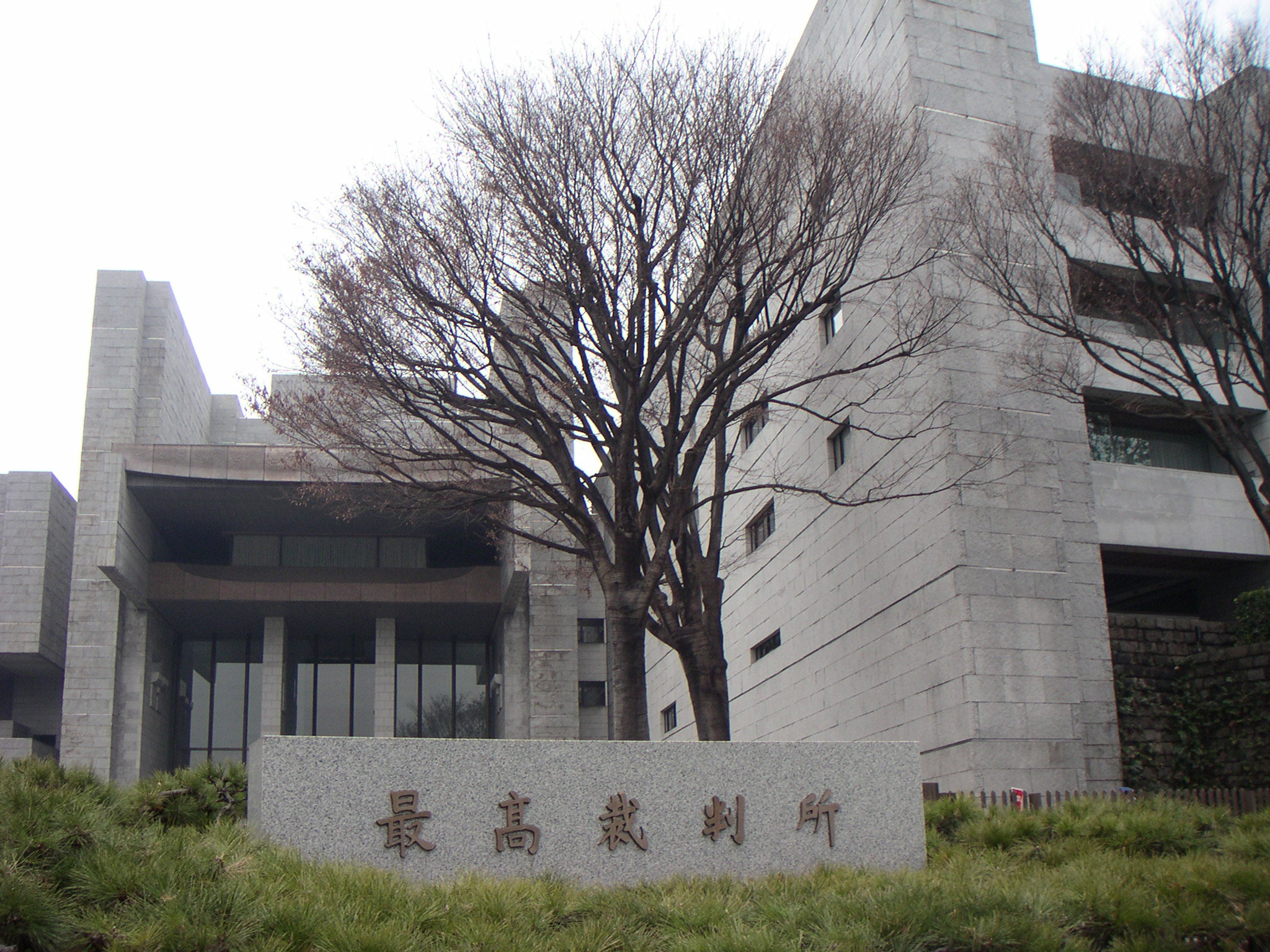
Supreme Court of Japan: Eight Strikes in Sixty Years
Eight. In over six decades of constitutional governance, the Supreme Court of Japan has struck down exactly eight laws on constitutional grounds. During the same period, Germany's Federal Constitutional Court struck down more than 600. The United States Supreme Court exceeded 900. India's Supreme Court surpassed 2,600. The numbers tell a story that no building can quite contain, though the building itself -- a fortress of white granite in Tokyo's Hayabusacho neighborhood -- tries. Designed by architect Shinichi Okada and completed in 1974, the Supreme Court building was selected from 217 competition entries and later won the Architecture Institute of Japan Prize for Design. Its austere geometry announces authority. What happens inside announces something more complicated: a court with the constitutional power of judicial review that almost never uses it.
Born from Occupation
The modern Supreme Court of Japan was established through Article 81 of the Constitution of Japan in 1947, during the Allied occupation. The American legal officers of the Supreme Commander for the Allied Powers who drafted the constitution debated the extent of judicial authority, but their arguments were overshadowed by larger questions -- popular sovereignty, the future of the emperor, the renunciation of war. The court that emerged possessed the power of judicial review, allowing it to determine the constitutionality of any law or official act. But the scope of that power remained ambiguous for years. In its early rulings, the court clarified that it would exercise judicial review only in concrete cases -- disputes between real parties with real stakes -- rather than issuing abstract rulings on laws in the theoretical sense. This was a conservative interpretation from the start, and it set the tone for everything that followed.
The Judicial Crisis
In the 1960s and 1970s, a generational fault line cracked open within the Japanese judiciary. Younger, more liberal judges in the lower courts began issuing rulings that frustrated government ordinances, particularly those aimed at restricting anti-government demonstrations. The so-called Miyamoto Affair drew significant media coverage and public protest from other judges, exposing a bitter internal conflict over the independence of the bench. The Supreme Court, which manages the operations, budget, and personnel of all Japanese courts through its Administration Bureau, holds a powerful lever: it determines the postings of judges throughout the system. A judge who defied the prevailing institutional culture could find their career advancement quietly stalled. Whether through ideology, institutional pressure, or a desire to maintain relationships with the Ministry of Justice, the Supreme Court settled into a posture of extraordinary restraint -- striking down laws so rarely that scholars would spend decades asking why.
Judges the People Can Remove
Japan's Supreme Court has a feature found in few other countries: retention elections. Every Supreme Court justice is subject to a public vote at the first general election following their appointment. If a majority votes against a justice, they are removed from office. It has never happened. The system was designed as a democratic check on judicial power, but in practice, voters rarely know enough about the justices to cast an informed ballot. A second public review is stipulated every ten years, but since justices are generally appointed at age sixty or older and must retire at seventy, the second review almost never occurs. The result is a system that looks democratic on paper but functions as a formality -- a retention election where no one is ever un-retained.
Granite Authority
The Supreme Court's current home is a product of postwar ambition. The court originally intended to occupy the building of the former Supreme Court of Judicature, the highest court during the Imperial Japan era, but that structure had been largely destroyed in World War II. A temporary reconstruction was completed in October 1949 and served the court for twenty-five years. In 1964, the government launched a design competition for a new building, specifying a modern style. Of 217 submissions, the entry led by architect Shinichi Okada and a team of seventeen at the Kajima Corporation was selected. Construction began in 1971 and concluded in 1974. The building sits in Hayabusacho, Chiyoda, at the political heart of Tokyo, near the National Diet and the Prime Minister's residence. Clad in Japanese white granite, its severe lines project permanence and gravity -- the look of a court that takes its power seriously, even if it rarely deploys it.
From the Air
Located at 35.680°N, 139.744°E in Hayabusacho, Chiyoda, central Tokyo. The Supreme Court building is a substantial white granite structure visible from altitude near the political center of Japan, adjacent to the National Diet Building and the Prime Minister's official residence. The area forms a distinct cluster of government buildings west of the Imperial Palace. Best viewed at 2,000-4,000 feet AGL. Tokyo International Airport / Haneda (RJTT) lies approximately 8 nautical miles south. Narita International Airport (RJAA) is approximately 35 nautical miles east-northeast.