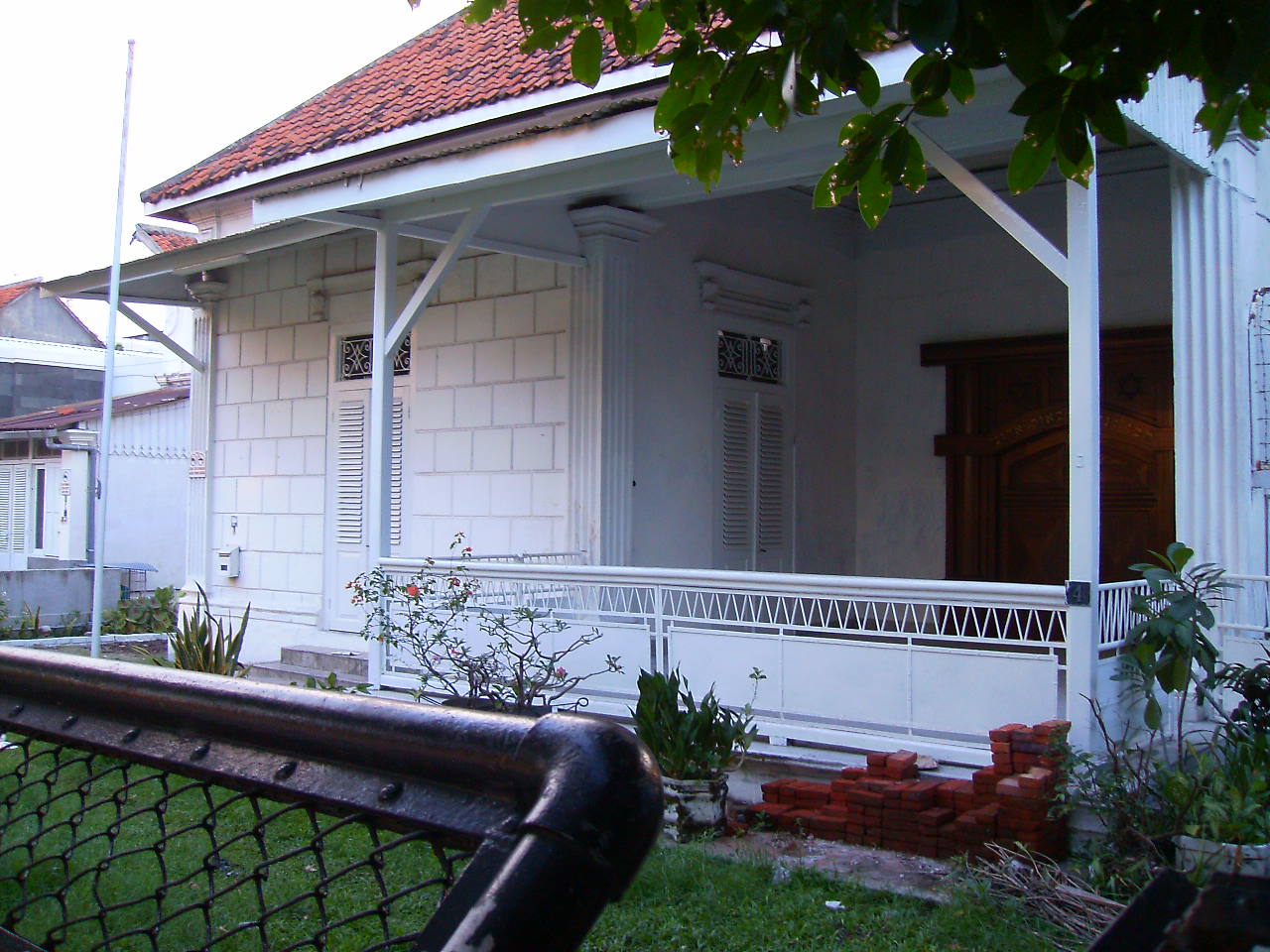
The Last Congregation: Surabaya's Vanished Synagogue
By 2003, only three families still gathered for holidays at the Beth Shalom Synagogue in Surabaya. No weekly services, no packed pews - just twenty people carrying on rituals in a building that had been old when they were young, sandwiched behind larger structures on a side street in Indonesia's second-largest city. A decade later, the building was gone entirely, replaced by a hotel. The story of how Indonesia's only synagogue went from rented room to consecrated house to rubble spans just ninety years, but it maps the pressures of colonialism, world war, Cold War politics, and the fraught intersection of local identity with distant conflicts.
A Rented Room in the Dutch East Indies
Jewish traders had passed through Java for centuries, but organized worship came late to Surabaya. In 1923, a group of Iraqi Jews established the Israelitische Gemeente Soerabaia - the city's first formal Jewish congregation. Their synagogue was a rented room, nothing more. The community was small but active enough to establish a Jewish cemetery in 1926, one of only a handful in the entire Dutch East Indies. Weddings and bar mitzvahs took place in private homes, often at the residence of businessman Charles Mussry. It was modest, but it was theirs. In 1948, the congregation pooled resources and purchased a private house built in 1939 - a humble structure described as tucked behind other buildings, invisible to passersby who did not already know it was there. They named it Beth Shalom, House of Peace. The timing was bittersweet: within two years, a large portion of the congregation had emigrated to the newly founded state of Israel.
The Slow Emptying
The departures accelerated through the 1950s and 1960s, each wave driven by a different current of geopolitics. The Suez Crisis of 1956 brought anti-Jewish hostility to the surface. Indonesia's claim over Western New Guinea led to broader measures against foreign nationals, and some Jewish residents were caught in that net. Others converted to Islam and took Indonesian citizenship, assimilating into the majority. Through it all, the Surabaya congregation remained the most viable in the country. When Jakarta's Jewish community dwindled, its members effectively merged with Surabaya's. As late as the 1990s, families from the capital still traveled to East Java to celebrate bar mitzvahs at Beth Shalom. It was the last functioning synagogue in a nation of over 200 million people - not because the building was grand, but because every other option had already closed.
Between Heritage and Hostility
In its final years, the synagogue occupied an uncomfortable space between official recognition and political targeting. During the 2008-2009 Gaza War, Islamic groups demonstrated outside the building and forcibly closed it, conflating a tiny local congregation with a distant state. The Surabaya Department of City Culture and Tourism responded by considering the synagogue as a potential cultural landmark in 2009. Local politicians and the Ministry of Religious Affairs voiced support for religious tolerance. For a moment, it seemed the building might be saved by its own vulnerability - a symbol too rare to lose. But preservation requires more than goodwill. By 2011, the building's ownership was mired in legal disputes. The official caretaker was alleged to be living in Israel and planning to sell the property despite lacking clear legal title.
A Hotel Where a Synagogue Stood
In 2013, the Beth Shalom Synagogue was demolished. Heritage groups including Sjarikat Poesaka Soerabaia reported the demolition to the city and police, but never received a satisfactory explanation for why it had been permitted. The chairman of the Surabaya city council called for a halt to construction on the site, but the objections came too late. A hotel was built on the ground where the congregation had once prayed, and it opened for business in 2018. What had been the only synagogue in the world's most populous Muslim-majority nation became a place where travelers check in and out without knowing what stood there before. In 2019, a different congregation opened the Sha'ar Hashamayim Synagogue in Tondano, North Sulawesi - a Sephardic house of worship that is now the sole active synagogue in Indonesia. The thread, thinner than ever, did not quite break.
From the Air
The former synagogue site sits at 7.27S, 112.75E in central Surabaya, East Java, within the dense urban core of Indonesia's second-largest city. The nearest major airport is Juanda International (WARR/SUB), approximately 20 km to the south, with dual 3,000-meter runways. From altitude, Surabaya's grid and the Kalimas River corridor provide orientation. The Suramadu Bridge to Madura Island is a prominent visual landmark to the northeast. The site itself is not individually visible from the air. Tropical monsoon climate with best visibility during dry season (May-October).