Susa: The City That Outlived Its Empires
Ashurbanipal wanted the world to know what he had done. In 647 BC, the Assyrian king sacked Susa and dictated his triumph onto a clay tablet: "I destroyed the ziggurat of Susa. I smashed its shining copper horns. I reduced the temples of Elam to naught; their gods and goddesses I scattered to the winds." He even sowed salt on the land. And yet Susa endured. It had already been standing for more than three thousand years before Ashurbanipal arrived, and it would stand for two thousand more after he left. Few cities on Earth have absorbed so much destruction and simply continued.
Before Writing, Before Bronze
Settlement at Susa began around 4200 BC, making it one of the oldest continuously occupied sites in the ancient world. The city rose between the Karkheh and Dez rivers in what is now Iran's Khuzestan province, at the foot of the Zagros Mountains and 250 kilometers east of the Tigris. Its founders may have been refugees from the nearby settlement of Chogha Mish, which had been destroyed and abandoned. They built a massive platform and began burying their dead with painted ceramic vessels -- drinking goblets, serving dishes, small jars -- provisions for the afterworld that mirror the meals of this one. Nearly two thousand of these pots, painted by hand with geometric precision, were recovered from the cemetery. Most are now in the Louvre. Copper axes and polished mirrors also emerged from the graves, evidence that metalworking was already well established by the late fifth millennium BC.
Capital of Elam, Crossroads of Empires
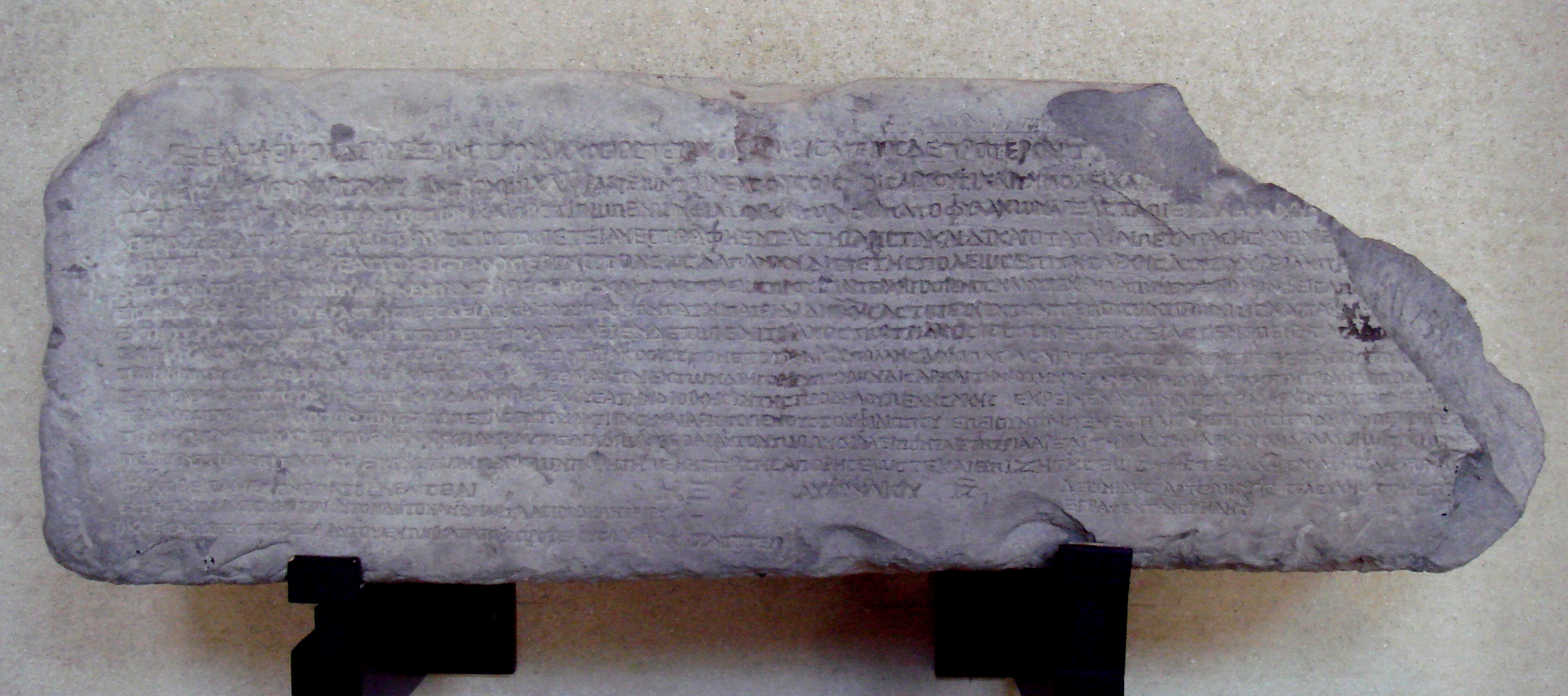
Susa's position between the Mesopotamian lowlands and the Iranian highlands made it a natural capital. The Elamites claimed it, and so did the Sumerians, the Akkadians, and the Babylonians. Sargon the Great absorbed it into his empire around 2330 BC. The Elamite king Kutik-Inshushinak briefly won independence around 2100 BC and promoted the Linear Elamite script, which remains undeciphered today. When the Elamite king Shutruk-Nahhunte plundered Babylon around 1175 BC, he carried off the original stele of the Code of Hammurabi and installed it at Susa as a trophy. French archaeologists found it there in 1901, more than three thousand years later. That single artifact -- Babylon's most famous legal document, found in an Elamite capital -- captures the tangled history of a city that belonged to everyone and no one.
The Palace of Darius
Susa reached its grandest expression under the Achaemenid Persians. Cyrus the Great captured the city between 540 and 539 BC, and his successors made it one of four imperial capitals. Darius the Great undertook a massive building program, digging down to bedrock and packing forty cubits of rubble before raising his palace above it. He boasted in an inscription that the ornamentation was brought "from afar" -- cedar from Lebanon, gold from Sardis and Bactria, ivory from Ethiopia, stonecutters from Ionia. The palace was a declaration in architecture: this was the center of an empire that stretched from Egypt to India. Aeschylus set his play The Persians in Susa in 472 BC, making it the backdrop for the oldest surviving work of theatre. The Book of Esther places its story here too, in the court of King Ahasuerus, where Esther saved the Jewish people from destruction.
Conquered, Destroyed, Rebuilt
Alexander the Great took Susa without a fight in 331 BC; the satrap surrendered the city and its treasury. Alexander later held a mass wedding here in 324 BC, marrying Macedonian officers to Persian women in a symbolic fusion of empires. Under the Seleucids, Susa became a Greek-style city with peristyle houses and Greek inscriptions, though it lost its status as imperial capital to Seleucia on the Tigris. The Parthians reclaimed it, and for centuries Susa served as a refuge when the Romans sacked the Parthian capital of Ctesiphon -- which happened five times between 116 and 297 AD. The Sassanid king Shapur II destroyed Susa in 339 AD after a Christian rebellion, using three hundred elephants in the assault, then rebuilt it with prisoners of war and renamed it Eran-Khwarrah-Shapur. The city endured conquest by Arab armies in the seventh century and Mongol devastation in the thirteenth. Each time, something remained.
What Remains at Shush
The modern town of Shush sits directly on the ancient site, a modest Iranian city of perhaps sixty-five thousand people in the hot lowlands of Khuzestan. The archaeological mounds still rise above the surrounding plain -- the Acropolis, the Apadana, the Royal City, the Craftsmen's Quarter. French archaeologists dominated excavation here from 1885 until the Islamic Revolution, sending trainloads of glazed bricks, column capitals, and painted pottery to Paris. The Louvre's Near Eastern collections owe much to Susa. A UNESCO World Heritage Site since 2015, Susa is also home to the traditional Tomb of Daniel, the biblical prophet, a cone-topped shrine revered by both Muslims and Jews. The tomb draws pilgrims to a city that has drawn people for six thousand years -- through Elamite prayers, Persian ceremonies, Greek commerce, and Islamic devotion. Susa's genius was never grandeur. It was persistence.
From the Air
Located at 32.19°N, 48.26°E in Iran's Khuzestan province, between the Karkheh and Dez rivers at the foot of the Zagros Mountains. The archaeological mounds of ancient Susa are visible from moderate altitude as raised terrain amid the flat plains near the modern town of Shush. Nearest airports include Ahvaz International Airport (OIAW), approximately 120 km to the southeast. The Zagros foothills to the northeast provide dramatic terrain contrast. Best viewed at 5,000-10,000 feet for the relationship between the river valleys and the ancient site.