Sutro Heights Park
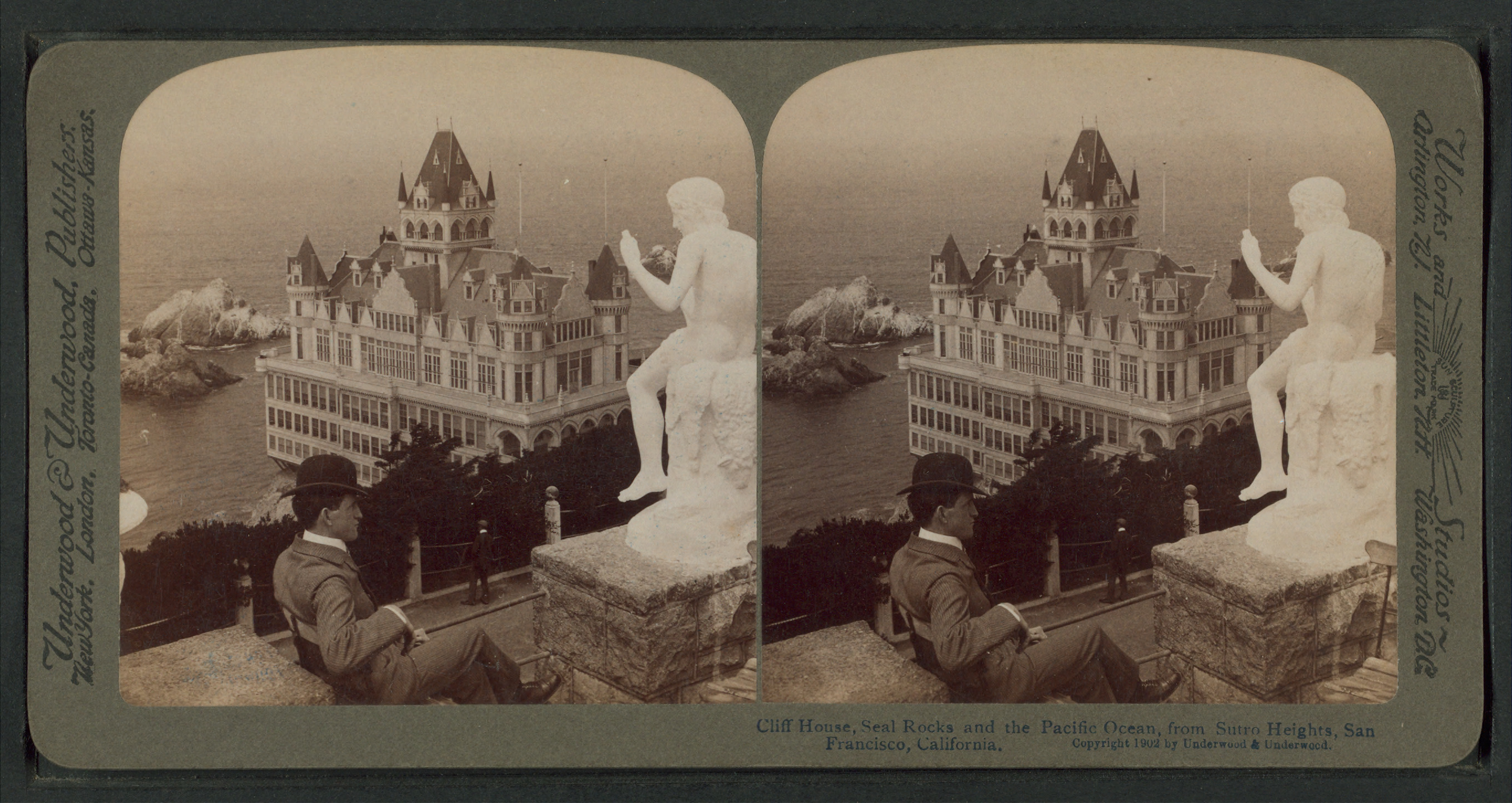
Adolph Sutro stood on these bluffs and looked down at his empire. Below him, the Sutro Baths held two million gallons of Pacific seawater. The Cliff House perched on the rocks to the south. Seal Rocks barked offshore. And here, on the heights above it all, Sutro planted gardens, placed statues, and created an estate that he opened to the public -- a private park that anyone could visit, decades before the Golden Gate National Recreation Area absorbed the property into federal lands. Today the statues are copies of copies and the formal gardens have gone wild, but the view remains Sutro's greatest gift: an unobstructed panorama of the Pacific that stretches to the edge of the visible world.
The Mining King's Garden
Sutro made his fortune boring a tunnel through the Comstock Lode in Nevada, then invested his wealth in San Francisco real estate, eventually owning one-twelfth of the city's total acreage. He served as mayor from 1895 to 1897. The estate at Sutro Heights was his personal retreat and his public statement: elaborate gardens in the European style, planted with Monterey cypress and Norfolk Island pine to shelter the grounds from Pacific winds. He collected plaster copies of classical statues and placed them throughout the gardens, creating a version of a European aristocratic estate accessible to working-class San Franciscans. Visitors arrived via the Ferries and Cliff House Railroad, which ran along the cliffs below.
Ruins and Wildness
After Sutro's death in 1898 and the estate's gradual decline, the formal gardens reverted to a more natural state. The National Park Service acquired the property as part of the Golden Gate National Recreation Area. The cypresses Sutro planted have grown enormous, creating windbreak tunnels that frame views of the ocean. Some of the original statues remain on their pedestals, weathered and mossy. The parapet wall that once defined the estate's edge still stands, offering visitors a viewing platform above the Cliff House ruins and the crashing surf below. The park occupies a curious middle ground between designed landscape and recovered wilderness, neither fully tame nor fully wild.
The View That Never Changes
Sutro Heights Park is elevated enough to see the Farallon Islands on clear days, 27 miles out in the Pacific. Closer in, Seal Rocks, Ocean Beach, and the vast blue expanse of the open ocean fill the western horizon. To the north, the Marin Headlands and Point Bonita Lighthouse mark the opposite side of the Golden Gate. What Sutro understood, and what the park still delivers, is that the most valuable thing about this piece of land is not the gardens, the statues, or the architecture. It is the simple fact of standing at the western edge of the continent and looking out at nothing but water.
From the Air
Sutro Heights Park is at 37.78N, -122.51W, on the bluffs directly above the Cliff House and Seal Rocks at the northwestern corner of San Francisco. The mature cypress trees make the park visible as a dark green canopy above the rocky shore. Adjacent landmarks include the Sutro Baths ruins to the north and Ocean Beach stretching south. Nearest airports: KSFO 14nm south, KOAK 13nm east.