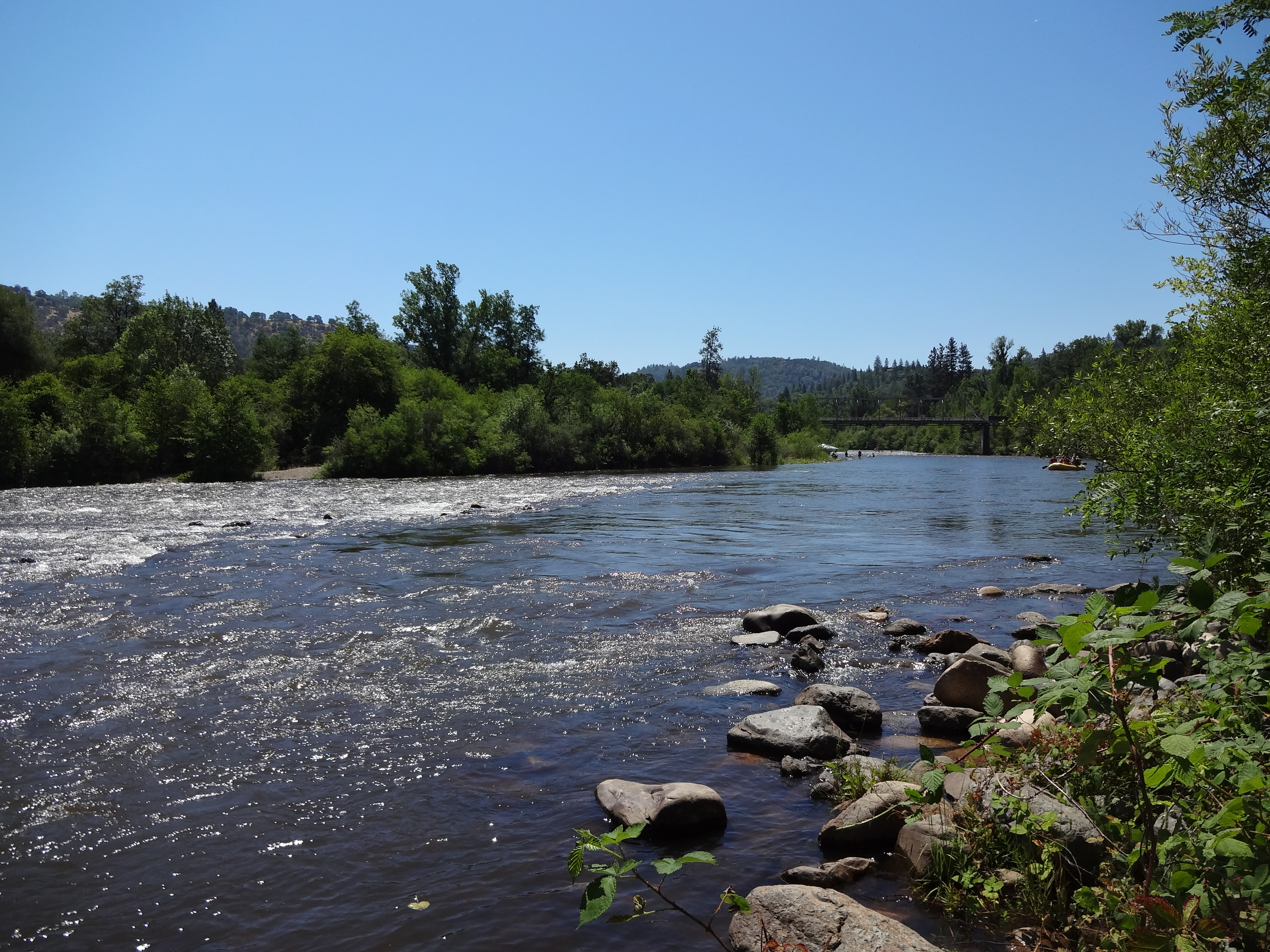
Sutter's Mill
On the morning of January 24, 1848, James Wilson Marshall was inspecting the tailrace of a sawmill he was building on the American River when something glinted in the water. He picked it up, bit it to test its softness, and recognized it as gold. Marshall tried to keep the discovery secret - his employer, John Sutter, knew that gold seekers would overrun his agricultural empire. They were right to worry. Despite their efforts, news leaked. By May, San Francisco was emptying as residents headed for the hills. By December, President Polk confirmed the discovery to Congress, and the rush was on. Over the next seven years, 300,000 people would migrate to California from the United States, Latin America, Europe, China, and Australia. San Francisco grew from a village to a city of 25,000 in two years. California became a state in 1850. The sawmill that started it all was abandoned and eventually washed away, but Marshall's discovery had transformed the American West and accelerated the nation's coast-to-coast expansion.
Sutter's Empire
John Sutter was a German-born Swiss immigrant who had established himself as a frontier entrepreneur in Mexican California. In 1839, he obtained a land grant of nearly 50,000 acres in the Sacramento Valley, which he named New Helvetia. He built a fort, established farms and ranches, hired Native Americans as laborers, and dreamed of an agricultural empire. By 1847, he needed lumber to expand his operations and hired James Marshall, a carpenter from New Jersey, to build a sawmill on the American River about forty miles from the fort. The location Marshall chose, called Coloma by the local Nisenan people, had ample water power and nearby timber. Neither man suspected that the project would destroy everything Sutter had built.
The Discovery
On January 24, 1848, Marshall was inspecting the tailrace - the channel that carried water away from the mill wheel - when he noticed metallic flakes in the gravel. He collected several pieces, tested them, and became convinced they were gold. Four days later, he rode to Sutter's Fort to show his employer. Sutter tested the samples with acid and weight, confirming they were gold. Both men wanted to keep the discovery quiet until the mill was complete and Sutter could secure his land claims. They failed almost immediately. Workers at the mill began panning on their own time. One of them paid for brandy at a local store with gold dust. By March, the news was spreading through California's small population.
The Rush
San Francisco newspaper publisher Sam Brannan accelerated the frenzy. After buying up every pickaxe and shovel he could find, he walked through San Francisco in May 1848 holding a bottle of gold dust and shouting 'Gold! Gold! Gold from the American River!' The city emptied. Soldiers deserted. Ships' crews abandoned their vessels in the harbor. By the end of 1848, an estimated 10,000 miners were working the California goldfields. Then came President Polk's December message to Congress, confirming the discovery and sending gold fever worldwide. The Forty-Niners arrived in 1849 - by ship around Cape Horn, overland across the continent, through the isthmus of Panama. They came from everywhere, transforming California from a sleepy Mexican province of 14,000 non-Native residents to an American state of 300,000 in just a few years.
The Losers
Gold made some men rich, but the men who found it lost everything. James Marshall, increasingly unstable, was driven from claim after claim by miners who resented him. He spent his later years bitter and impoverished, dying in 1885 and leaving debts. John Sutter fared even worse. The gold seekers overran his land, slaughtered his cattle, and squatted on his property. California courts ruled against his land claims. He relocated to Pennsylvania and spent decades petitioning Congress for compensation, dying in 1880 while waiting for an answer. The Nisenan people, who had lived in the Coloma area for millennia, were devastated by disease and violence; their population dropped from perhaps 9,000 to 800 by 1910. The Gold Rush enriched California and accelerated American expansion, but it left wreckage in its wake.
Visiting Sutter's Mill
Marshall Gold Discovery State Historic Park in Coloma preserves the site where the Gold Rush began. The original mill is gone, washed away by floods, but a replica stands at the discovery site on the American River. The park includes restored and reconstructed buildings from the Gold Rush era, including a Chinese store, a blacksmith shop, and miners' cabins. A statue of James Marshall stands on a hill overlooking the valley, pointing toward the spot where he found gold. The Gold Discovery Museum interprets the rush's impact through artifacts and exhibits. Visitors can pan for gold in the American River - with some success, as gold still washes down from the Sierra. The river itself is popular for whitewater rafting. Coloma lies 45 miles east of Sacramento on Highway 49, the route that threads through the Gold Country's historic mining towns. Sacramento International Airport (SMF) is the closest major airport. Spring and fall offer the best weather for exploring.
From the Air
Located at 38.80°N, 120.89°W on the American River in El Dorado County, California. From altitude, Coloma appears as a small settlement in the Sierra Nevada foothills where the American River cuts through hilly terrain. Highway 49 winds through the Gold Country towns visible along the western slope. Sacramento lies 45 miles to the southwest. Lake Tahoe is 50 miles to the east.