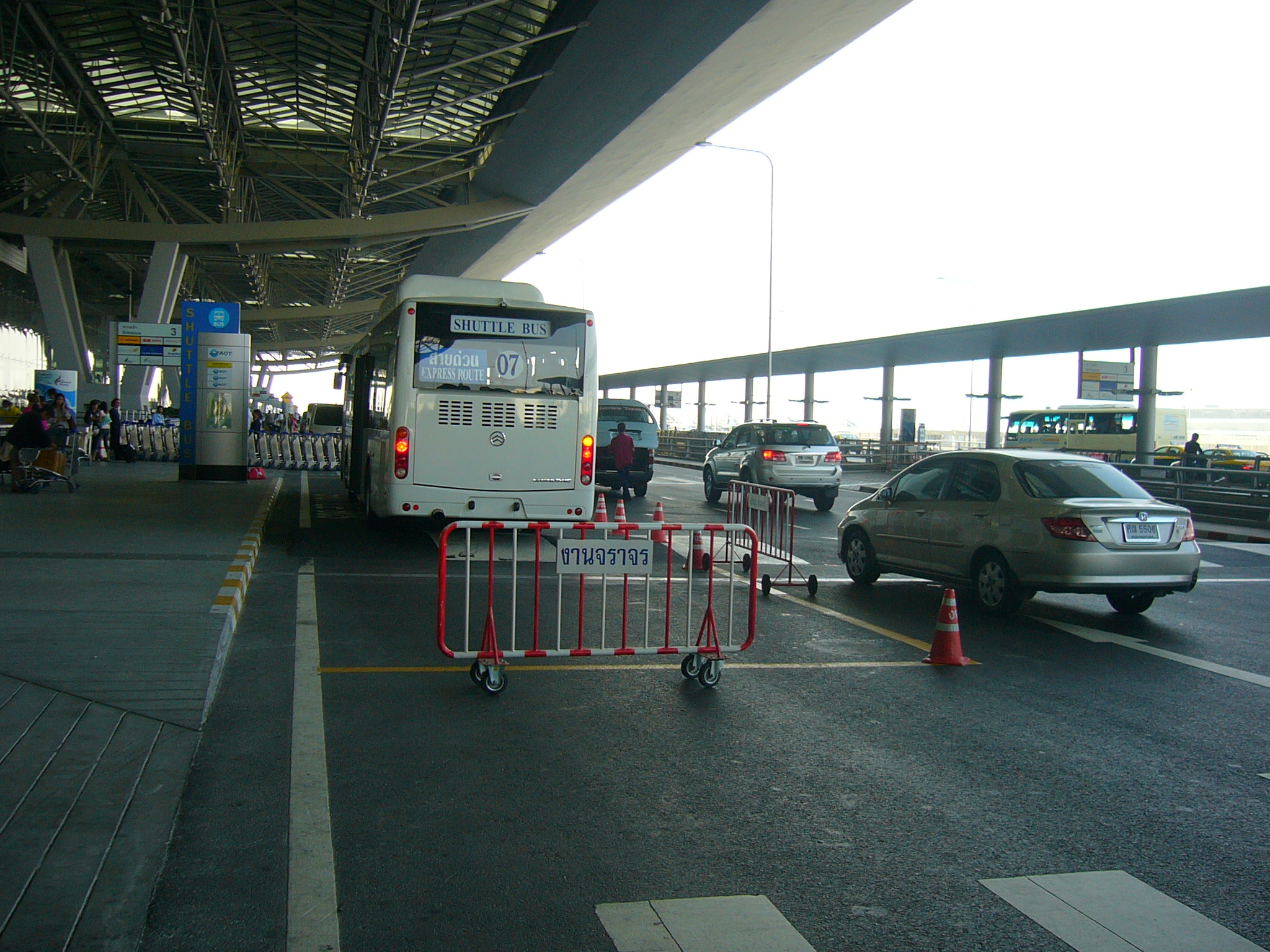
Suvarnabhumi Airport
The locals called it Nong Nguhao -- Cobra Swamp. For decades, the waterlogged land east of Bangkok seemed an unlikely site for anything, let alone one of the busiest airports in Asia. But when Suvarnabhumi Airport finally opened on September 28, 2006, it emerged as a soaring glass-and-steel gateway handling over 62 million passengers a year by 2024, served by 113 airlines -- more than any other airport on earth. The name itself reaches back centuries before the first jet engine: Suvarnabhumi, meaning "Land of Gold," was chosen by King Bhumibol Adulyadej from an ancient Sanskrit toponym found in Buddhist texts, a reference to a mythic golden kingdom believed to have existed somewhere in Southeast Asia.
Forty Years from Swamp to Runway
The idea of a second Bangkok airport surfaced as early as the 1960s, when Don Mueang -- the city's original airport, in operation since 1914 -- was already showing signs of strain. The swampy plot in Bang Phli district, Samut Prakan Province, was identified and acquired, but political upheaval, funding disputes, and the Asian financial crisis of 1997 delayed construction for decades. When the airport finally opened for limited domestic service on September 15, 2006, it was a monument to persistence as much as engineering. Designed by German-American architect Helmut Jahn of Murphy/Jahn Architects, the terminal building sprawled across 563,000 square meters, briefly holding the title of the world's fourth-largest single-building airport terminal. Its free-standing control tower, rising 132.2 meters, was the tallest in the world from 2006 to 2014.
The Name of a Golden Kingdom
Suvarnabhumi appears in ancient Indian literary sources and Buddhist scriptures as a prosperous land to the east of the Ganges -- possibly somewhere along the coast of mainland Southeast Asia. Thai government proclamations and national museums have long placed the golden kingdom near the ancient city of U Thong, which may have been the origin of the Indianized Dvaravati culture. Whether or not the historical claims hold up to scholarly scrutiny, the name carries deep cultural weight. King Bhumibol Adulyadej selected it personally, and the choice links Thailand's busiest transportation hub to a tradition that stretches back over two millennia. The king's own name includes the element Bhumi, meaning earth or land, adding another layer of resonance to the naming.
A Terminal That Never Sleeps
Suvarnabhumi operates as the primary hub for Thai Airways International and K-Mile Air, with Bangkok Airways, Thai VietJet Air, and Thai AirAsia maintaining operating bases here. The airport's reach extends far beyond the region: it functions as a connecting gateway between Asia, Oceania, Europe, and Africa, run by Airports of Thailand. During the COVID-19 pandemic, parts of the airport were temporarily converted into a hospital and vaccination center, a surreal transformation of departure lounges into medical wards. The airport bounced back rapidly. Its 62.2 million passengers in 2024 made it the ninth-busiest airport in Asia and twentieth-busiest in the world, a volume that continues to push planners toward expansion. A satellite terminal connected by an Automated People Mover has been added to handle growing demand, and the airport's rail link provides a direct connection to downtown Bangkok.
Cracks in the Foundation
The swampy terrain that gave Nong Nguhao its name has not been entirely tamed. The airport has faced persistent issues with runway and taxiway surface cracking, attributed to the soft ground beneath. Maintenance and repair of the tarmac remains an ongoing challenge -- a reminder that building one of the world's busiest airports on reclaimed swampland demands constant attention. The terminal interior, meanwhile, contends with the sheer volume of human traffic flowing through its gates daily. Congestion has been a recurring concern, driving the phased expansion projects that continue to reshape the airport's footprint. Despite these growing pains, Suvarnabhumi remains the undisputed gateway to Thailand and one of the most important aviation hubs in Southeast Asia.
From the Air
Located at 13.69N, 100.75E in Bang Phli district, Samut Prakan Province, approximately 25 km east of downtown Bangkok. ICAO code VTBS, IATA code BKK. Two parallel runways (01L/19R and 01R/19L) oriented roughly north-south. The airport's distinctive tent-like terminal roof designed by Helmut Jahn is clearly visible from altitude. Don Mueang (VTBD) lies approximately 30 km to the north-northwest. Motorway 7 connects the airport to Bangkok and the eastern seaboard industrial zone. The Chao Phraya River delta spreads to the west, and the Gulf of Thailand lies to the south.